REVIEW · KAILUA KONA
Fun and Creative Stained Glass Class and Workshop
Book on GetYourGuide →Operated by Big Island Stained Glass · Bookable on GetYourGuide
A home studio, and suddenly you’re an artist. In Kailua-Kona on the Big Island, a stained glass workshop turns a quiet corner of a house into a hands-on art class with real, practical steps. I love the personal feel of Sheri and Doug Reynolds teaching you, and you’ll also enjoy how friendly and supportive the room is right from the start.
What makes it even better: you work with a wide variety of glass colors and textures, then learn the core methods like cutting, grinding, foiling, and soldering. The big win here is that you change from watching art happen to making something yourself.
One possible drawback to plan for: it’s in a home studio setting, so if you’re expecting a formal workshop space, the first few minutes may feel a little different. Also, the take-home piece is a small sun catcher and the stand isn’t included, so don’t expect a full display setup ready to go.
In This Review
- Key things to know before you make stained glass in Kona
- The big appeal: a stained glass class that feels welcoming
- Where it happens in Kailua-Kona (and why that matters)
- The 150-minute format: what your time is likely used for
- Choosing your glass: where creativity starts
- Cutting, grinding, foiling, soldering: the skills you learn
- What you take home: the sun catcher (and the stand detail)
- Price and value: what $125 covers and what you should compare
- Who this is best for (and who might want to rethink it)
- Practical rules you should know before you arrive
- Making it work with your Kona plans
- Should you book Big Island Stained Glass?
- FAQ
- How long is the stained glass class?
- Where does the class take place?
- What is the price per person?
- Are materials included?
- What do I take home?
- Is the experience suitable for children?
- Is it wheelchair accessible?
- Is there free cancellation?
Key things to know before you make stained glass in Kona
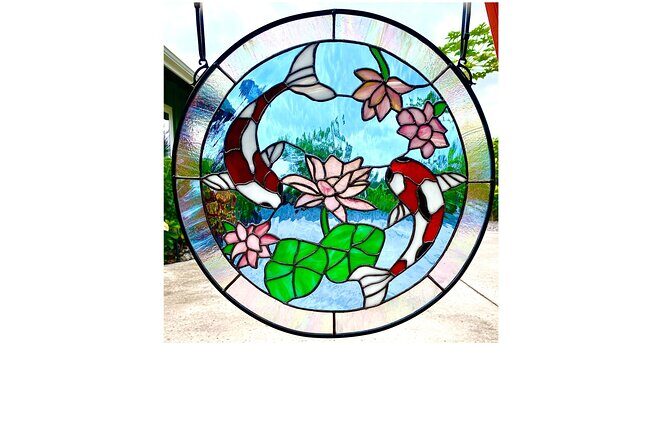
- Sheri and Doug Reynolds teach in a home studio in Kailua-Kona with one-on-one and group options
- All supplies are included, so you’re not hunting for tools or materials
- You learn the real workflow: cutting, grinding, foiling, and soldering
- You’ll choose glass for your own design, with lots of color and texture options
- You take home a small finished sun catcher, stand excluded
- It’s a private group experience and wheelchair accessible
The big appeal: a stained glass class that feels welcoming
If you’ve ever watched stained glass and thought, I could never do that, this workshop is built to knock down that wall fast. The session is taught by Sheri & Doug Reynolds in Kailua-Kona, and the vibe is warm and relaxed rather than stiff or overly formal.
I like experiences where you get coaching instead of just instructions. Here, that’s the point. Sheri takes time to explain how stained glass is made, supports you step-by-step while you work, and keeps you moving even if you’re unsure at the start.
There’s also something grounding about doing this in a home studio. You’re not just passing through a classroom. You’re learning in a real workspace, where the teachers clearly care about the craft and the people doing it.
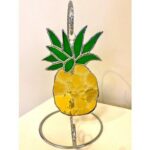
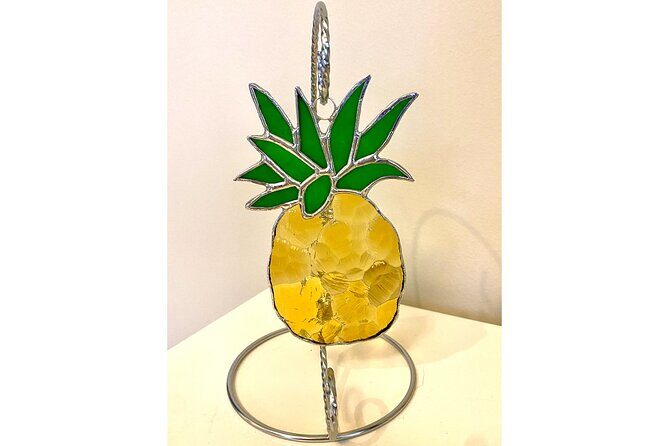
And for many people, that matters more than fancy surroundings. One participant even said they brought their disabled brother along, and he ended up with a pineapple piece while the hosts made sure he could participate comfortably. That kind of support is a strong signal that this class is not about judging skill. It’s about helping you create.
If you're still narrowing it down, here are other tours in Kailua Kona we've reviewed.



Where it happens in Kailua-Kona (and why that matters)
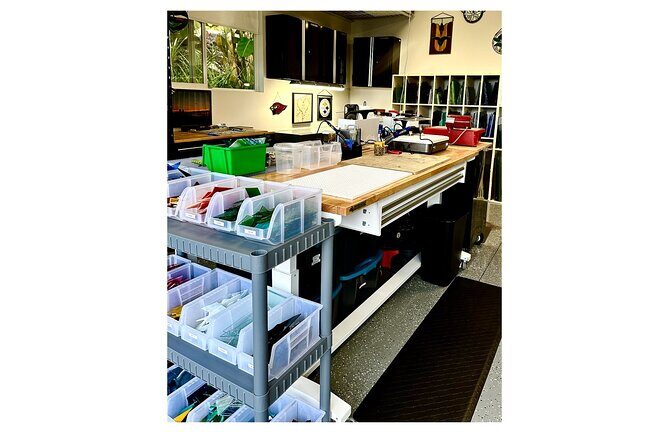
This is a home studio experience. You can park in the driveway, and you’ll be working in a space owned and run by the instructors. That can be a big plus if you like hands-on learning without crowds, and it keeps the class feeling personal.
It’s also where you should set expectations. In a home studio, you’ll likely get a more casual flow than a big public facility. The tradeoff is that you may need to be comfortable with the idea of going to someone’s house for an activity.
One more practical detail: the workshop is wheelchair accessible. That’s worth noting because working with tools and a workstation setup can be tricky in many craft studios. Here, it’s specifically listed as accessible, so you can plan with more confidence.
The 150-minute format: what your time is likely used for
The class runs 150 minutes. In that time, you’ll do two things: learn how the craft works, and then actually make your own piece. The workshop includes instruction in the basics of stained glass, and it’s not just a talk. You’ll be cutting and assembling elements with the materials provided.
Most of the value comes from the step-by-step coaching. You’re guided through cutting, grinding, foiling, and soldering, which are the core stages of the craft. If you’ve never held these tools before, this structure matters because it gives you a sequence to follow instead of random trial-and-error.
Think of it like learning a recipe. When you understand the order—cut, prep, line up, solder—you can make choices with less stress. And once you’re past the early stages, you’ll spend more time seeing your piece come together.
Also, remember that the class is private group. That usually means you’re not stuck watching while others take turns. Your attention and time are more likely to stay focused on your piece and your questions.
Choosing your glass: where creativity starts
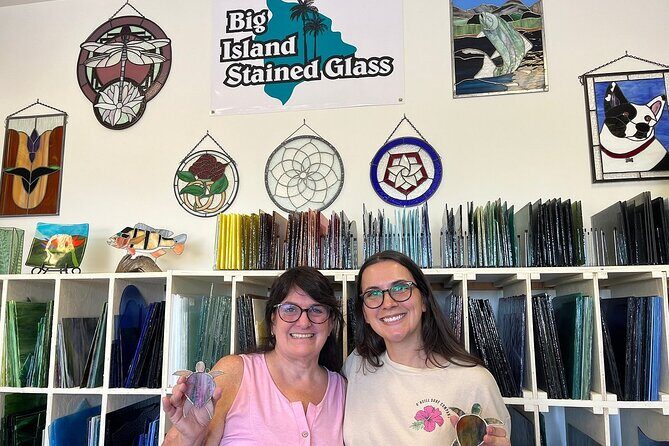
Before the tools, there’s the fun part: selecting glass. You’ll have a wide variety of colors and textures to work from, and you’ll get time to choose the pieces that fit your idea.
This matters more than it sounds. In stained glass, color and texture do a lot of the heavy lifting. People often think the design is the main thing, but the material choices create the mood. Smooth glass can read different from textured glass once light passes through it.
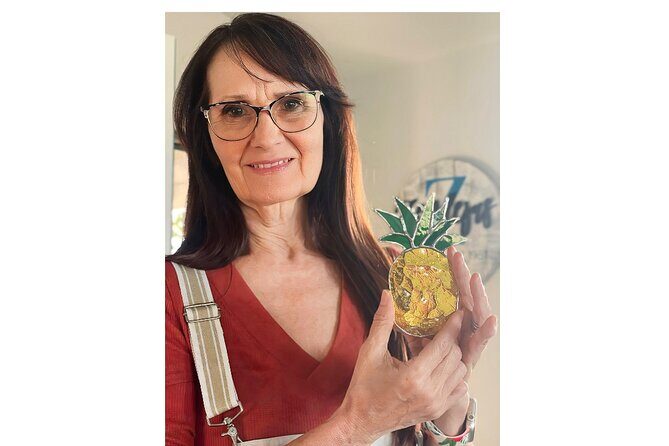
If you’re worried you don’t have an artistic bone in your body, that’s normal. The class is set up so you can pick a theme or simple shapes and still end up with something you’ll be proud to hang. One participant described their brother ending up with a pineapple sun catcher, which shows how flexible the process can be.
In other words, you’re not required to draw a masterpiece first. You’re choosing glass for a small project and building it step-by-step.
Cutting, grinding, foiling, soldering: the skills you learn
This is not a paint-by-numbers craft. The class teaches the basics of stained glass techniques that real makers use.
Here’s what you can expect to learn as you work:
- Cutting: shaping your glass into the parts of your design
- Grinding: refining edges so pieces fit and the layout works
- Foiling: adding foil to edges to prepare for assembly
- Soldering: joining pieces together to make the final panel
Even if the exact order and pacing feel a little different for each person, the core stages are consistent. That’s what makes it feel like a real workshop instead of a casual demo.
And yes, you’ll get personalized attention. The instructors provide support as your project progresses, which is especially important with skills like foiling and soldering. Those are the steps where a small mistake can throw off alignment, and having a teacher there helps you correct course quickly.
If you’re the type who worries about messing up, this class helps you learn without shame. You’re guided through the process, not left alone with a pile of glass and a hope.



What you take home: the sun catcher (and the stand detail)
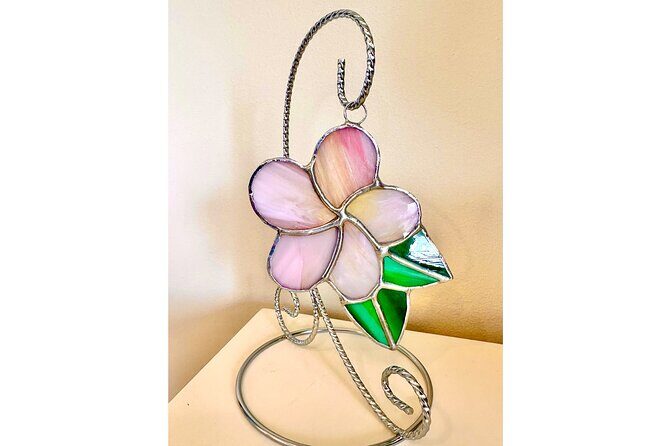
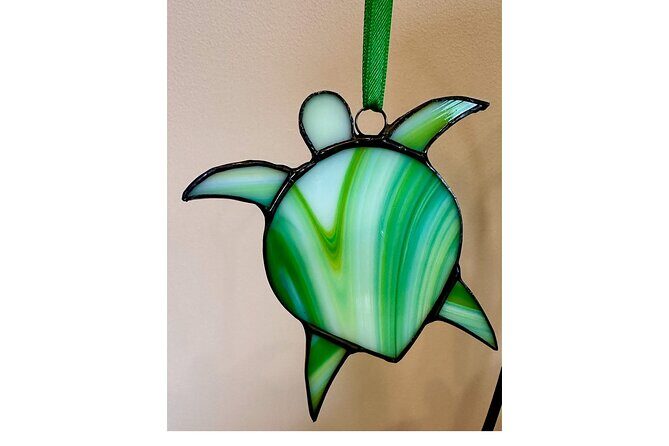
The class includes all necessary supplies, and the best part is that you get to take home a small finished sun catcher.
Two practical notes:
- You’ll have a finished project to bring back with you, which makes the class feel like more than a one-time activity.
- The stand is not included, so plan how you’ll display it.
In practice, a sun catcher like this usually looks great by a window where sunlight can pass through. One couple mentioned hanging their finished pieces in a bedroom window and noticing the piece every morning. That’s exactly the kind of everyday reminder you want from a vacation workshop.
If you like small, meaningful keepsakes—something you made with your hands—this fits that goal well.
Price and value: what $125 covers and what you should compare
At $125 per person for about 150 minutes, this isn’t the cheapest craft activity in Kona. But stained glass isn’t a low-cost hobby, mainly because materials, tools, and instructor time add up fast.
Here, the value case is strong because:
- All materials are included
- You receive instruction through multiple core stages (cutting, grinding, foiling, soldering)
- You end with a finished item you can take home
When a class like this includes supplies, you avoid the common travel pitfall: paying “cheap” prices and then realizing you still need to buy materials. That’s not the situation here.
Your most realistic comparison is not with casual souvenirs. It’s with other structured classes that either provide supplies or don’t. If you’re choosing an activity for an afternoon and you want a tangible result, this delivers.
Also, the private group style can increase perceived value. When you’re not sharing instructor attention with a large crowd, you’re more likely to get help at the exact moment you need it.
Who this is best for (and who might want to rethink it)
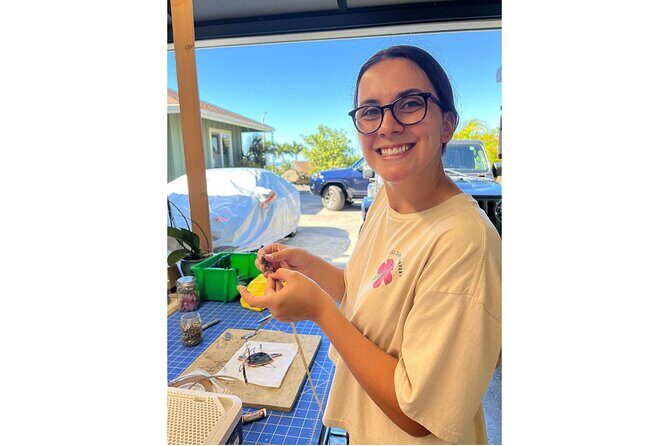
This workshop is a great fit for people who want a calm, hands-on creative activity in Hawaii that doesn’t require prior experience. It also suits couples and friends who enjoy doing something together rather than just sightseeing.
It’s also well-suited for people who need patience and support. One review specifically mentioned a disabled brother having a great time and completing a pineapple-themed piece with help from the hosts. That suggests the instructors know how to adjust support so students can participate.
It’s not suitable for children under 12. If you’re traveling with younger kids, you’ll need another activity.
If you want a purely passive experience—sit back, watch, and leave—this isn’t that kind of class. You’ll be learning techniques and working with your hands.
Practical rules you should know before you arrive
The workshop has clear conduct rules, and it’s worth reading them before you go. You should not bring weapons or sharp objects, and smoking, vaping, and intoxication are not allowed. Alcohol and drugs are also prohibited.
There are also clothing and personal items limits. Swimwear and bare feet aren’t allowed, and costumes and nudity are not permitted. Unaccompanied minors aren’t allowed either.
The main takeaway: come as you are, but dress comfortably and appropriately for a tool-based craft session. If you’ll be wearing bare feet, don’t. If you’ll be arriving with any kind of sharp personal items, leave them out.
One more note: the class is taught in English, so plan on using English for questions and instructions.
Making it work with your Kona plans
Because this is a home studio in Kailua-Kona, I like to treat it like an appointment. Plan to arrive with enough time to park and settle in.
The upside is that once you’re there, you don’t have to think about logistics. Supplies are included, and you’ll follow the instructors’ guided process from start to finish.
Also, since the class is 150 minutes long, it gives you a meaningful block of activity without swallowing your whole day. It’s a solid choice if you want one creative stop during your stay and then still have time for Kona’s beaches, viewpoints, or local food.
Should you book Big Island Stained Glass?
If you want a vacation activity where you learn real stained glass skills and take home a finished sun catcher, I’d book it. The biggest strengths are the supportive teaching style and the fact that supplies are included, which turns your money into a tangible result.
I’d be a little more careful if you dislike home-style studio settings or if you’re expecting a formal, large-scale venue. Since it’s held at a private studio, you should be comfortable with that feel.
Also, if you’re traveling with kids under 12, this isn’t suitable. For everyone else, it’s a creative afternoon that doesn’t rely on you already being an artist. You’ll learn the process, pick your own glass, and leave with a piece that catches light back home in a way a photo never will.
FAQ
How long is the stained glass class?
The class lasts 150 minutes.
Where does the class take place?
It takes place in Kailua-Kona on the Big Island of Hawaii. It’s a home studio, and you can park in the driveway.
What is the price per person?
The price is $125 per person.
Are materials included?
Yes. All materials are included.
What do I take home?
You take home a small finished sun catcher. The stand is not included.
Is the experience suitable for children?
It is not suitable for children under 12.
Is it wheelchair accessible?
Yes, it is wheelchair accessible.
Is there free cancellation?
Yes. You can cancel up to 24 hours in advance for a full refund.