REVIEW · KAILUA KONA
Kailua-Kona: Manta Ray Spotting Night Snorkeling Tour
Book on GetYourGuide →Operated by Kona Snorkel Tours / Hawaii Island Ocean Tours · Bookable on GetYourGuide
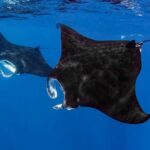
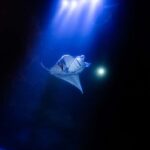
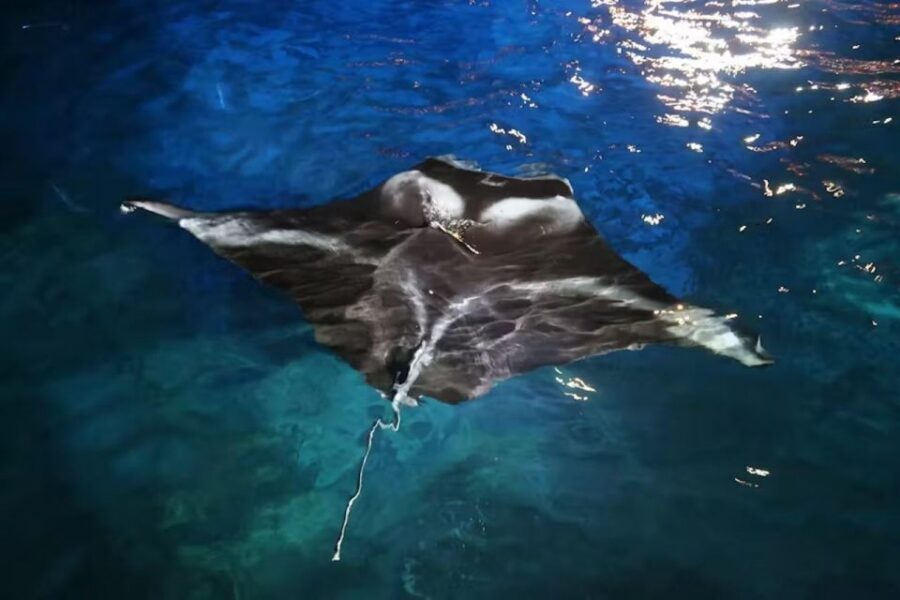
Manta rays at night feel like a dream. This Kona snorkeling tour is built for better odds with a small 14-guest group and serious underwater lighting (144,000 lumens). I like that they run later tours to give you more time with the mantas and fewer boats competing at the same moment, and I also like the clear “keep trying” policy if you don’t see rays.
One drawback to keep in mind: manta rays are wild animals, so even with the best setup you’re not guaranteed a sighting on every single tour night. If you don’t see them, you’ll need to take a later replacement attempt (or your next visit) rather than count on a refund.
In This Review
- Key things I’d zero in on before you go
- Night snorkeling with manta rays in Kona: what makes this setup work
- Later departures and fewer boats: the real advantage of going after dark
- The 3-minute boat ride: saving energy so you can actually snorkel
- 144,000 lumens: how the lighting changes what you see
- What happens once you’re in the water
- Manta ray guarantee: what it means (and what it does not)
- Safety and crew: why the in-water team matters at night
- Price and value: is $95 a good deal?
- Meeting point and first steps: how to make day-of stress-free
- What to bring (and what to wear) so you can focus on the water
- Who should book this Kona manta ray night snorkeling tour
- Should you book it? My practical call
- FAQ
- How long is the Kailua-Kona manta ray spotting night snorkeling tour?
- What’s included in the tour price?
- What is the manta ray guarantee policy?
- Is there a refund if manta rays aren’t seen?
- What should I bring?
- Where do I meet the tour?
Key things I’d zero in on before you go
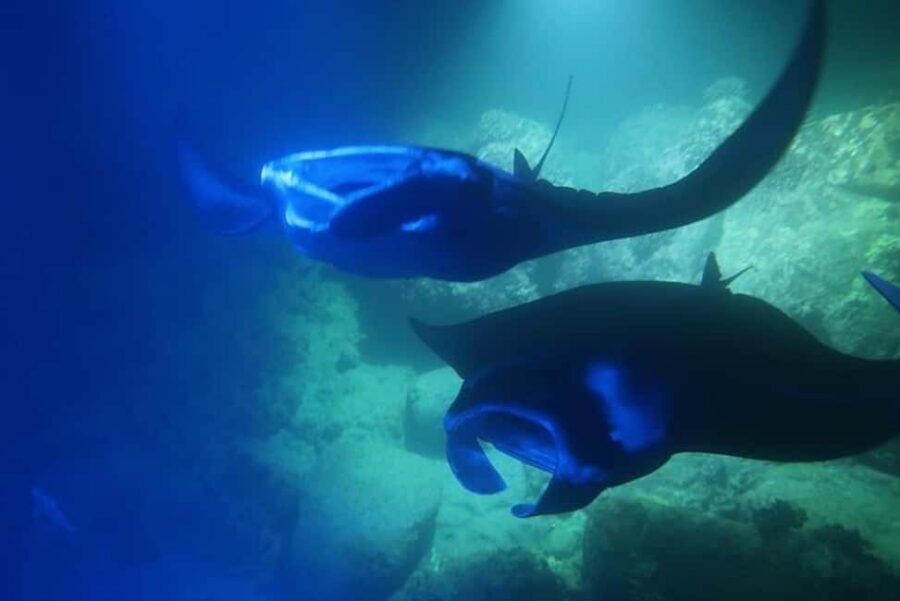
- 14-guest max means less chaos in the water than the 20–50 person boats you’ll see around Kona.
- 144,000 lumens of underwater light power to help attract and highlight mantas.
- Later departures designed to reduce competition and maximize your manta time.
- Only a ~3-minute boat ride to the viewing site, so you spend more time snorkel-ready.
- In-water crew support (captain, lifeguard, and a swim guide) for a calmer, safer experience.
- Manta ray guarantee policy with free/replacement chances if rays aren’t spotted.
Night snorkeling with manta rays in Kona: what makes this setup work
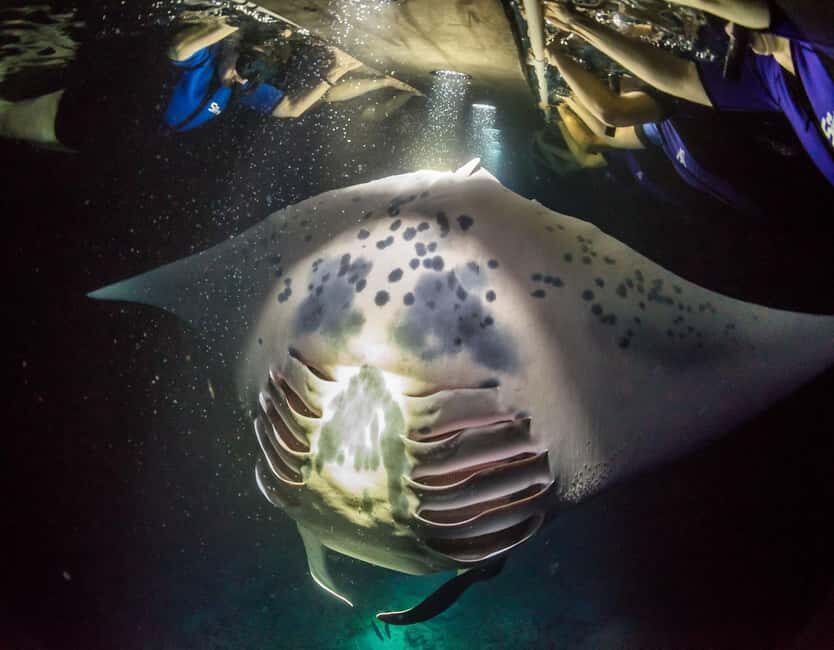
This is not the kind of tour where you mostly hang out on a boat and hope. It’s built around time in the water and the conditions mantas seem to like at night.
The core idea is simple: more control over the competition and the viewing conditions. With a small group and later tour times, you’re not constantly getting jostled or displaced by larger boats arriving for the same animal trails. That matters because manta ray behavior can be unpredictable, and crowd pressure can make a good night feel rushed.
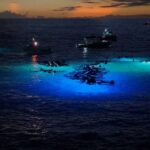
The other big lever is lighting. The tour uses 144,000 lumens of underwater light power, which is meant to bring more mantas into the area and keep attention focused in the water column. In a nighttime setting, light changes everything: it helps you see, and it can influence where marine life gathers.
Other Manta Ray night snorkel tours in Kailua Kona
Later departures and fewer boats: the real advantage of going after dark
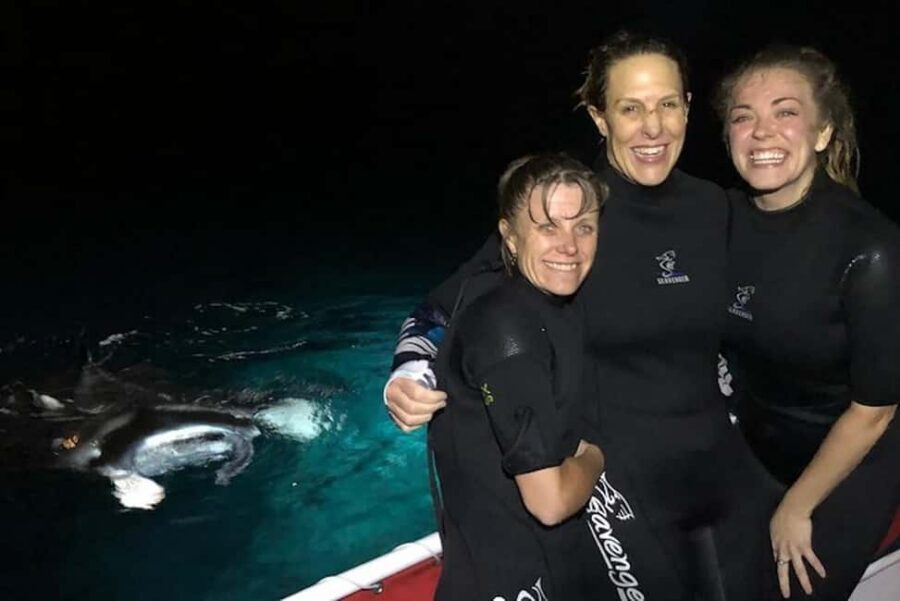
Kona night snorkeling can be a busy scene. Some boats head out earlier and end up chasing the same manta activity while other groups are doing the same thing. This tour specifically claims they run later times than other boats, giving you more time with mantas and reducing the “every boat for the same rays” effect.
For you, that translates to a better flow. You’re more likely to enjoy a calmer snorkel session instead of a race where you’re constantly relocating or fighting for position. If you’ve ever felt that big-group snorkeling can turn into line management, this small-crew approach is the antidote.
It’s also worth noting the tour includes an “earlier” option too. So if you’re visiting on a schedule that doesn’t allow later starts, you still have a pathway to do the experience—just understand the tour’s selling point is that later timing tends to improve manta time.
The 3-minute boat ride: saving energy so you can actually snorkel
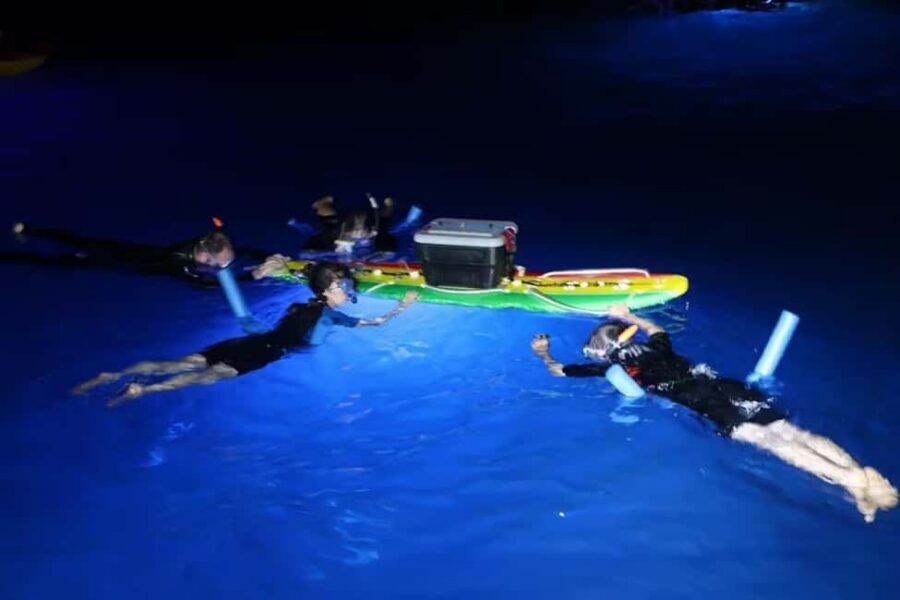
A standout practical detail here is the travel time to the viewing area. You get about a 3-minute boat ride to the site, while other operations from other harbors may involve roughly a one-hour round trip for the boat transfer.
That speed matters more than you might think. When you’re snorkeling at night, you want your body warmed up, your gear sorted, and your focus on the water—not on long stretches of waiting in the dark between locations. Short transfer time also keeps your “snorkel window” tighter and more productive, especially if manta activity is time-sensitive.
You meet at the Outrigger Resort area, then you’re off. After the viewing, the tour ends back at the meeting point, so you’re not stuck figuring out a separate return plan.
144,000 lumens: how the lighting changes what you see
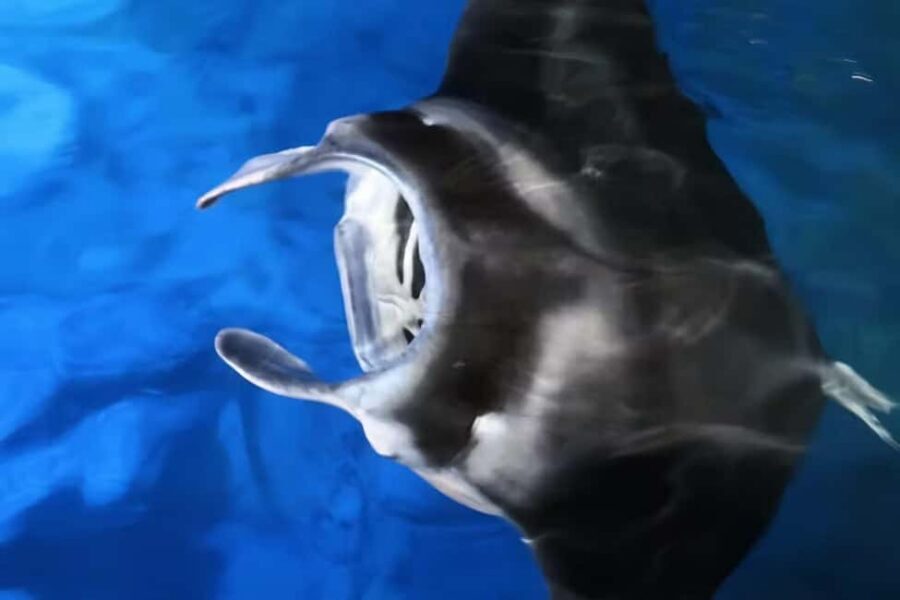
Night snorkeling is all about illumination and control. Here, they bring serious underwater light power—144,000 lumens—and that’s the tool they use to increase manta chances and concentrate what you’re watching.
I like how they frame the logic: more light power gives you more opportunity to “accumulate” sightings, meaning mantas may spend more time in the illuminated zone. Of course, no amount of lighting creates a sure thing with wildlife. But lighting can still improve your odds, and it usually improves your ability to actually see what’s there.
The lighting can also bring out other small life. One highlight people share is seeing plankton up close, which is a fun reminder that you’re not just hunting mantas—you’re exploring a whole nighttime ecosystem once the light is on.
What happens once you’re in the water
You’re set up for night snorkeling with the basics covered. You’ll get a life jacket, plus a mask and snorkel, and you’ll snorkel with the manta rays in the water.
The crew is not hands-off. The tour includes a captain, a lifeguard, and a swim guide who’s in the water. For you, that support is a big deal. Night conditions can make everything feel less familiar—visibility is lower, movements feel bigger, and it’s easier to overthink. Having trained eyes and help right there is how you keep the experience relaxed instead of stressful.
In terms of what you might see beyond manta rays: some groups have reported a baby shark and other fish during the same session. You shouldn’t treat that as guaranteed, but it does fit with what lighting often reveals at night—other species move into the illuminated feeding zone too.
Other evening experiences in Kailua Kona

Manta ray guarantee: what it means (and what it does not)
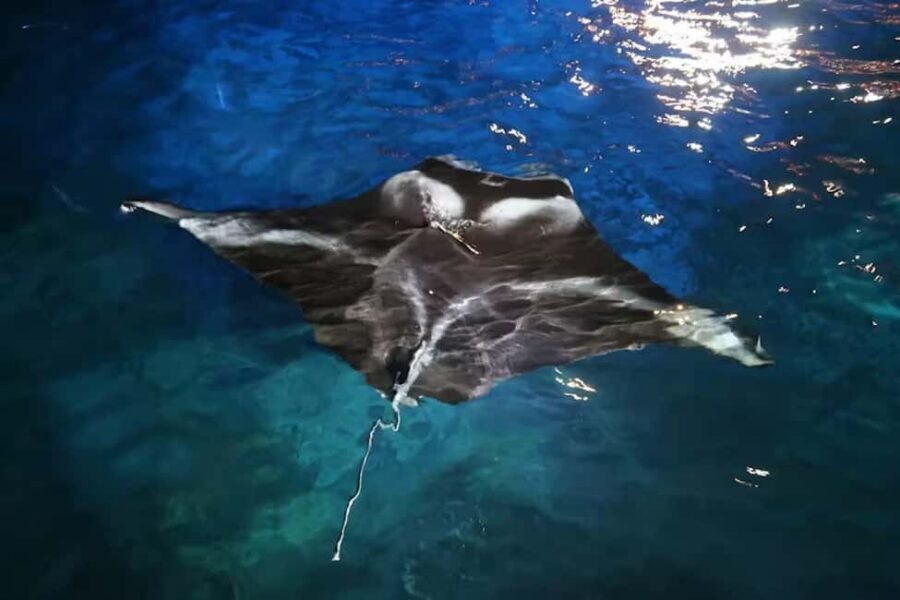
This tour is upfront: mantas are wild animals, so sightings can’t be promised in a literal sense. What they do offer is a manta ray guaranteed policy paired with a practical “try again” plan.
If you don’t see a manta ray on your tour, the policy allows you to attempt again the same night on a later time frame, or on a different night, or even on your next Hawaii visit for free—based on availability and with timing that’s checked an hour before each tour.
Also important: the tour data says there are no refunds in the event that manta rays are not seen. So think of the guarantee as “replacement chances,” not “your money back.”
For value-minded travelers, that’s still a pretty strong safety net. It just requires flexibility on your schedule. If you can’t do another night or don’t want to revisit the area at the last minute, then this is the part you should weigh carefully.
Safety and crew: why the in-water team matters at night
Night water is not the place to wing it. Here, you’re supported by a captain, a lifeguard, and a swim guide in the water, with life jackets and snorkel gear provided.
One of the best signals is that people mention feeling safe and that guides went above and beyond. The names that show up in guide feedback include Chris, Jordan, and Shay. Even if you don’t meet the same trio, you can expect the tour’s staffing to match that hands-on style.
If you’re a confident swimmer, you’ll probably find it easier to relax and focus on the manta action. If you’re less comfortable in open water, the structure and in-water guidance can help you stay calm and coordinated. Either way, night snorkeling rewards calm breathing and slow movements, and the crew role is to help you do that.
Price and value: is $95 a good deal?
At $95 per person for an 80-minute experience, you’re paying for more than “snorkeling.” You’re paying for a higher-touch setup: a small group, significant underwater light power, and a schedule designed to avoid the biggest competition problems.
Here’s how I’d judge value for you:
- Small-group format usually means fewer interruptions, less crowding, and more time actually facing the water—not managing gear space.
- 144,000 lumens is an expensive way to improve conditions and visibility at night.
- Short boat transfer (~3 minutes) helps you maximize the time you’re actually suited up.
- Replacement/next-visit option if you don’t see rays reduces the risk that you waste a key Kona night.
The one “value” catch is your personal flexibility. Since there are no refunds for missed sightings, your ROI improves if you’re able to take a second attempt if needed.
Meeting point and first steps: how to make day-of stress-free
You’ll meet at 78-7138 Kaleiopapa Street, near the Outrigger Resort entrance. Look for a white van labeled Hawaii Island and Ocean Tours & Kona Snorkel Tours. Parking is available along the road, but you should not park in the long narrow stalls meant for vehicles with boat trailers.
Two small habits make this tour smoother:
- Arrive early enough to find the van—sometimes it’s further up or down the road than you expect.
- Bring your gear in one place before you get to the meeting point, because you’ll want to get organized quickly when it’s time to board.
What to bring (and what to wear) so you can focus on the water
Keep it simple. You’ll need:
- Swimwear
- A towel
- A camera (if you want to capture manta moments)
Also plan to use your body and basics efficiently. Night snorkel gear tends to feel more fiddly when you’re rushing, so having a towel ready and knowing where your camera goes helps you settle in.
One more thought: since this ends back at the meeting point, it’s a good idea to keep your post-tour change of clothes nearby so you’re not trying to improvise under low light.
Who should book this Kona manta ray night snorkeling tour
This tour makes the most sense if you:
- Want small-group snorkeling rather than a crowded free-for-all.
- Like the idea of later timing to improve your chances and give you more manta time.
- Care about safety and prefer a crew that stays engaged, including in-water guidance.
- Are okay with a “try again” model if sightings don’t happen on your first attempt.
It may not be the best fit if you:
- Need a strict refund guarantee—missed mantas mean no refund per the tour info.
- Are outside the stated comfort limits, since it is listed as not suitable for people over 80 years and not suitable for people over 280 lbs (127 kg).
If you’re planning a trip around Kona at night, this is a great candidate for one of your primary “one-time must-do” activities, especially if you can be flexible about trying again.
Should you book it? My practical call
I’d book this tour if you want to maximize your odds in a setting that’s calmer than the biggest boats. The combination of 14 guests max, 144,000 lumens, a 3-minute ride, and the in-water crew is a strong recipe for a night that stays focused on the mantas instead of logistics.
I’d pause only if you can’t handle the “no manta, no refund” reality. If you’re the type of traveler who hates contingency plans, that’s the one pressure point.
If you can be flexible and you’re excited by the idea of seeing manta rays and nighttime plankton light up in front of you, this is one of the most sensible ways to do Kona night snorkeling.
FAQ
How long is the Kailua-Kona manta ray spotting night snorkeling tour?
The tour duration is 80 minutes.
What’s included in the tour price?
The tour includes snorkeling with manta rays, the boat ride to and from the snorkel site, a life jacket, a mask and snorkel, and staff in the water (captain, lifeguard, and a swim guide).
What is the manta ray guarantee policy?
If you don’t see a manta ray on your tour, you may try again on the same night at a later time frame, on a different night, or on your next visit for free, based on availability an hour before each tour.
Is there a refund if manta rays aren’t seen?
No. The tour information says there are no refunds in the event that manta rays are not seen; it offers replacement chances instead.
What should I bring?
Bring swimwear, a towel, and a camera.
Where do I meet the tour?
Meet at 78-7138 Kaleiopapa Street. Look for a white van labeled Hawaii Island and Ocean Tours & Kona Snorkel Tours near the Outrigger Resort entrance. Park along the road only, and avoid the long narrow stalls designated for vehicles with boat trailers.