REVIEW · BIG ISLAND OF HAWAII
Polynesian Cultural Carving Experience in Kona
Book on Viator →Operated by Aloha Adventure Farms · Bookable on Viator
A tiki you carve yourself beats any postcard. This Polynesian Cultural Carving Experience on the Big Island is interesting because you learn the craft firsthand from a 4th generation Master Carver direct from Tonga, right in Holualoa. I love the small-group size (max 8), so you actually get hands-on coaching, and I love that you leave with a real take-home tiki you made. One possible drawback: the entrance can be a little tricky to find, so I’d give yourself a few extra minutes.
You pick either a morning or afternoon session, and the workshop runs about 2 hours. Everything you need is included, including tools and top quality local wood grown on the Big Island, and the experience is offered in English with a mobile ticket.
The vibe is part lesson, part calm workshop. Mani, the teacher many people name in their feedback, is described as patient and encouraging—even for families and first-timers—and you’ll carve a tiki using Polynesian traditions shared during the process.
In This Review
- Key Highlights You’ll Care About
- Kona Tiki Carving: Why This Workshop Feels Different
- Meet Mani and the 4th Generation Carver Lineage
- Your 2-Hour Session: What Happens From Start to Finish
- Wood Quality, Tools, and the Keepsake You’ll Actually Want
- Plan for weight and travel
- Pack your patience, not your tool belt
- Small Group Size in Holualoa: The Real Value for Families and Couples
- Finding the Entrance: A Small Logistical Headache
- Price and Value: $242.40 for 2 Hours of Craft You Own
- Weather, Timing, and How to Choose Morning vs Afternoon
- Who Should Book (and Who Might Skip This One)
- Should You Book This Polynesian Tiki Carving in Kona?
- FAQ
- How long is the Polynesian Cultural Carving Experience in Kona?
- Where does the experience meet, and where does it end?
- What is the group size limit?
- What is included in the price?
- Is the tour offered in English, and can I choose a time of day?
- What if weather is bad?
Key Highlights You’ll Care About
- Master carver instruction from Tonga: You work with a real craft lineage, not a generic demo.
- Hands-on carving for everyone: Tools and wood are included, and guidance is built in for beginners.
- Small-group format (up to eight): More attention per person, especially helpful for kids.
- Choose a symbol for your tiki top: You shape the meaning, not just the shape.
- Take-home souvenir weight to plan for: Many people report each tiki is around 7 pounds for travel.
- Scenic, peaceful farm setting: People consistently mention the location and calm atmosphere.
Kona Tiki Carving: Why This Workshop Feels Different
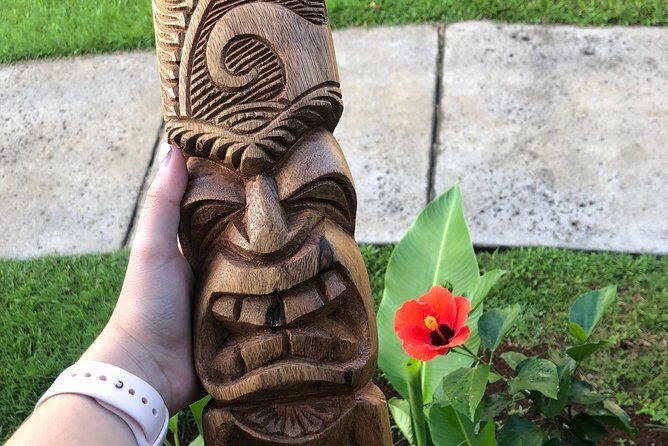
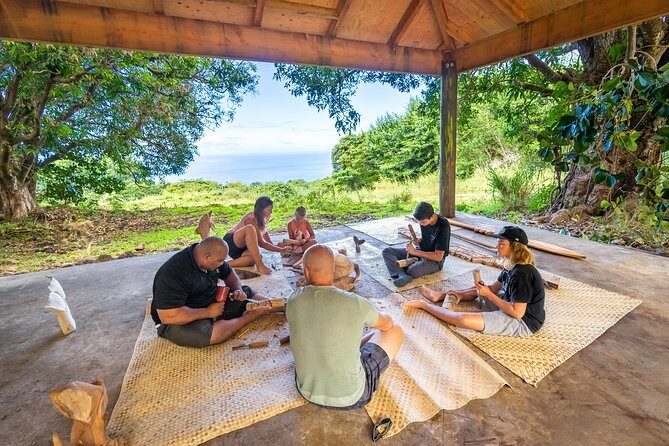
This isn’t the kind of activity where you watch someone else do the real work. The point here is that you carve your own tiki, guided closely enough that even people who say they are not crafty can end up with something they are genuinely proud to take home.
A big part of the value is the mix of craft + cultural context. You’re not just shaping wood; you’re learning why tiki forms and symbols matter in Polynesian culture, and that turns a souvenir into a story you’ll tell later. It also explains why people mention listening to Mani’s family history and culture as one of the best parts.
The other difference is the setting. Aloha Adventure Farms gets repeatedly described as stunning and relaxing, with a peaceful feel. That matters because carving takes focus. When the environment isn’t rushed, you can slow down, ask questions, and actually enjoy the process instead of trying to squeeze it into a packed day.
Other luau and Polynesian shows in Big Island of Hawaii



Meet Mani and the 4th Generation Carver Lineage
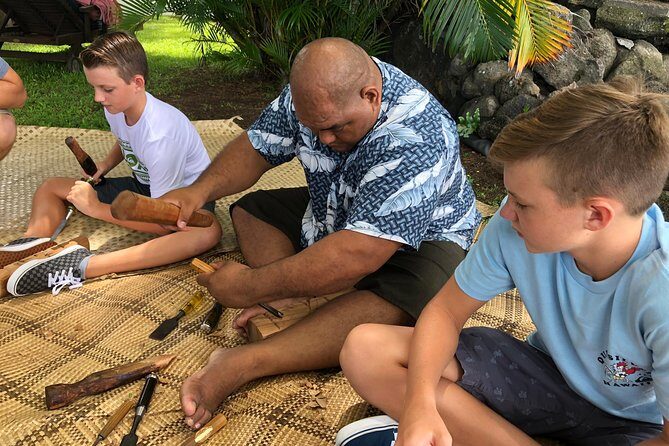
The workshop centers on a highly sought after 4th generation Master Carver direct from Tonga. In the feedback, the teacher you’ll likely interact with is Mani, and people consistently call him warm, calm, and patient.
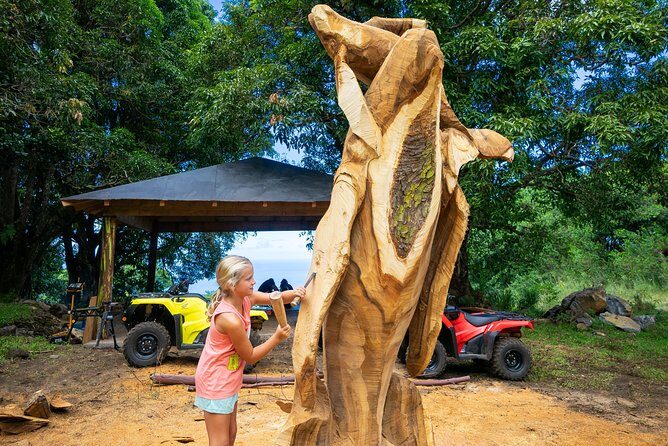
For you, that’s not a small detail. When the craft involves steady hands and a learning curve, the teacher’s style can make the difference between frustration and confidence. People specifically describe Mani guiding kids successfully and helping adjust carvings when needed, which is exactly what you want in a workshop format with real tools.
You’ll also notice that the approach feels personal rather than factory-style. Small groups and hands-on instruction mean you’re not competing for attention. It’s the kind of class where you can ask about what you’re doing and why it fits Polynesian tradition, instead of only getting a quick overview.
Your 2-Hour Session: What Happens From Start to Finish
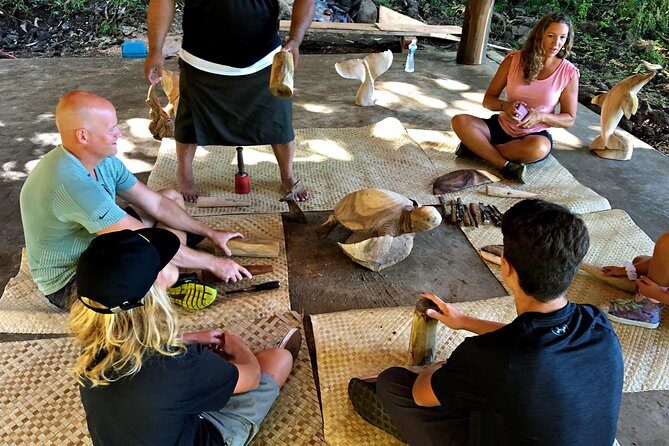
Your experience starts at 77-6261 Mamalahoa Hwy, Holualoa, HI 96725, and ends back at the same meeting point. The stated duration is about 2 hours, so the pace stays focused—no half-day commitment, no wandering around for “context stops.”
Here’s how the time typically feels, based on how people describe the process:
Arrival and getting set up. You’ll meet at the property, then get oriented by the staff. Multiple people mention the receptionist as warm and friendly, which helps a lot when you arrive and you’re not sure where the entrance is.
Intro to carving and the tools. You get the tools and wood needed to carve your tiki. That included setup is a real value point because you don’t have to guess what kind of blanks, carving knives, or safety equipment you’ll need.
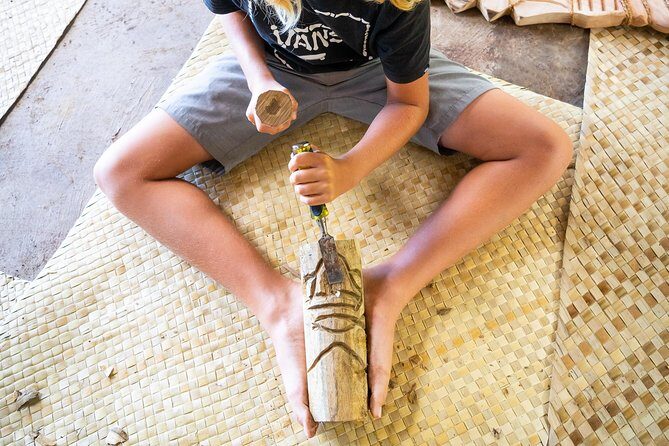
Carving your own tiki, step by step. Everyone carves a tiki, and the master carver works with you as you shape your piece. People emphasize that you do not need to be crafty. Expect guidance that’s more “make it work” than “try on your own and see what happens.”
Learning the meaning of symbols and choices. A key moment is that you choose the symbol for the top of your tiki, and the teacher carves that choice into your piece. That transforms the souvenir into something personal, and it also gives you a better understanding of what you’re carving.
Final touches and taking your tiki home. You’ll end with a finished keepsake you made. The experience is described as longer than expected by some groups, but the overall total time stays in that roughly 2-hour window.
If you’re planning your day, I’d think of this as a “core experience” slot. It’s one of those activities where you’ll want to be mentally available—carving doesn’t mix well with sprinting to your next stop five minutes later.
Wood Quality, Tools, and the Keepsake You’ll Actually Want
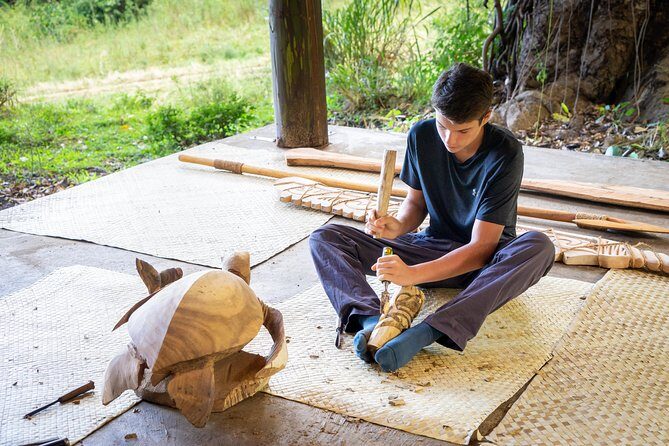
The program uses top quality wood grown locally on the Big Island, which is a nice upgrade from the generic “souvenir shop tiki.” That matters because good wood carves more cleanly, and it also feels more connected to the place you’re visiting.
Tools and wood are included, so your main job is showing up and following instructions. Still, there are a couple practical points to plan around.
Plan for weight and travel
Many people mention that the finished tiki pieces weigh about 7 pounds each. That’s not huge compared to a big statue, but it is enough that you should think about luggage weight if you’re flying home. One traveler also shared that TSA unpacked their tiki in carry-on because they didn’t recognize what it was.
So, for your own sanity:
- If you can, pack like it is a fragile artifact, not a casual bag item.
- If you’re checking a bag, pad it well.
- If you’re using carry-on, expect security to possibly inspect it.





Pack your patience, not your tool belt
Carving is hands-on, and the listing notes you should have a moderate physical fitness level. That likely means you’ll be using your hands and sitting or standing for a while. If you have limited grip strength or trouble with fine motor work, you might want to think about whether you’ll feel comfortable using carving tools safely and steadily.
Small Group Size in Holualoa: The Real Value for Families and Couples
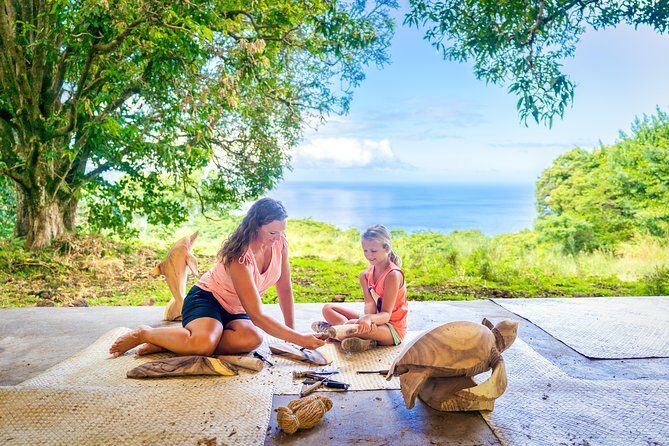
This is capped at 8 travelers, and that’s one of the most praised parts of the experience. With small groups, the teacher can give feedback to each person without time pressure, which is what helps beginners succeed.
Families seem to love this format. People describe Mani as extremely patient with kids aged 12 to 14, and others mention how guided the process is for non-crafters. If you’re traveling with teens who want an activity that feels meaningful—not just a “sit and watch” museum moment—this fits well.
Couples like it too, mostly because you end up with matching memories that aren’t the same as everyone else’s vacation photos. When both people carve a tiki and choose a symbol, you’re bringing home a pair of stories you made, not just items you bought.
There’s also a calm, scenic side to it. Reviews repeatedly mention the location and scenery as stunning and relaxing. That calm matters for a craft workshop. It gives you time to ask questions and adjust your approach when something doesn’t look right yet.
Finding the Entrance: A Small Logistical Headache
Here’s the one snag that keeps showing up: the entrance can be hard to find. People say it’s worth the trouble, but the “where do we go?” moment costs time if you arrive close to the start of your session.
So I’d do this:
- Build in buffer time when you’re heading out.
- Use the meeting address you have—77-6261 Mamalahoa Hwy—and plan to arrive early enough to park and ask.
The good news is that once you’re in, the atmosphere is described as welcoming, and the staff helps get you started smoothly.
Price and Value: $242.40 for 2 Hours of Craft You Own
At $242.40 per person for about 2 hours, this isn’t a cheap “try something” activity. But the value adds up in a few ways that make the math feel fair if you want an actual keepsake.
First, you get materials included: tools and wood are provided. You’re not paying for a lecture. You’re paying for instruction and a project you complete.
Second, you’re taking home an object you made with a personal symbol. Many souvenirs are decorative, but they don’t carry the meaning you get from choosing and carving a symbol yourself.
Third, the instruction appears highly supportive. People describe the teacher fixing things and making sure everyone succeeds. That level of attention is hard to replicate in higher-capacity workshops.
Also, you’re getting the cultural context with a real teacher tied to Tonga’s carving lineage. That’s worth something, because you’re not learning from a generic script—you’re learning in the craft language, hands-on, with meaning included.
If your budget is tight, you might compare it to buying a carved piece in a shop. But if you care about experience quality and you want a souvenir you can say I made, this is in the category of experiences that justify its price.
Weather, Timing, and How to Choose Morning vs Afternoon
The experience requires good weather. If it’s canceled due to poor weather, you’ll be offered a different date or a full refund. That’s important on the Big Island, because sudden conditions can change plans.
As for timing, you can choose either morning or afternoon. Pick based on your day and your heat tolerance. Carving with tools can take focus and can feel warm depending on where you’re working. One review even suggests adding water to help keep people hydrated, which is a hint that comfort matters during your session.
If you tend to run warm, aim for the part of the day where you feel freshest. Bring what you can for comfort (and if you have a refill bottle, that’s a sensible idea).
Who Should Book (and Who Might Skip This One)
This experience is best for:
- Couples who want a hands-on memory with a meaningful keepsake.
- Families with kids old enough to follow instructions and enjoy craft.
- Anyone who likes learning through making, not through listening.
You might reconsider if:
- You have trouble with fine motor tasks or long periods of sitting/hand use, since carving takes physical coordination.
- You strongly prefer low-logistics activities and don’t want any navigation challenge (the entrance can be tricky).
- You’re not willing to deal with weight planning for the tiki piece, since many come in around 7 pounds each.
If you love authentic cultural crafts and you want a souvenir that isn’t mass-made, you’ll probably feel like this was money well spent.
Should You Book This Polynesian Tiki Carving in Kona?
If you want a vacation day that ends with something you truly made, yes—book it. The biggest reasons are small-group attention, hands-on carving for everyone, and the chance to work with Mani and learn the cultural meaning behind what you’re carving.
Do book it with two practical expectations:
1) Give yourself extra time to find the entrance.
2) Plan for the tiki’s weight in your travel home.
If that fits your style, this is the kind of Kona experience that sticks—because you aren’t just passing through. You’re leaving with a piece of the islands you helped shape.
FAQ
How long is the Polynesian Cultural Carving Experience in Kona?
It runs for about 2 hours (approx.).
Where does the experience meet, and where does it end?
It starts at 77-6261 Mamalahoa Hwy, Holualoa, HI 96725, USA, and ends back at the same meeting point.
What is the group size limit?
The maximum group size is 8 travelers.
What is included in the price?
Tools and wood to carve your tiki are included.
Is the tour offered in English, and can I choose a time of day?
Yes, it is offered in English, and you can choose either a morning or afternoon tour.
What if weather is bad?
This experience requires good weather. If it’s canceled due to poor weather, you’ll be offered a different date or a full refund.