REVIEW · BIG ISLAND OF HAWAII
Hawaii Volcanoes National Park Experience from Maui
Book on Viator →Operated by Hawaii Island Experiences, LLC · Bookable on Viator
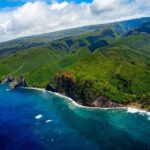
Firelight on the Big Island in one day. This tour strings together an inter-island flight from Maui with major stops that build up to Hawaii Volcanoes National Park and the kind of heat-you-can-feel geology you don’t see anywhere else.
I really like the variety: you get coffee-farm views in Kona country, a short nature walk in Manuka State Wayside Park, and then that classic Punaluʻu black sand beach stop with a chance to see green sea turtles. I also like that the group is limited to a maximum of 22, and you travel with a guide who shares local context during the drive—one guide experience has even included Melvin (Mel).
The main drawback to plan for is the pace and conditions. It’s a long day, and at higher elevations the weather can swing fast—plus volcanic gases can be an issue if you have respiratory problems, so bring layers and take safety prompts seriously.
In This Review
- Key things I’d focus on before you go
- Price and logistics: what your $589.99 really buys
- How the Maui-to-Big-Island flight shapes the whole day
- Kona coffee country: Greenwell Farms as a calm warm-up
- Manuka State Wayside Park: a short walk that explains the island
- Punaluʻu Bake Shop: lunch done right (and where to expect the best bites)
- Punaluʻu Black Sand Beach: the sea turtle chance
- Hawaii Volcanoes National Park: where the day turns hot and real
- Halemaʻumaʻu Crater: the molten glow moment
- Kīlauea Iki Rainforest Lookout: contrast matters
- Thurston Lava Tube: walk through a tunnel made by lava
- Active steam vents: the smell and heat you can’t forget
- Mauna Kea Access Road and the Kohala Coast: big altitude changes and big views
- Mauna Kea Access Road: steep, windy, colder as you climb
- Kohala Coast: drier air and scenic stopping points
- Hilo in one day: museums, gardens, and tsunami memory
- What it’s like to ride all day: comfort, walking, and cell limits
- Group size, guide style, and how to get the most out of it
- Who this tour is best for (and who should pick something else)
- Should you book this Maui-to-Big-Island volcano day trip?
- FAQ
- How long is the tour?
- What’s included in the price?
- Where do I meet on arrival in Kona?
- Are meals included?
- Is there a chance to see sea turtles?
- What should I pack and wear?
- Can I cancel and get a refund?
Key things I’d focus on before you go
- Round-trip airfare from Kahului to Kona is included, so you’re not doing extra booking gymnastics.
- Max 22 travelers means you should get a more personal feel than big bus tours.
- Greenwell Farms and Kona coffee country add a slower, human scale before the volcano intensity.
- Punaluʻu Bake Shop lunch stop is timed for food you can actually buy, and it can be your best chance to eat.
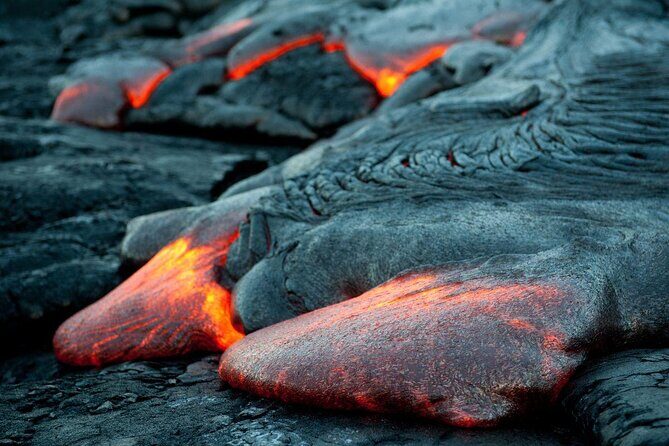
- Hawaii Volcanoes National Park hits multiple zones: Halemaʻumaʻu Crater, Kīlauea Iki lookout, Thurston Lava Tube, and steam vents.
- Mauna Kea Access Road is a big temperature change day—bring layers, even if Maui is warm.
Price and logistics: what your $589.99 really buys
At $589.99 per person, this isn’t a cheap day trip. The value comes from the fact that the price wraps up the inter-island flying piece and several paid experiences in one package.
Here’s why that matters. Inter-island flights on their own can eat up time and hassle—especially when your schedule is tight and you want to maximize daylight on the Big Island. This tour’s structure solves that problem by building the day around a flight into Kona International Airport with pickup details ready to go (meet at the lot behind Alaska Baggage claim B-2).
You also get:
- An air-conditioned vehicle for the long drives
- Narration from a local guide during the ride
- Hawaii Volcanoes National Park admission
- Entry tickets provided by your driver
The trade-off is that you’re committing to an 8 to 10 hour day. That’s fine if you like action and stops, but it’s not a “relax and wander” style day. Plan for a full schedule with limited meal flexibility.
Other Volcanoes National Park tours in Big Island of Hawaii


How the Maui-to-Big-Island flight shapes the whole day
This tour runs from Maui by way of Kona, which changes how the day feels. Instead of spending half the day traveling by car and ferry, you land in Kona, get your vehicle, and start stacking stops.
Start time is 8:00 am at Kona International Airport, and pickup is arranged if you fly into Kona. That early start is one reason the itinerary can fit in multiple environments—coffee slopes, black sand coastline, then volcano terrain, then back toward Hilo and the evening return.
A practical note: this kind of schedule leaves little room for delays. If weather messes with flights or higher-elevation conditions slow things down, you’ll still be on the clock. If you’re someone who gets stressed by strict timing, you may find this day long.
Kona coffee country: Greenwell Farms as a calm warm-up
You start with Greenwell Farms in the Kona region, on the slopes of Mauna Loa. It’s one of the oldest Kona coffee producers, with roots going back to 1850, and it’s known for the way the land and climate shape the flavor.
Why this stop works for most people:
- It’s a breather before the volcano intensity
- You get a sense of how volcanic soil shows up in everyday life
- The timing is short (about 30 minutes), so it doesn’t eat the whole day
You’ll also learn what makes Kona coffee conditions special: sunny mornings, cloud-covered afternoons, consistent rainfall, and volcanic soil. Even if you don’t buy coffee, the setting helps you understand what you’re actually traveling through.
Manuka State Wayside Park: a short walk that explains the island
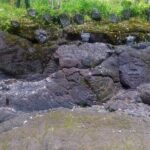
Next up is Manuka State Wayside Park, a 13-acre stop along Hawaii Belt Road (Highway 11). You get around 30 minutes here, including the 2-mile Manuka Nature Trail.
This is a slower-feeling stop compared with the major attractions. It’s also useful because it adds ecology and geology to the day, not just photo ops. The area mixes wet and dry forest ecosystems, so you see how conditions shift with elevation and exposure.
What I like about this kind of stop on an all-day tour:
- It gives you native Hawaiian plant and wildlife context
- It reminds you that the Big Island isn’t only volcano “spectacle”
- It’s a chance to stretch your legs on a defined trail before the more demanding walking at volcano sites
Practical consideration: 2 miles sounds easy, but it’s on uneven ground and you’re wearing volcanic-terrain shoes anyway. If your feet tire easily, pace yourself.
Punaluʻu Bake Shop: lunch done right (and where to expect the best bites)
At Punaluʻu Bake Shop (about 30 minutes), you’ll get the southern U.S. bakery claim and a lineup of Hawaiian sweet breads in flavors like taro, guava, and mango.
This stop matters because meals are your responsibility. So when a tour includes a lunch stop that’s timed into the schedule, it can save you from scrambling later. The bakery also has a garden and a gift shop, which makes the wait feel less like waiting.
Important for planning: bring cash. The tour notes that roadside stands and local shops can be cash-only, and that’s often true around places like this. Lunch options you can expect here include sourdough sandwiches, Kalbi beef, and Hawaiian plate lunches, plus baked treats.
If you’re the type who gets hungry quickly on long days, I’d treat this stop as your main food moment. In at least one guide-driven day, people ended up wishing they’d eaten sooner or brought breakfast snacks. You don’t want to be stuck waiting when the timing still has a lot left.



Punaluʻu Black Sand Beach: the sea turtle chance
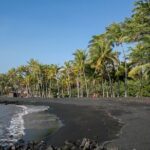
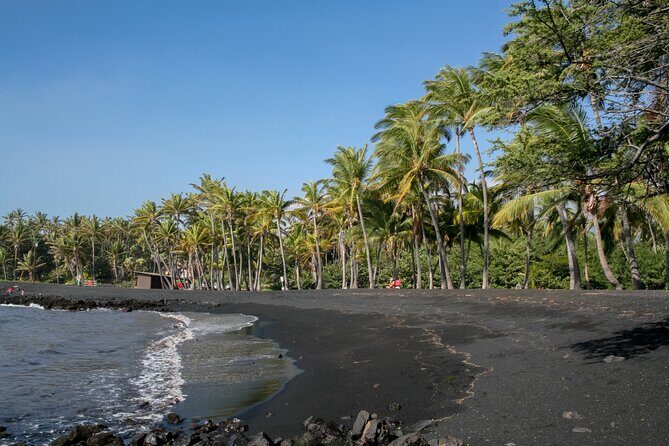
Then comes Punaluʻu Black Sand Beach, one of the most iconic visuals on the island. You’ll have about 30 minutes to walk the beach and take in the ocean view.
Here’s what to realistically expect:
- Black sand is dramatic and photogenic
- There’s a chance to see the native Hawaiian green sea turtle
That word choice is key. A turtle sighting isn’t guaranteed, but the beach is a real place where turtles are known to surface and rest. If you go in expecting possibility rather than certainty, you’ll be happier—and you’ll spend your time watching the right areas.
Hawaii Volcanoes National Park: where the day turns hot and real

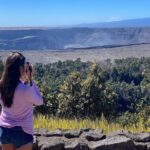
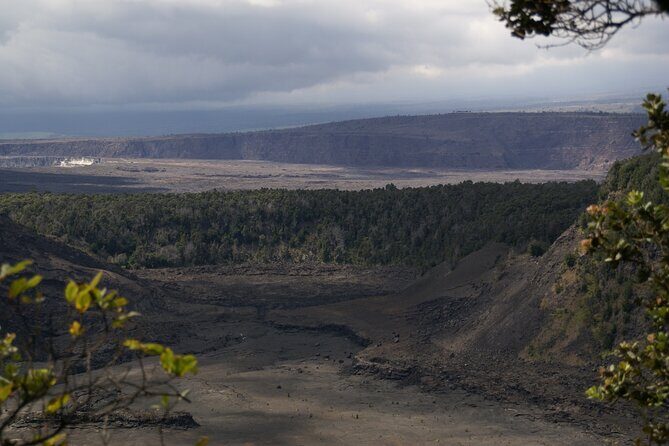
This is the heart of the trip, about 2 hours at Hawaii Volcanoes National Park. Starting at the visitor center, you get park context—geology and history—before heading out to the main viewpoints and stops.
The tour’s listed highlights are smart because they cover different types of volcanic activity and terrain, not just one viewpoint.
Halemaʻumaʻu Crater: the molten glow moment
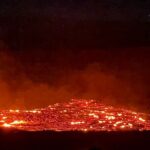
You’ll go to Halemaʻumaʻu Crater and see the awe-inspiring glow of molten lava when timing and conditions allow. This is the “wow” stop.
Timing note: the tour emphasizes that if you time it right, you’ll catch the island’s orange fiery glow. That’s not something you can control as a traveler, but it’s one of the reasons to pick this specific structure rather than a generic park visit.
Kīlauea Iki Rainforest Lookout: contrast matters
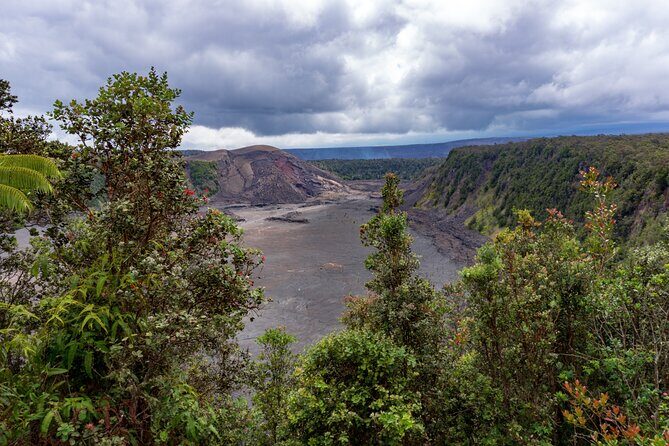
Next is the Kīlauea Iki Rainforest Lookout. This is a striking contrast after the more dramatic crater views. You see a lush rainforest around a massive crater, and there’s a trail leading through remnants of a past eruption.
This stop helps you understand how volcanic landscapes become living ecosystems. It’s not just heat—it’s change.
Thurston Lava Tube: walk through a tunnel made by lava
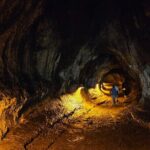
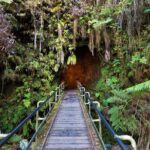
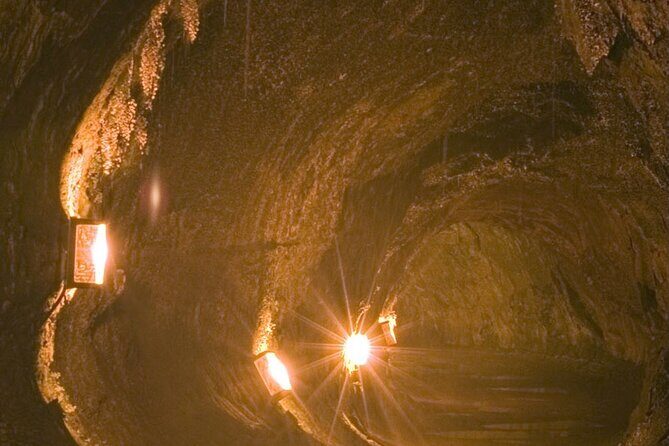
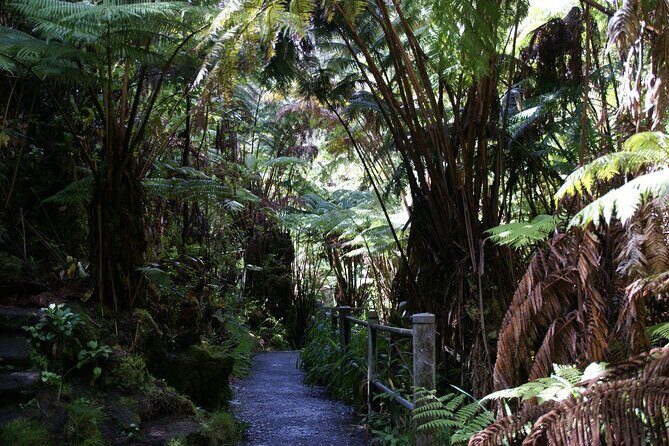
You’ll visit Thurston Lava Tube, a natural tunnel formed by flowing lava. If you’ve only seen volcanoes from a distance, this type of stop gives you scale. You can also feel the difference in air and temperature inside and near the tube.
Active steam vents: the smell and heat you can’t forget
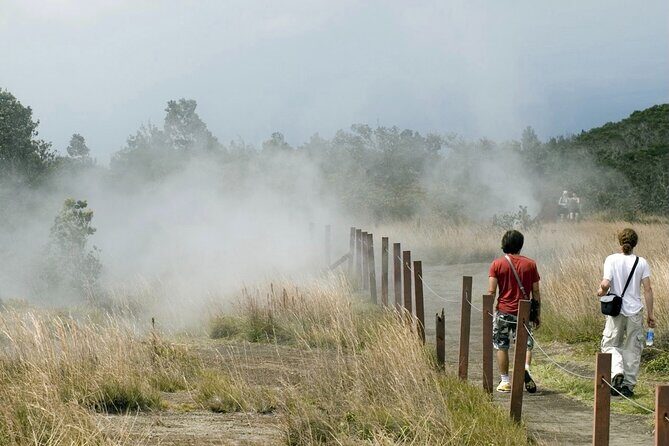
Finally, you’ll head to active steam vents, where heat rises from the earth. This is where volcano geology becomes sensory. It’s also where the tour’s safety notes become extra important.
Volcanic hazards can include volcanic gases (like sulfur dioxide). If you have asthma or other respiratory issues, don’t ignore that note. Follow the guides and stay on marked trails.
Mauna Kea Access Road and the Kohala Coast: big altitude changes and big views
After the volcano focus, you get two additional environment shifts.
Mauna Kea Access Road: steep, windy, colder as you climb
Mauna Kea Access Road is described as steep and winding, leading up toward the summit of Hawaii’s tallest volcano. As you climb, you travel through different climates—from grassy plains to barren, volcanic terrain.
The tour also notes that air gets thinner and temperatures drop significantly. That’s why you’ll see the same advice repeated for this kind of day: bring layers, ideally a rain jacket too. Even if the Maui side is sunny, it can feel cold and wet up on higher ground.
Kohala Coast: drier air and scenic stopping points
Then there’s the Kohala Coast segment. It’s known for beautiful beaches, scenic views, and luxury resorts, and it’s generally drier than other parts of the island.
This part of the day gives you a break from crater-and-lava focus. It’s also useful for framing the island as a whole: volcanoes aren’t only about heat and rock; they also shape where coastlines, rainfall patterns, and vegetation develop.
Hilo in one day: museums, gardens, and tsunami memory
The route also brings you to Hilo, which is known for a mix of history, culture, and public spaces. You’ll get stops tied to:
- The Lyman Museum
- The Hilo Historic District
- The Pacific Tsunami Museum
- Liliuokalani Gardens
- The Hilo Farmers Market (not historical, but a lively local hub)
If you care about how people adapt to living on an active island, the combination of museums and tsunami education is a meaningful pairing with the volcano time earlier in the day.
Practical reality: you can’t spend hours at each place in a schedule like this. So treat Hilo as a tasting menu. The value is in seeing several key anchors in a limited time window.
What it’s like to ride all day: comfort, walking, and cell limits
This is a day that mixes vehicle time and short walks. The vehicle is air-conditioned, which helps on travel legs, but you still need to be ready for humidity changes and uneven ground.
Wear:
- Comfortable, closed-toe shoes for uneven and potentially sharp volcanic terrain (flip-flops or sandals aren’t recommended)
- Layers, including a rain jacket, because weather can change quickly at higher elevations
Bring:
- Water and snacks (especially because services in the park can be limited)
- Sunscreen and a hat
Also plan around limited cell service. The tour warns that cell phone service can be limited or nonexistent in many parts of the park. Download anything you need ahead of time, and don’t rely on last-minute map fixes while you’re moving.
Group size, guide style, and how to get the most out of it
The tour runs with a maximum of 22 travelers, which changes the experience. With fewer people, it’s easier to hear the guide narration and get context while you’re on the move.
One guide note that comes through clearly: the stories are local. In the example guide experience, Melvin (Mel) is a native Hawaiian and shared history and culture in a way that made the drive between stops feel like part of the tour, not dead time.
Tip for maximizing the value: ask questions as you’re driving. If you’re trying to understand what you’re seeing—like how volcanic soil affects coffee, or why steam vents smell the way they do—that’s when the guide can connect the dots fastest.
If you’d like, cash tips are appreciated.
Who this tour is best for (and who should pick something else)
This one-day plan is a strong match if you:
- Want a big sweep of the Big Island without adding your own car or extra hotel days
- Like guided context, especially around geology and culture
- Can handle a long day with scheduled stops
- Want a real shot at the fiery glow moment in the Volcanoes National Park
You may want to pass or adjust expectations if you:
- Have respiratory issues and are sensitive to volcanic gases
- Hate rushed timing and want lots of unplanned downtime
- Prefer a slower pace with more time at each site
Should you book this Maui-to-Big-Island volcano day trip?
If your dream is a well-paced “greatest hits” day—coffee country, black sand beach, and multiple Volcanoes National Park stops—this is the kind of tour that makes sense. The inter-island flight included piece is the real differentiator; it lets you fit the Big Island into a single day without fighting logistics.
I’d book it if you can follow the practical tips: pack layers, wear sturdy shoes, and bring snacks so you’re not stuck hungry between stops. If you’re concerned about volcanic gases, talk to your doctor first and be honest with yourself about your sensitivity to sulfur odors and steam.
Bottom line: it’s a packed day with real payoff, especially at Hawaii Volcanoes National Park—provided you’re ready for the pace and the cool-to-cold weather swings.
FAQ
How long is the tour?
It runs about 8 to 10 hours.
What’s included in the price?
You get round-trip airfare from Kahului to Kona International Airport, Hawaii Volcanoes National Park admission, an air-conditioned vehicle, and narration from a local guide. Entry tickets to attractions are provided by your driver.
Where do I meet on arrival in Kona?
Meet at the lot behind Alaska Baggage claim B-2 at Kona International Airport. The tour starts at 8:00 am.
Are meals included?
No. Meals are at your own expense. The tour includes a lunch stop at Punaluʻu Bake Shop where you can buy food.
Is there a chance to see sea turtles?
Yes. You’ll visit Punaluʻu Black Sand Beach and there’s a chance to see native Hawaiian green sea turtles.
What should I pack and wear?
Bring layers and a rain jacket, plus water, snacks, sunscreen, and a hat. Wear comfortable closed-toe shoes suitable for uneven and potentially sharp volcanic terrain.
Can I cancel and get a refund?
You can cancel up to 24 hours in advance for a full refund.