REVIEW · BIG ISLAND OF HAWAII
Baumkuchen Campfire Baking Class
Book on Viator →Operated by Baumkuchen Farm · Bookable on Viator
Tree-cake meets a campfire. On the Big Island, this class turns campfire baking into a hands-on lesson, with you making a Baumstriezel (the granddaddy of Baumkuchen) stick by stick over real heat. Before the dough ever touches flame, you get tasting samples and a simple explanation of how this dessert fits into Hawaiian and German connections.
What I love is the mix of fresh samples and build-your-own payoff. You’re not just watching from afar—you wrap dough around a stick, grill it over the fire, then finish with toppings like butter and cinnamon sugar right when it’s warm. One thing to consider: you’ll be baking outdoors, and even with a shelter, rain and wind can change how messy the process feels and how long it takes to reach that perfect warm, done-through stage.
In This Review
- Why This Baumkuchen Class Feels Different
- Key Things to Know Before You Go
- Entering The Baumstriezel Rhythm: What Happens During the Class
- 1) Meet, get oriented, and taste first
- 2) Dough on a stick: the core technique
- 3) Butter, cinnamon sugar, and warm eating
- The Hawaiian-German Story Isn’t Just a Sidebar
- Rain-Proof Reality: How the Setup Works in Real Weather
- Practical tip
- Price and Value: What $65 Buys You on the Big Island
- Group Size, Language, and the Pace You’ll Likely Feel
- Who This Works Best For
- Service animals
- Getting the Most Out of Your Campfire Session
- A Quick Note on Location and Timing
- Should You Book This Baumkuchen Campfire Baking Class?
- FAQ
- FAQ
- How long is the Baumkuchen Campfire Baking Class?
- Where does the class meet?
- What does the class include?
- Will the class run if it rains?
- How much does it cost?
- What language is the class offered in?
- How big is the group?
- Are mobile tickets used?
- Is there a cancellation option if my plans change?
Why This Baumkuchen Class Feels Different
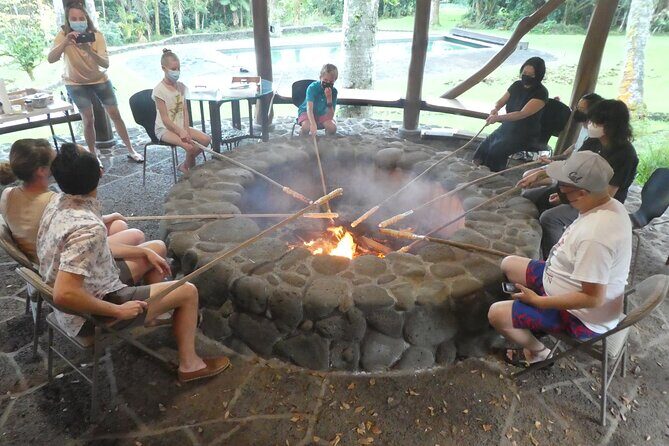
This is one of those food experiences where the focus stays on the craft. You’ll learn the basic rhythm of making a thin-layer cake over an open flame, and you’ll eat it while it’s still warm enough to smell like a freshly baked snack stand—only this one comes with an actual story.
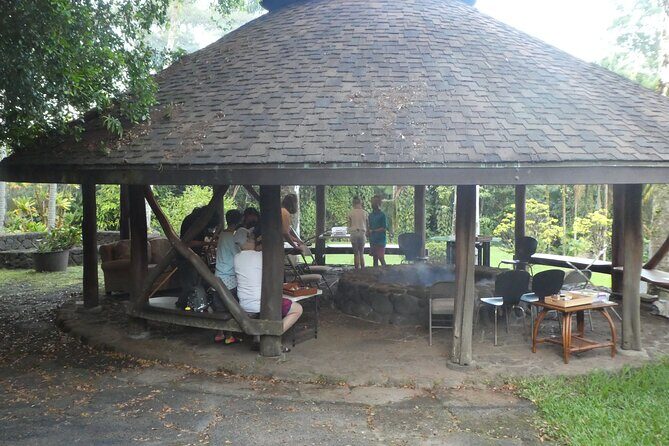
The setting also matters. The campfire setup sits under a rain pavilion, so the fires roar rain or shine. That small detail turns a weather worry into part of the adventure, instead of a reason to cancel plans.
And the class keeps the atmosphere practical. It’s small (max 20 people), in English, with a mobile ticket, so it’s easy to show up, get oriented, and start baking without waiting through a long lecture.
Key Things to Know Before You Go
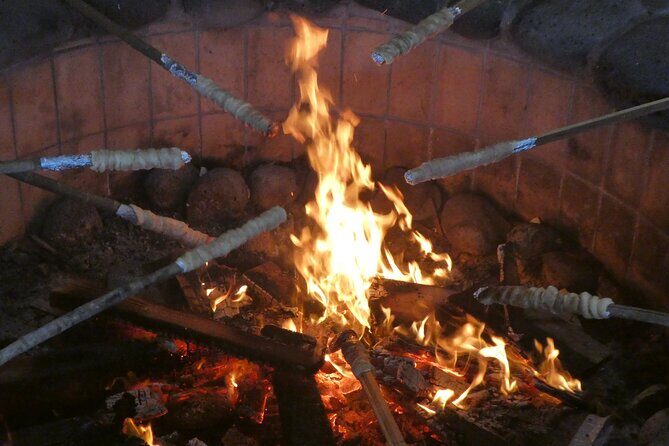
- You bake the Baumstriezel yourself by wrapping dough around a stick and grilling over an open campfire.
- A rain pavilion protects the experience so the class runs even when the weather is wet.
- Tastings come before you start cooking, so you can learn by tasting as you go.
- You’ll get the Hawaiian-German connection story as part of the explanation.
- Finish with simple toppings like butter and cinnamon sugar, plus options like chocolate dipping sauce based on what you’ll see during tastings.
- It’s compact at about 1 hour 30 minutes, which makes it a solid add-on to an afternoon.
Other cooking classes in Big Island of Hawaii
Entering The Baumstriezel Rhythm: What Happens During the Class
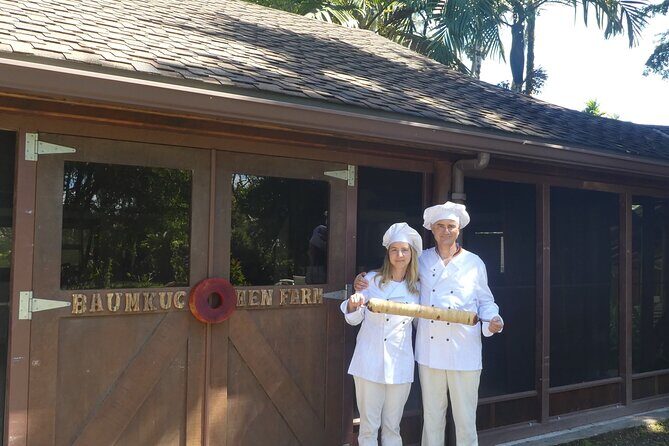
Think of this class as a mini workshop with one clear goal: build a layered Baumstriezel over fire and eat it warm.
1) Meet, get oriented, and taste first
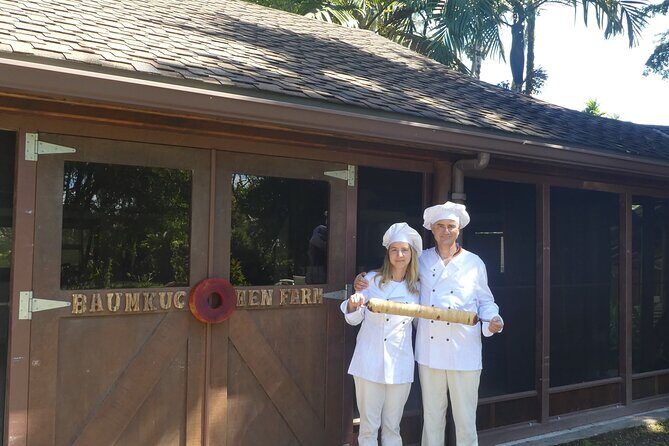
When you arrive at 27-714 Ka’ie’ie Rd in Papaikou, you’ll get the intro before hands-on work begins. The hosts explain what Baumkuchen is and how the familiar layered look relates to the method—thin layers cooked gradually, built up over time.
Then you’ll taste samples. This matters more than it sounds. If you’ve never had Baumkuchen, tasting early helps you understand what you’re aiming for—sweet, baked, and rich without being cloying. It also gives you an immediate reward while you’re still learning the steps.
2) Dough on a stick: the core technique
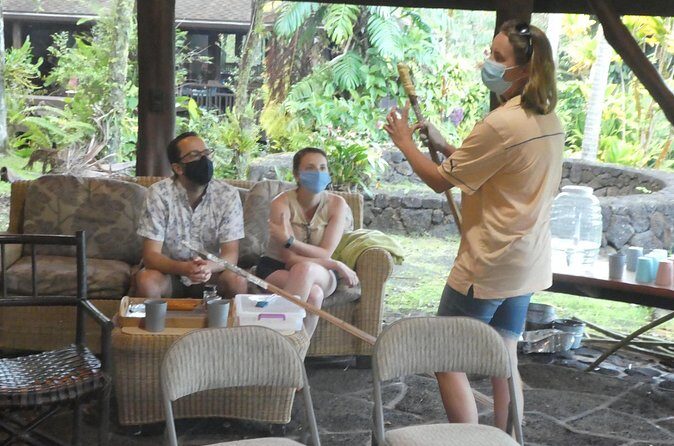
Next comes the main activity: you’ll wrap Baumstriezel dough around a stick. The goal is an even wrap, because even thickness cooks more consistently over flame.
Once the dough is wrapped, you move into grilling. This is the part that makes the experience feel real. You’re not turning a knob or pressing a button—you’re working with heat from an open fire and managing the process as the cake cooks.
3) Butter, cinnamon sugar, and warm eating
When your Baumstriezel is ready, the class shifts to finishing and eating. You can spread it with butter and add cinnamon sugar, then enjoy it warm right away.
This is where the class hits its sweet spot. Freshly baked Baumstriezel tastes different than something bagged and packaged. The warmth changes the aroma, softens the texture, and makes the sugar and butter feel like they belong together.
And based on what people have highlighted in past experiences, you might also see a chocolate dipping sauce as part of the treat spread. Even if chocolate isn’t your go-to, it’s nice to have options when you’re trying a dessert you’ve likely only seen in pictures.
A few more Big Island of Hawaii tours and experiences worth a look

The Hawaiian-German Story Isn’t Just a Sidebar
The class doesn’t treat the background like trivia. It actually connects the dessert to the broader Hawaiian and German relationship, which is part of what makes this more than a bake-and-go gimmick.
Here’s why I think that matters for you: food history is easy to skim past, but when you learn it in the same session where you’re making the food, it sticks. You’ll remember the lesson because your hands are involved. You’ll also be able to explain the dessert to friends later without sounding like you read a label.
It’s not a long lecture. It’s an explanation that fits the flow of the class—short, practical, and tied directly to what you’re doing.
Rain-Proof Reality: How the Setup Works in Real Weather
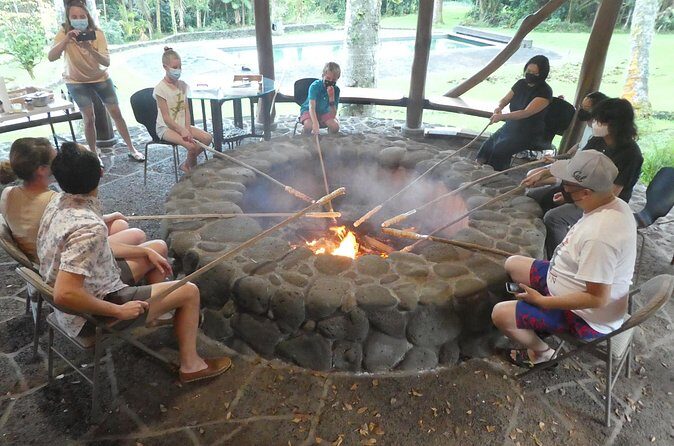
One of the smartest parts of this experience is the rain pavilion. The fires go rain or shine, so you’re not stuck in the weird limbo of waiting to see if it will dry out first.
That doesn’t mean rain never affects the experience. If it’s windy, you may feel it around the open-fire cooking. If it’s wet, you might notice the environment makes everything feel slightly more casual and outdoor-focused—think damp hands, a little extra care around where you place items, and a general need to dress for the elements.
Still, the pavilion is the difference between being miserable and being able to keep the class moving.
Practical tip
Wear shoes you don’t mind getting a little weathered. This is an outdoor fire activity on a farm setting, so comfortable grip and closed-toe protection help more than you might expect.
Price and Value: What $65 Buys You on the Big Island
$65 per person might sound steep if you compare it to a typical dessert tasting. But this isn’t only a sample session, and it’s not a guided walk through a bakery.
You’re paying for a real craft experience:
- Your own Baumstriezel over an open campfire
- Intro plus tastings before you bake
- Instruction and hands-on guidance
- A rain-ready setup that keeps the class running in less-than-perfect conditions
The value gets even better if you like experiences where you leave with something that actually feels handmade. Food can be a souvenir, but this is different—you make the cake yourself and eat it warm while it’s at its best.
Also, the class stays compact at about 1 hour 30 minutes, so you’re not losing half a day. On the Big Island, where scheduling depends on where you’ll be next, that time efficiency is part of the value.
Group Size, Language, and the Pace You’ll Likely Feel
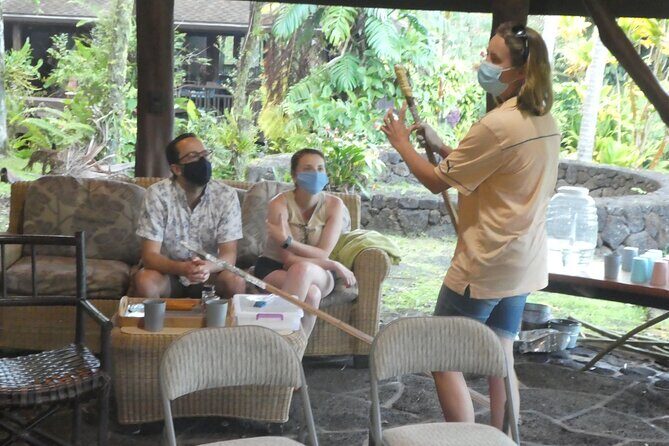
The class caps at 20 people. That matters because it keeps the process from dragging. In small settings, instructors can correct wrap technique and answer questions while you’re actively working.
It’s also offered in English, and confirmation is sent at booking time. You’ll use a mobile ticket, which usually makes arrival smoother.
You should expect an active pace: taste, learn, wrap and grill, finish with toppings, eat. There’s no sense of being stuck in one place for a long time.
Who This Works Best For
This class is a strong match if you:
- Want a hands-on food experience instead of passive tasting
- Like learning how a dessert technique works, not just what it tastes like
- Enjoy cultural food stories, especially where German influence connects to Hawaiian life
- Are looking for a practical afternoon activity that fits around other plans
It’s also a good choice for couples and small groups who want something memorable without booking a multi-hour tour.
If you’re someone who hates outdoor fire settings or strongly dislikes rain-weather environments, it may feel more challenging. But the pavilion is designed to keep things comfortable enough to keep baking.
Service animals
Service animals are allowed, which can be helpful if you travel with one.
Getting the Most Out of Your Campfire Session
Here’s how to set yourself up for success when the stick is in your hands and the heat is real.
- Arrive a bit early so you can settle in before instructions start.
- Pay attention to even wrapping. The outside look and even cooking are tied to how the dough is applied.
- Plan to eat soon after finishing. Warm Baumstriezel is the whole point.
- Be open to toppings. Butter and cinnamon sugar are a classic match, and chocolate dipping sauce may be part of what’s available during tastings.
A Quick Note on Location and Timing
The meeting point is at 27-714 Ka’ie’ie Rd, Papaikou, HI 96781, and the activity ends back at the same meeting point.
This class runs about 1 hour 30 minutes. Booking tends to happen in advance (on average, it’s booked about 78 days ahead), so if you’re visiting during peak season or a busy stretch, you’ll want to lock it in sooner rather than later.
If plans change, free cancellation is available up to 24 hours in advance for a full refund.
Should You Book This Baumkuchen Campfire Baking Class?
If you want a dessert experience with real participation, I’d book it. You get a full process—tasting, technique, campfire baking, and warm eating—while learning the Hawaiian-German connection that gives the dessert meaning beyond its taste.
It’s especially worth it if you’re the type who likes to learn one craft step at a time and then enjoy the results immediately. The rain pavilion also turns a possible weather problem into a managed part of the plan.
The main reason to hesitate is comfort with outdoor fire cooking in wet or windy conditions. Even with shelter, it’s still an open-air experience. If that sounds fine to you, this is one of the more memorable ways to spend an afternoon on the Big Island.
FAQ
FAQ
How long is the Baumkuchen Campfire Baking Class?
The class lasts about 1 hour 30 minutes (approx.).
Where does the class meet?
It meets at 27-714 Ka’ie’ie Rd, Papaikou, HI 96781, USA, and it ends back at the same meeting point.
What does the class include?
You’ll receive an introduction to Baumkuchen, tasting samples, and then bake a Baumstriezel (cake cooked on a stick) over an open campfire, with toppings to finish.
Will the class run if it rains?
Yes. There is a rain pavilion, and the fires are set up rain or shine.
How much does it cost?
The price is $65.00 per person.
What language is the class offered in?
The class is offered in English.
How big is the group?
This activity has a maximum of 20 travelers.
Are mobile tickets used?
Yes, the tour includes a mobile ticket, and you’ll receive confirmation at booking time.
Is there a cancellation option if my plans change?
You can cancel for free up to 24 hours in advance of the experience start time for a full refund. Changes within 24 hours aren’t accepted, based on local time.