REVIEW · BIG ISLAND OF HAWAII
Kona Surf Lesson in Kahaluu
Book on Viator →Operated by Ohana Surf Lessons · Bookable on Viator
Kahaluu is a friendly place to learn surf basics. This 2-hour Kona lesson takes you to a classic shoreline where you’ll practice fundamentals, learn ocean etiquette, and get real coaching with a small group. You also get a taste of Hawaiian coastal culture right where locals spend time.
I really like that the class is set up for first-timer success. You’ll be fitted with a foam top surfboard, reef walker surf shoes, and an SPF surf shirt, so you’re not scrambling for gear. I also love the attention you get from instructors, since the activity caps at 15 people and lessons are run like hands-on coaching, not a lecture.
One thing to keep in mind: Kona surf conditions can vary a lot day to day. On the wrong wave day, you might paddle farther for suitable surf or feel more challenged than you expected, even with a good instructor.
In This Review
- Key Things You’ll Notice Right Away
- Why Kahaluu Beach Park Works for Surf Lessons
- The 2-Hour Lesson Flow: What Happens From Start to Finish
- Gear Check: What’s Included and What It Means for You
- In the Water: Pop-Up, Etiquette, and Safety (Not Just Standing Up)
- Small-Group Coaching in Practice: Plenty of Attention, Even With Families
- Price and Value in Kona: When $169.99 Makes Sense
- Timing, Tide, and Wave Conditions: The Part You Can’t Control
- What to Bring (So Your Lesson Doesn’t Feel Like a Shopping Trip)
- Who Should Book This Kona Surf Lesson?
- Should You Book Ohana Surf Lessons in Kahaluu?
- FAQ
- Where is the Kona surf lesson meeting point?
- How long is the surf lesson?
- What surf gear is included?
- What do I need to bring myself?
- Is this a small group lesson?
- What language is the lesson taught in?
- Can I get a refund if plans change?
- Is this activity okay for someone with moderate fitness?
Key Things You’ll Notice Right Away
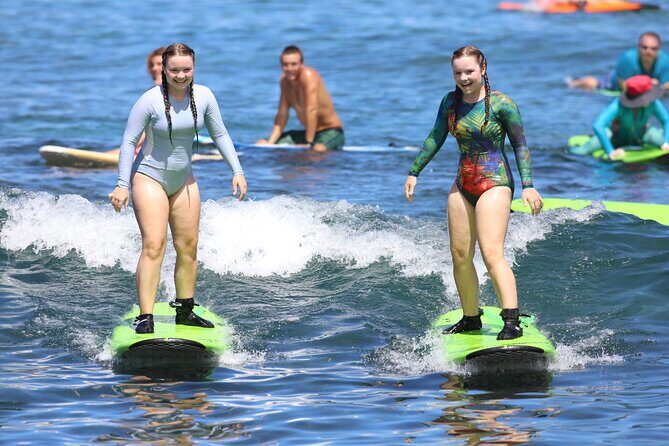
- Kahaluu Beach Park setting: a learning-friendly bay with ocean access built for beginners.
- Small-group coaching: up to 15 travelers, plus instructors working to keep eyes on everyone.
- All the important gear is provided: foam surfboard, reef walker shoes, and an SPF surf shirt.
- Lesson is built around technique and etiquette: pop-up basics, onshore instruction, and in-water safety.
- Multiple instructor styles (and names you’ll hear): lessons have included coaches like Koa, Brady, Andre, Carl, Molokai, Kaleo, Parker, Max, and Poa.
Why Kahaluu Beach Park Works for Surf Lessons
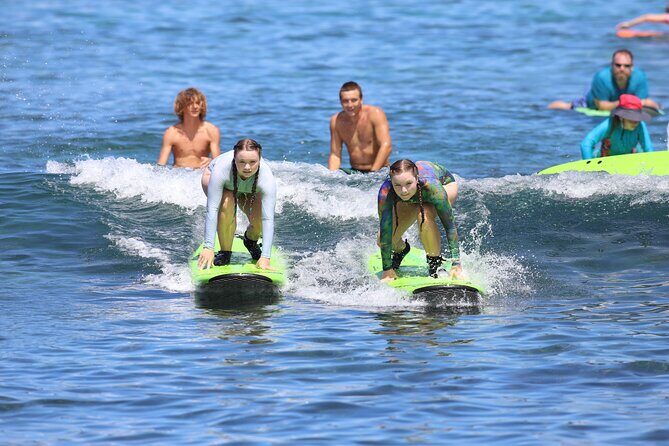
Kahaluu Beach Park sits in Kailua-Kona, and it’s known for being a practical spot to teach. For you, that matters because learning surf is mostly about getting repeat reps with the right kind of waves, not just standing on shore hoping for the best.
What I like about this location for a lesson is the overall feel: you’re at a public beach area where the ocean is the star, but the learning environment is controlled by the instructors and the lesson flow. In other words, you’re not left to figure out the beach rules on your own.
Also, Kahaluu is one of those places where you’ll see other ocean life nearby, and that changes the mood. Even when you’re waiting your turn, it doesn’t feel like dead time. One family even paired this with snorkeling nearby for the non-surfers, which is a great add-on if you’ve got mixed interests in your group.
A few more Big Island of Hawaii tours and experiences worth a look


The 2-Hour Lesson Flow: What Happens From Start to Finish
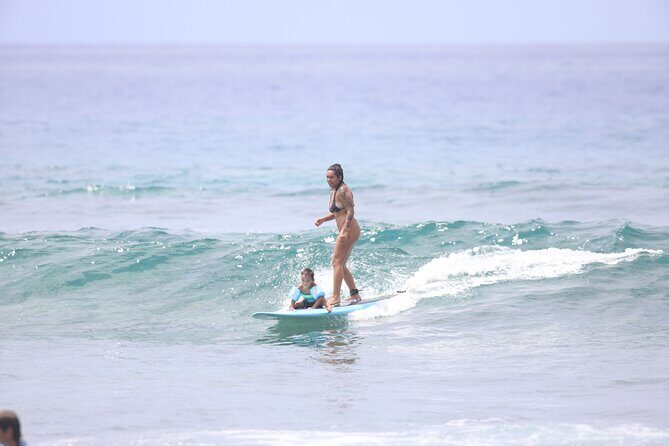
This is a 2-hour surf lesson, and the schedule is designed so you don’t burn the whole day just getting ready. The activity starts at Kahalu’u Beach Park (Ali‘i Dr) and ends back there.
Here’s the typical rhythm once you arrive:
First, you’ll get sized up for gear. You’ll be assigned a foam top surfboard, which is the beginner-friendly choice because it’s more buoyant and forgiving than a hard board. Then you’ll get reef walker surf shoes for foot protection and an SPF surf shirt. That means you can focus on learning instead of trying to improvise sun protection and safe footing.
Next comes the teaching block. Expect hands-on guidance covering:
- proper surfing technique
- pop-up method (from lying to standing)
- surf etiquette (how to move and when not to)
- a detailed onshore and in-water safety briefing
Then you go into the water to practice. The best part is that the lesson is not just “watch and hope.” Instructors coach you through the key movements and safety rules so you can catch waves safely and build confidence.
In a bunch of recent lessons, the vibe has been very “start in a success zone.” One instructor was praised for being patient and starting surfers in an area where they could actually stand up, not just struggle in the deep end right away.
Gear Check: What’s Included and What It Means for You
The gear list is one of the biggest value wins here. The lesson includes:
- foam top surfboard
- reef walker surf shoes
- SPF surf shirt
That trio is exactly what first-timers usually worry about. Surf shoes protect your feet so you can move over the shore without turning the experience into a game of “don’t step there.” And the SPF surf shirt is huge. Sunburn on day one of a Hawaii trip can wreck your energy for everything else. It’s also a practical layer for the kind of friction that can happen while learning.
Because this is included, you don’t have to pack a lot. You still need swimsuit basics, but you can travel lighter and avoid paying for gear rentals that might not fit right.
The one gear-related caution I’d flag comes from a review about beginner board sizing. The lesson is supposed to match you to a suitable board, but if you’re at the extremes of body weight, it’s worth being aware that having a correct-size beginner board can affect how quickly you progress.
In the Water: Pop-Up, Etiquette, and Safety (Not Just Standing Up)
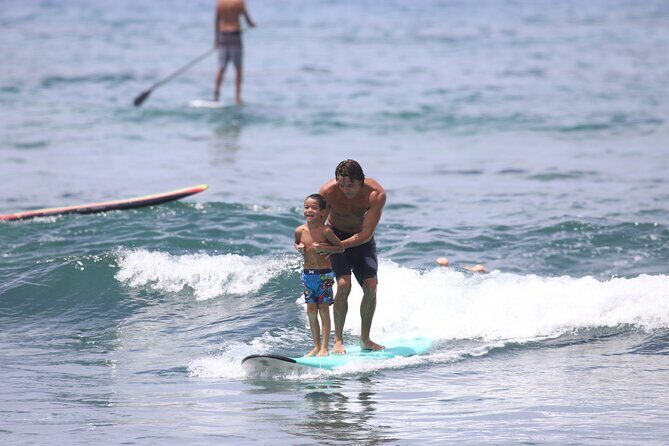
The lesson covers both the physical skills and the ocean rules. That’s what separates a fun surf outing from a scary one.
On the technique side, you’ll work the pop-up method. The pop-up is the move you practice over and over because it’s the bridge between lying on the board and actually riding. Most novices don’t fail from lack of willpower. They fail because they’re rushing the steps, bending the wrong way, or not getting their weight placed correctly. Having a coach correct that in real time makes a big difference.
Etiquette and safety matter just as much:
- where to wait and how to position your board
- when to paddle and when to hold back
- how to avoid interfering with other surfers’ paths
- safety guidance so you know what to do if things feel off
In multiple reviews, instructors were praised specifically for keeping people feeling safe while still getting them into good waves. Names that came up often include Carl, Kaleo, Molokai, Parker, Max, Poa, and Brady (among others). That’s a sign the teaching quality is consistent across different coaches, not dependent on just one star instructor.
One review also warned that conditions can be rough on certain days. That’s not a reason to skip the lesson, but it is a reminder that the ocean controls the schedule more than any company does. When conditions are challenging, instructors’ judgment is the real product you’re buying.
Small-Group Coaching in Practice: Plenty of Attention, Even With Families
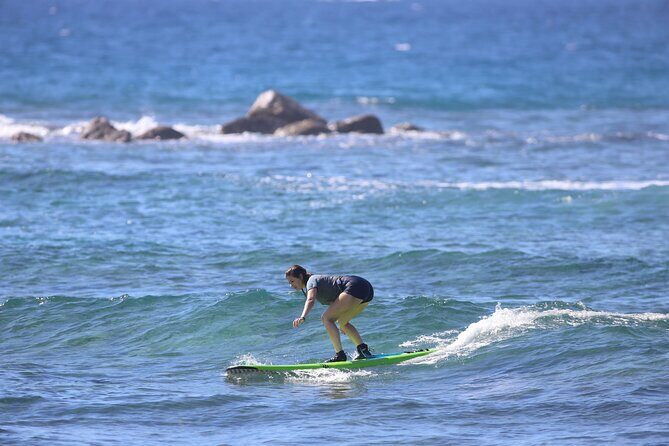
Even though this is billed as a small-group lesson, the real-life test is what it feels like when you’re in the lineup. The activity is limited to 15 travelers, and recent feedback mentions multiple instructors in the water to support different skill levels.
For you, that translates into:
- more frequent turns to try again
- quicker correction when your pop-up is off
- help if you get stuck or you’re unsure where to sit/paddle
One family review described having multiple instructors working with a group that included teens and adults, and they emphasized that someone stayed with the younger surfer the whole time. Another review said they were the first group out on the water and got lots of practice time, which is exactly what you want from a timed lesson.
That mix can be great if you’re traveling with kids or a group where not everyone is equally comfortable in the ocean. It also tends to work well for couples and solo travelers, because coaching doesn’t disappear once you’re standing on the beach.





Price and Value in Kona: When $169.99 Makes Sense
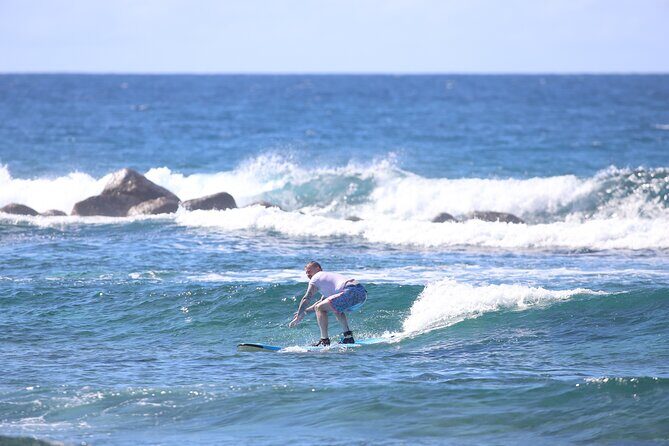
The price is $169.99 per person, and the question is whether it’s worth it versus renting a board or just going for a swim.
For me, the value logic here is simple:
- You’re getting coached instruction for 2 hours.
- You’re getting included surf gear (board, reef shoes, SPF surf shirt).
- You’re capped at 15 people, so the class is not a massive crowd where you only get tips once.
Surf lessons can feel pricey anywhere. Here, the included gear reduces the hidden extras. You still need to bring swimsuit and towel, but you aren’t paying to assemble the key items that protect you and keep the session comfortable.
Also, if you’re a first-time surfer, coaching usually beats trial-and-error. The fastest way to gain confidence is getting your technique corrected early, before you build bad habits.
If you already know how to stand and want a long session, you might feel the time is short. But if you want a strong beginner start and a safe introduction to surfing etiquette, this lesson is a solid match for your money.
Timing, Tide, and Wave Conditions: The Part You Can’t Control
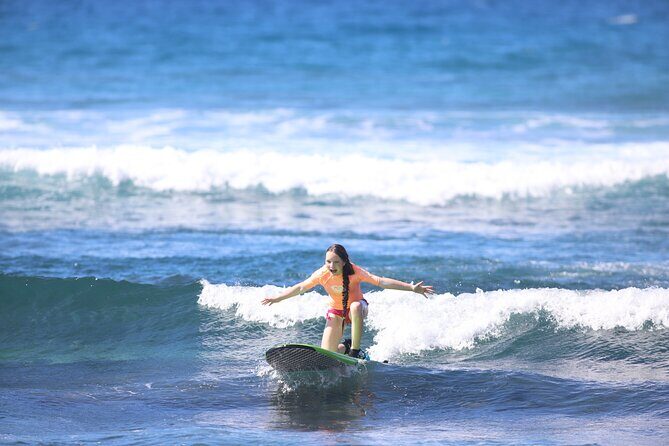
This lesson is tied to weather and ocean conditions. That means the “best day” for you could be different from the “best day” on paper.
One useful tip from a review: people had success going about an hour after low tide. That may not apply every day, but it’s a reminder to expect that timing and tide can affect wave shape and learning ease. Your instructors will make the call based on what the ocean is doing that day.
Also, Kona surf is not guaranteed every single moment. One review pointed out that swells can be few and that you might need to paddle out farther into Kahalu’u Bay to find rideable waves. If your expectations are realistic—some paddling, some waiting, some small wins—then this becomes a great learning experience.
On the other hand, if you’re scheduling this during a time when you want photos from shore, there’s a practical downside: one review said they had trouble getting good pictures from land. If you care about photos, consider bringing a waterproof case for your phone and plan that you’ll be more focused on learning than on filming the perfect shot.
What to Bring (So Your Lesson Doesn’t Feel Like a Shopping Trip)
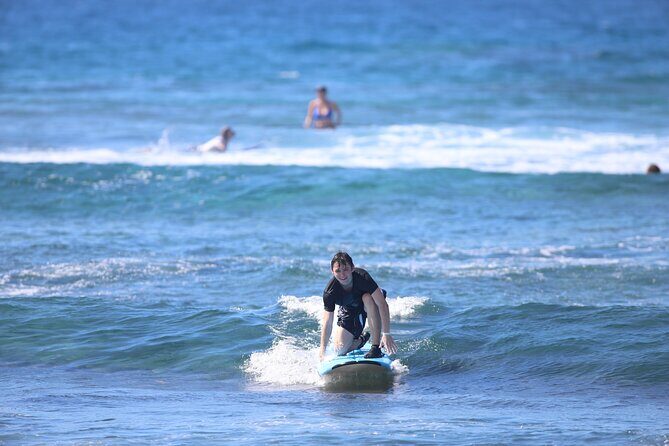
The lesson includes surf shoes, board, and an SPF surf shirt, so your packing list is mostly about what isn’t provided.
Bring:
- swimsuit
- towel
- sunscreen (not provided)
- gratuity (not included)
The moderate fitness note matters, too. You don’t need to be an athlete, but you should be comfortable paddling and getting in and out of the water during a 2-hour lesson.
If you’re traveling with kids or an older parent, it’s smart to think ahead about comfort. Reef walking shoes and coaching help, but you’re still in the ocean with water movement and sun. The better you arrive prepared, the more enjoyable the lesson feels.
Who Should Book This Kona Surf Lesson?
This lesson is a strong fit if:
- you’re new to surfing and want step-by-step coaching
- you want a small-group setup with plenty of instruction
- you prefer having key safety and comfort gear provided
- you’re traveling with family or a mixed-skill group
It’s especially good for couples who want a shared activity that feels distinctly Hawaiian and active without being a huge commitment. One reason families loved it is that instructors can adjust to different ages and skill levels, and they work to keep newer surfers comfortable while still getting them real wave time.
It may be less ideal if:
- you are extremely sensitive to crowds (even at 15 max, it’s still a lesson group)
- you want guaranteed big-wave riding (this is a learning environment, and wave quality can change)
- you expect the ocean to behave perfectly on your schedule
Should You Book Ohana Surf Lessons in Kahaluu?
If you want a beginner-friendly surf start in Kona, I’d book this. The best reasons are practical: gear is included, instruction is hands-on, and you’re supported by instructors who focus on safety and getting you standing. The fact that instructors like Carl, Kaleo, Molokai, Parker, and others have repeatedly shown up in positive feedback is a good sign you’re not relying on luck.
Before you pay, just adjust your mindset about wave conditions. Some days will be perfect; some days will be more “keep trying and learn anyway.” If you can roll with that, you’ll leave with real skill, not just a souvenir.
If you tell me your group ages, your surfing experience (none, once, a few times), and when you’re visiting, I can help you decide if this timing and tide approach is likely to be a good match.
FAQ
Where is the Kona surf lesson meeting point?
The lesson starts at Kahalu’u Beach Park on Ali‘i Dr in Kailua-Kona, HI 96740, and it ends back at the meeting point.
How long is the surf lesson?
The lesson runs about 2 hours total.
What surf gear is included?
You’ll get a foam top surfboard, reef walker surf shoes, and an SPF surf shirt.
What do I need to bring myself?
You’ll need a swimsuit, a towel, sunscreen, and you should plan for gratuity since it is not included.
Is this a small group lesson?
Yes. It’s a small group activity with a maximum of 15 travelers.
What language is the lesson taught in?
The lesson is offered in English.
Can I get a refund if plans change?
You can cancel for a full refund up to 24 hours before the experience’s start time. If you cancel within 24 hours, there is no refund.
Is this activity okay for someone with moderate fitness?
The tour notes that travelers should have a moderate physical fitness level. Service animals are allowed, and the meeting area is near public transportation.