REVIEW · BIG ISLAND OF HAWAII
Kona Haunted Hele Ghost Tour
Book on Viator →Operated by Big Island Ghost Tours · Bookable on Viator
Creepy corners, real stories. This Kona Haunted Hele Ghost Tour works because it pairs Hawaiian place history with nighttime mystery, and it keeps things small-group (you won’t be stuck in a crowd). I also like that the guides—names like Zach, Jenna, and Olivia show up in past outings—tend to be easy to talk to and good about answering questions.
One thing to consider: it’s not a jump-scare “theater” night. Some stops are outside only (Hulihe’e Palace and Mokuaikaua Church aren’t places you’ll go inside at night), so if you’re expecting lots of supernatural activity on command, you may feel a little let down.
In This Review
- Key highlights worth your evening
- Why Kona’s haunted stories fit an after-dark walk
- Meeting points, timing, and how the walk actually feels
- Stop 1: Kona Inn Shopping Village and the idea of red flats
- Stop 2: Hulihe‘e Palace and the lady in white question
- Stop 3: Mokuaikaua Church and the lava-rock church puzzle
- Stop 4: Ahuena Heiau and the Ku-to-Lono transformation
- Stop 5: Kamakahonu Beach, Kamehameha I, and a shoreline that holds stories
- Stop 6: Kailua Pier and missionary-era arrivals
- The paranormal angle: what’s likely to happen during a “haunted hele” night
- The sage smudge ending: a respectful way to close the loop
- Price value: what you get beyond the word haunted
- Who this Kona haunted walk suits best
- When you should manage expectations
- Should you book Kona Haunted Hele Ghost Tour
- FAQ
- How long is the Kona Haunted Hele Ghost Tour?
- Where does the tour start and end?
- What time does the tour begin?
- Is the tour in English?
- Will I be able to go inside Hulihe‘e Palace or Mokuaikaua Church?
- What happens if the weather is poor?
Key highlights worth your evening
- Small-group pacing with a max size listed around 10–15, so the storytelling has room to breathe
- Downtown Kona meeting point that’s easy to find after dinner: Kona Inn Shopping Village → finish at Kailua Pier
- Sacred-site itinerary that moves from heiau and royal grounds to the shoreline where Kamehameha I died
- A cleansing sage smudge to close out the tour at the end point booth
- Ghost-lore + history mix, with some groups using EVP/EMF/photo moments as part of the fun
Why Kona’s haunted stories fit an after-dark walk
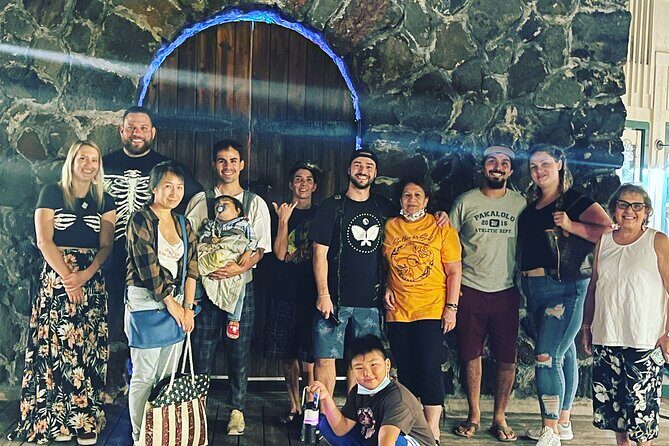
Kona changes its mood at night. The streets quiet down, the air feels different, and you’re mostly outside, walking from one historic corner to the next. That matters, because this tour doesn’t treat “haunted” as a separate topic—it treats it as the spooky layer over places that already carry heavy meaning.
You’ll move through spots that connect royal power, old religious systems, and the arrival of Western influences. Then, right on top of that, you’re given legends—like the possible sightings tied to the palace—and eerie “what if” questions that follow the route. It’s a night where your brain keeps asking: Who lived here? What happened here? And what lingers?
The other reason this tour works is the tone. The best outings I’ve seen people describe aren’t just dramatic. They’re also grounded in real details—lava rock church materials, heiau dedications, and the shifting rules around sacred life in Hawai‘i. You end up with a sense of Kona as a place with layers, not just a list of stops.
If you're still narrowing it down, here are other tours in Big Island of Hawaii we've reviewed.


Meeting points, timing, and how the walk actually feels
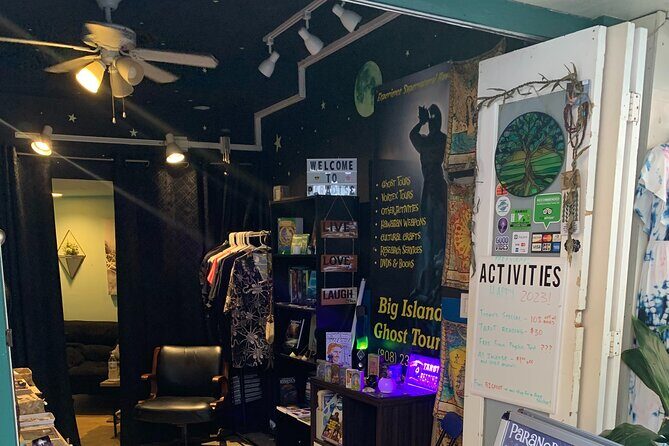
This is an evening tour that starts at 7:00 pm, with a total time around 1 hour 30 minutes to 2 hours. The meeting point is Kona Inn Shopping Village on Ali‘i Drive, and the tour ends at Kailua Pier across from the King Kamehameha Kona Beach Hotel.
That start/end setup is practical. Kona’s downtown area is walkable for this kind of route, and finishing near Kailua Pier gives you an easy “post-tour zone” for stretching your legs, grabbing dessert, or catching a ride. Also, because it’s a mobile-ticket activity offered in English, you don’t need to deal with paper vouchers on arrival.
A small-group format is the real comfort factor. You can hear the guide, ask questions without feeling rude, and actually move as a unit instead of getting stretched out. Past experiences highlighted that the guide’s style can make a difference—some nights feel more engaging than others—so if you’re particular about audio and pacing, arrive a few minutes early and stand where you can see and hear clearly.
And yes, weather matters. The tour requires good conditions, and rain can cut the experience short—so bring a light layer and be ready to adapt.
Stop 1: Kona Inn Shopping Village and the idea of red flats
You start at Kona Inn Shopping Village, and the guide frames it as a site with deep roots before tourism-era Kona took over. The big theme here is the way modern buildings sit over older ground.
This area is described as built on ancient grounds, with ties to King Kamehameha II. It’s also associated with the term papa‘ula, often translated as red flats—a name tied to accounts that this may have been a place connected with human sacrifice. Even if you don’t walk away convinced of every detail, you’ll leave with a clearer sense of why locals treat these places with seriousness.
What I like about this stop: it sets expectations for the whole night. You’re not just “doing a ghost tour.” You’re learning how Hawaiian religious practice, royal history, and later changes in Kona connect on the same streets.
Possible drawback: because this is an outdoor start in a busy downtown area, you may hear less clearly if you’re far from the guide or if there’s street noise. Stand close enough to read body language and facial cues.
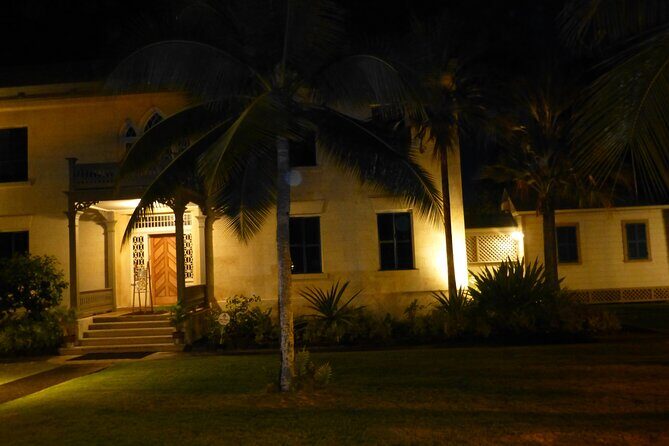
Stop 2: Hulihe‘e Palace and the lady in white question
Next comes Hulihe‘e Palace, one of the landmarks most tied to Kona’s later royal and European-influenced era. The tour’s hook here is the ghost-story angle: will the “lady in white” show herself again?
The guide also plays with timing and identity. The legend is treated like a question tied to possible figures such as Pele (in the sense of mythic connections people make) or Princess Kaiulani. What matters for you on the ground is the way the story is delivered—less like a spooky checklist, more like folklore woven into a real building and its surrounding grounds.
What to expect: you’ll spend around 10 minutes on this stop. That’s enough time to absorb the vibe and ask a question or two, but not enough to treat it like a long sightseeing detour.
Important reality check: you won’t count on going inside after dark. The palace is not presented as a nighttime interior visit.
Stop 3: Mokuaikaua Church and the lava-rock church puzzle
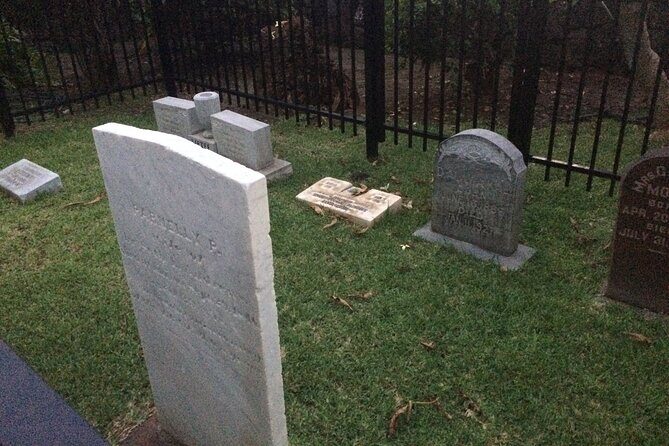
Then you head to Mokuaikaua Church, tied to a major historical shift. The tour highlights that Hawai‘i’s very first Christian church used lava rock cornerstones that were originally part of an ancient Hawaiian temple.
That kind of detail changes how you see conversion-era history. Instead of a clean “before and after,” it suggests overlap—materials, sacred architecture, and cultural tension living in the same physical spaces.
The guide connects this shift to major social change, including the end of the old kapu system and the conflicts that people sometimes describe as Hawai‘i’s civil war period.
Why this stop works: it gives you something solid to hold onto while the ghost-lore part ramps up. If you’re the type who likes a reason for the mood—not just the mood—you’ll probably enjoy this.
Time note: you’re there for about 10 minutes, so keep one good question ready rather than trying to cover everything at once.



Stop 4: Ahuena Heiau and the Ku-to-Lono transformation
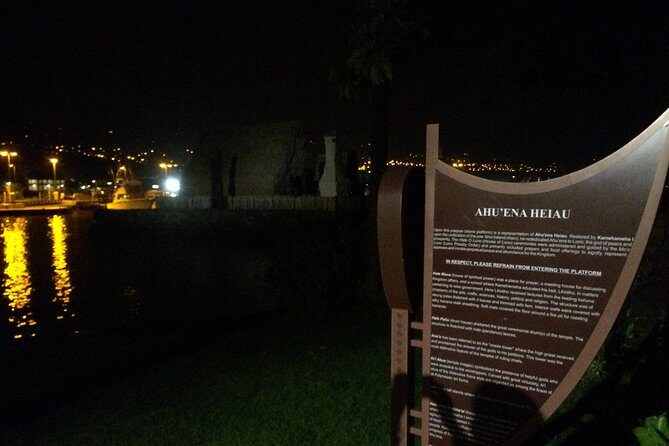
This is one of the most powerful stops on the route: Ahuena Heiau. The tour describes it as a former luakini heiau—meaning it was tied to dedicated worship of Ku, with human sacrifice reported in that historical context.
Then the story shifts forward. It’s also described as being rededicated by King Kamehameha to Lono, turning it into a temple of peace.
So you’re not just hearing one “scary” story. You’re watching the guide explain how power and belief changed over time—sometimes through conquest, sometimes through reform, sometimes through forced replacement.
What you’ll likely feel: this stop is less about theatrics and more about seriousness. Even the way the guide talks tends to emphasize respect for the site’s meaning.
Time note: about 15 minutes here. If you want extra time to photograph, do it quickly and respectfully, because this tour is timed to hit multiple sacred corners without rushing.
Stop 5: Kamakahonu Beach, Kamehameha I, and a shoreline that holds stories
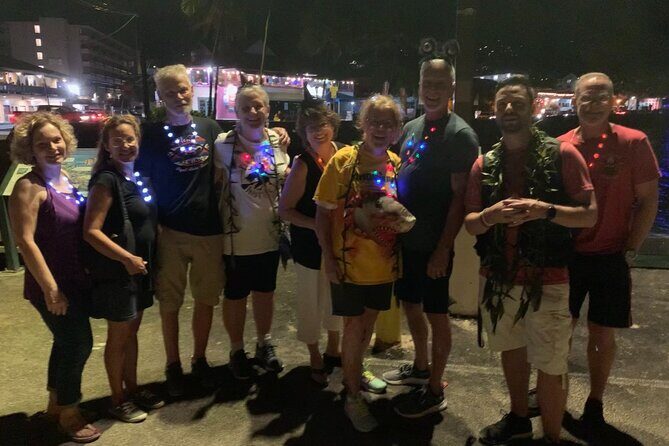
Next is Kamakahonu Beach, and the tour makes two claims that shape the mood fast.
First: this is described as the place where King Kamehameha I transitioned into the next life. Second: it’s also tied to stories of ancient human sacrifice.
A shoreline stop can become “just a beach” on other tours. Here, the guide keeps pointing you back to what the waterline represented in older Hawai‘i—royal passage, ritual meaning, and the way history travels with place.
You’ll spend about 30 minutes at this stop, which is longer than the others. That’s good for you if you like a slower moment in the middle of the walk. It also gives time for whatever the guide brings into the paranormal part—EVP clips, photo discussion, or other “mystery” prompts—without feeling like it’s squeezed in at the end.
Why it’s valuable: the beach gives contrast. After stops about buildings and stone, you get open space, the sky, and the ocean sounds. That makes the storytelling feel more like a lived scene than a slideshow.
Stop 6: Kailua Pier and missionary-era arrivals

Finally, you finish at Kailua Pier. The tour frames this as the central downtown meeting place and brings you to the theme of missionaries arriving and bringing Western religion to the islands.
It’s a logical closing spot. You’ve walked through multiple turning points—sacred rule systems, Christian-era change, royal transitions, and the lingering legends people connect to haunting. Finishing near the pier is a reminder that Hawai‘i’s story also includes arrivals, departures, and global contact.
Time note: about 20 minutes.
If you’re hoping for one more “spooky” moment, this is where the guide may wrap the night’s mystery thread. But even if nothing supernatural pops out, the historical through-line is strong here.
The paranormal angle: what’s likely to happen during a “haunted hele” night
This tour’s title signals ghosts, but the day-to-night balance is really a mix of history, folklore, and light paranormal exploration.
Some guides have shown EVP examples from past tours. A few outings include photo talk—like the possibility of orbs—and even mention EMF equipment being used during the walk. There are also cases where someone uses an EVP app on their phone while the group compares notes.
Here’s the practical takeaway for you: don’t treat the paranormal gear like a guarantee. Treat it like a way to interact with the stories. If it goes well, you’ll have fun thinking about what you’re seeing. If it’s quiet, you’ll still have a useful night of Kona context.
Also, audio can make or break these kinds of tours. One experience described a tablet losing power mid-tour, and another mentioned difficulty hearing the narrator from a distance. So if you feel sound issues, don’t suffer. Move closer early and ask a question if you miss a key point.
The sage smudge ending: a respectful way to close the loop
The tour includes a cleansing sage smudge at the end, described as happening at the new Big Island Ghost Tours booth. That’s a meaningful finish, because it shifts the night from “curiosity” to “closing.”
Even if you’re coming for the haunted side, I like this ending because it makes the experience feel intentional. You’re not leaving with only questions; you’re leaving with a ritual gesture that connects to Hawaiian tradition in a way the guide presents as part of the tour’s wrap-up.
How to handle it: watch what the guide does first. Don’t rush forward. Keep your movements calm and respectful, and follow any cues about standing position and timing.
Price value: what you get beyond the word haunted
No hard ticket price was provided here, so I can’t quote a cost. But I can tell you how the value is structured.
Several stops note admission ticket free for the locations you’ll be visiting, which matters because you’re paying for time, guide storytelling, and the route itself—not a stacked set of paid entrances. Hulihe‘e Palace is listed as admission not included, and the tour also doesn’t promise interior time at nighttime for palace or church.
That means you should think of this tour as:
- a guided walking route through meaningful sites,
- a story-led atmosphere after dark,
- and a small amount of optional mystery play (EVP/EMF/photo moments) if your group and guide go that direction.
If your main goal is to tour interiors of historic buildings, you might be happier with a daytime visit. If your goal is an evening that feels unusual and educational—without being overly long—this format tends to fit.
Who this Kona haunted walk suits best
You’ll probably love this tour if you’re the type who:
- enjoys Hawai‘i history and legends and wants them tied to real streets and sites,
- likes small groups and good story pacing,
- and wants a night activity that’s different from bar hopping or the usual sunset photos.
It also works well for couples. The route and timing are paced, and the finishing area at Kailua Pier gives you a natural “what next?” moment.
If you’re traveling with kids, the vibe is more spooky-thinking than horror. It’s still dark, still outdoors, and still an educational tour—but it may be better for older kids who can handle history talk and walk time.
When you should manage expectations
This is the honest part.
If you want a tour that delivers constant paranormal events on cue, this may not be your match. The experience is more like: learn the place, hear the legend, try a mystery moment, move on.
Also, don’t count on inside visits to Hulihe‘e Palace or Mokuaikaua Church during the night. The tour positions these as nighttime stops without interior access.
Finally, remember that sound and weather can affect the whole evening. If a rain shower hits or if the guide runs into tech issues, the tour pace can shift. Your best move is flexibility: show up early, wear weather-ready clothes, and treat the night as a walking story experience first.
Should you book Kona Haunted Hele Ghost Tour
Book it if you want an evening that feels special for the right reasons: sacred sites, Hawaiian lore, and a small-group route that actually makes Kona’s downtown feel connected to something older. I’d especially recommend it to history-minded travelers who like a little mystery, as long as you’re okay with the fact that it’s not guaranteed to be “full ghost sightings.”
Skip it (or pair it with a daytime plan) if your priority is interior tours of the palace or church, or if you’re only interested in dramatic paranormal activity. For that, you’ll want a different style of experience.
If you do book, do one practical thing: arrive a bit early at the meeting point so you’re close enough to hear well, and bring curiosity more than expectations. That’s when this tour tends to land hardest—in the space between the story and the place.
FAQ
How long is the Kona Haunted Hele Ghost Tour?
It runs about 1 hour 30 minutes to 2 hours.
Where does the tour start and end?
It starts at Kona Inn Shopping Village on Ali‘i Drive in Kailua-Kona and ends at Kailua Pier across from the King Kamehameha Kona Beach Hotel.
What time does the tour begin?
The start time is 7:00 pm.
Is the tour in English?
Yes, it’s offered in English.
Will I be able to go inside Hulihe‘e Palace or Mokuaikaua Church?
No. The tour does not present these as nighttime interior visits, and they’re closed at night.
What happens if the weather is poor?
The experience requires good weather. If it’s canceled due to poor weather, you’ll be offered a different date or a full refund.