REVIEW · BIG ISLAND OF HAWAII
Premium group surf lessons- Kona’s Best Surf Lessons
Book on Viator →Operated by Kona Mike's Surf Adventures · Bookable on Viator
Surfing is one of Hawaii’s simplest joys. This lesson focuses on getting you into the water fast, with coaching that helps you stand up instead of just watching. It’s set at Kahaluu Bay, a place with a steady rhythm of waves that works well for first-timers and improving riders.
What I really like is the small group size (max 8), which means your instructor can actually adjust what you’re doing. I also like that Kona Mike’s handles the gear, so you don’t spend vacation time figuring out what to pack or how to carry it. One thing to consider: the experience depends on good weather, so if conditions don’t cooperate, you’ll need to flex your schedule or choose a different date.
Key highlights to know before you go
- Max 8 people keeps the coaching personal and hands-on
- Gear is provided, so you travel lighter
- Kahaluu Bay is the learning ground for first wave momentum
- 1 hour 30 minutes is long enough to progress, short enough to fit your day
- Instructors like Chad, Alex, and Elijah are specifically praised for patience and encouragement
In This Review
- Kahaluu Bay: Why this surf spot is such a good classroom
- What you get from small-group coaching (max 8)
- Gear is included, and that changes the whole vacation math
- The 1 hour 30 minutes flow: what happens from arrival to wave riding
- 1) Arrive and set expectations
- 2) Warm up and practice the board basics
- 3) Catch waves and build toward standing rides
- Coaching style that helps you progress fast (Chad, Alex, and Elijah)
- Price and value: is $169 reasonable for a Kona surf lesson?
- Practical details that affect your day (and make it smoother)
- Language and communication
- Accessibility and animals
- Public transportation proximity
- Who this lesson is best for
- Book or skip: my honest call
- FAQ
- Where does the surf lesson start?
- How long is the surf lesson?
- How many people are in the group?
- What language are the lessons taught in?
- Is surf gear provided?
- What skill level is this best for?
- What happens if the weather is bad?
- What is the cancellation rule for a full refund?
Kahaluu Bay: Why this surf spot is such a good classroom
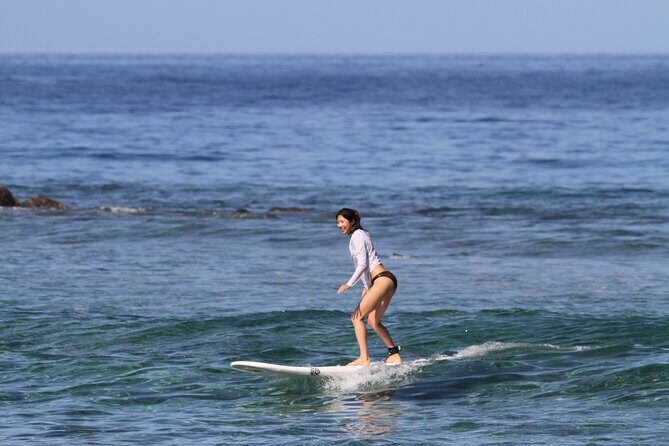
Kahaluu Bay sits on the Kona side of the Big Island, and it has a reputation for being a practical place to learn. The waves tend to offer that important mix: enough shape to practice takeoff and enough regularity that you’re not waiting around forever. In lessons like this, that matters. You want repetition, not just one lucky set.
The other reason this location works is that the setting helps you stay focused. You’re not bouncing between far-off sites. You’re meeting at Kahalu’u Beach Park (78-6702 Ali‘i Dr, Kailua-Kona) and spending your lesson time building skills right where the waves are. That keeps the day simple, which is a gift when you’ve already flown halfway across the planet.
Possible drawback: if ocean conditions are off that day, no surf school can control the sea. The operator requires good weather, and the lesson can be rescheduled or refunded if canceled due to poor weather. So keep one part of your day flexible.
What you get from small-group coaching (max 8)

A max of 8 people is the difference between a surf lesson that feels like a class and one that feels like coaching. With larger groups, instructors have to shout from a distance and move on quickly. Here, you’re more likely to get personal fixes like foot placement, board angle, and how to time your pop-up.
The reviews put a strong spotlight on encouragement and patience, and I love that. Names that come up again and again include Chad, Alex, and Elijah. That tells you something useful: instructors are not just teaching technique, they’re also reading your energy level and keeping you confident. Surfing is part physical, part mental. When you’re nervous, it helps to hear clear cues and get reassured that standing up is within reach.
Also, the lesson format is built for momentum. You’ll be moving through the steps that matter: getting your bearings on the board, learning how to handle the wave line, and practicing the movements that lead to standing. In 90 minutes, that rhythm is key. You’re not stuck in theory.
A few more Big Island of Hawaii tours and experiences worth a look


Gear is included, and that changes the whole vacation math
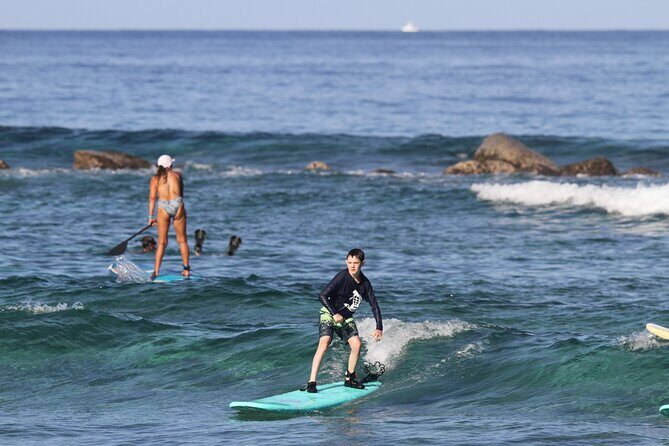
One of the easiest “value wins” here is that you don’t have to pack or rent your surf kit. The lesson includes everything you need, so you can treat your bag like a bag, not a surf gear problem.
That’s practical in Hawaii, where you might also be doing beach time, snorkeling, or hiking. If you had to source a board, leash, rash guard, and the rest, you’d be juggling extra tabs and extra errands. By handling gear on their side, Kona Mike’s keeps the lesson simple.
And since the equipment is provided by the school, you’re also more likely to match the right setup for beginners. Boards and gear matter because they affect stability, speed, and how easily you can recover after a wipeout. You want that stability while you learn pop-up mechanics.
Tiny reality check: even with good gear, you’ll get wet, and you’ll use muscles you didn’t plan on using. But that’s part of the fun—and you don’t need to guess what to bring.
The 1 hour 30 minutes flow: what happens from arrival to wave riding
This lesson is short enough to stay exciting and structured enough to create real progress. Expect a progression that typically goes like this: meet, get briefed, gear up, practice basics, and then shift toward getting actual rides.
1) Arrive and set expectations
You’ll start at Kahalu’u Beach Park. The benefit of a fixed meeting point is you can show up without stress. The confirmation is received at booking, and you’ll have a mobile ticket, which helps if you’re bouncing between stops on the island.
In the beginning, your instructor will likely help you understand how the ocean works for your skill level—things like where to position yourself, what to watch for, and how to think about timing. This is important because surfing is less about brute force and more about reading the wave.
2) Warm up and practice the board basics
Before you’re fully committing to standing and riding, you’ll practice the fundamentals. For beginners, this step often feels like the “real work” because it builds confidence. If you’ve never been on a board in moving water, you need muscle memory for getting from lying down to standing without panic.




3) Catch waves and build toward standing rides
The lesson is designed so you can shift into wave-catching rather than only doing drills. The coaching style matters here. In the praised experiences, instructors are described as helpful and encouraging, with patience that helps you repeat the right action.
A goal you can realistically expect in 90 minutes: getting at least one meaningful ride where you’re standing and moving forward (especially if conditions cooperate and you keep trying). Some people start the lesson nervous and end up riding farther than they thought possible.
Possible drawback: surf progress still depends on your body learning fast and the wave pattern that day. If it’s choppy or the sets are smaller, you might get fewer rides. That’s not the school’s fault—it’s ocean math.
Coaching style that helps you progress fast (Chad, Alex, and Elijah)
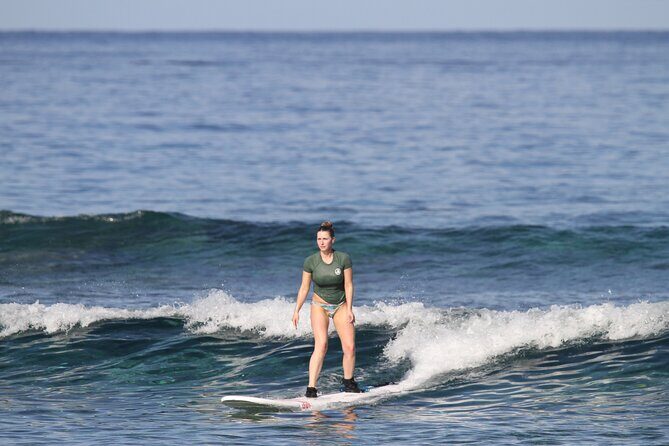
When people say an instructor is patient, that usually means something very specific in surf: they don’t treat every student the same. They watch what you’re doing, then correct one thing at a time.
Chad is praised for being helpful and encouraging, with the extra note that he’s patient with each person. Alex also shows up in positive feedback alongside Chad, especially in first-time situations where the group needed confidence-building and clear guidance.
Elijah is another name that comes up in a way that’s useful for you to know. The recurring theme isn’t just friendliness. It’s the combination of friendly energy plus skill coaching that lets people stand and surf on their own at the end.
That’s the coaching formula you want for value. If the lesson only teaches theory, you might pay $169 and still feel like you barely tried. If the coaching is hands-on and confidence-driven, you leave with a sense that you can repeat the basics next time.
Price and value: is $169 reasonable for a Kona surf lesson?
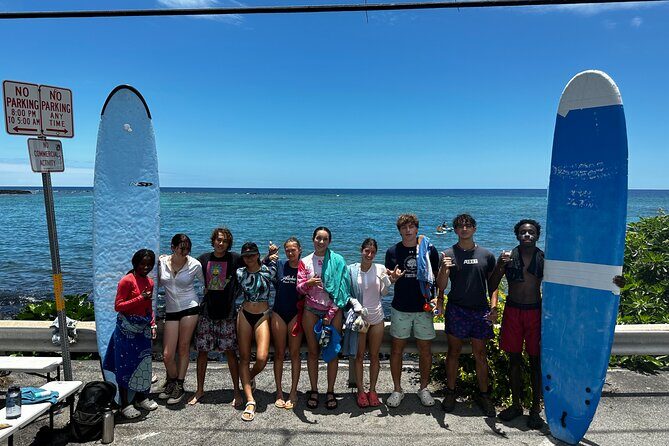
At $169 per person for about 1.5 hours, the price is in line with the “quality coaching + gear included” model. The value comes from a few things that reduce cost and friction for you:
- Small group size (max 8): you’re paying for instructor attention, not just the board rental.
- Gear provided: you’re not paying extra for equipment or scrambling to rent gear on arrival.
- 90-minute format: long enough to practice repeatedly, short enough to fit into a typical vacation schedule.
- Strong satisfaction rating (4.9) with high recommendation (98%): that matters because surf lessons are hit-or-miss depending on instructor quality.
In other words, you’re not just buying a ticket to stand on sand. You’re buying instruction that aims at standing and riding—plus the logistics support that keeps the day easy.
Who might feel it’s expensive: if you already have surf experience and you want highly technical coaching, you might prefer a more specialized coaching session. But for most people visiting Kona for the first time, this is a practical way to get real ocean time.
Practical details that affect your day (and make it smoother)
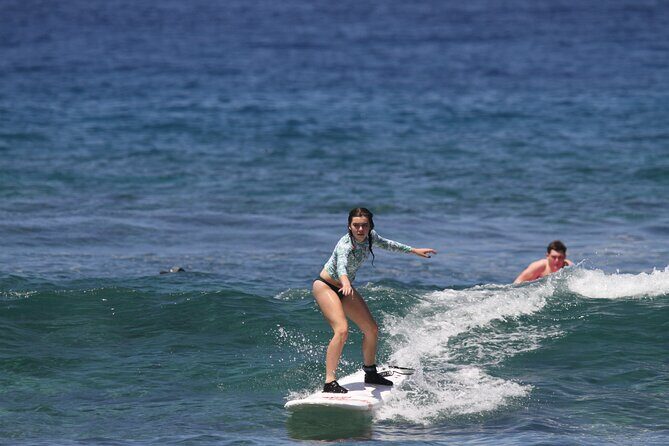
Here are the nuts and bolts that actually change the experience.
Language and communication
The lesson is offered in English, which helps if you want straightforward, no-guessing instructions.
Accessibility and animals
Service animals are allowed, and most people can participate. That said, the core requirement is that you can handle being in and around ocean conditions. If you’re unsure about physical readiness, it’s worth checking with the operator before booking.
Public transportation proximity
The start point is near public transportation. That’s handy because Kona traffic and parking can be unpredictable, especially if you’re also trying to squeeze in other beach activities.
Who this lesson is best for
This surf lesson is built for beginners and for people who want to level up quickly without getting lost in advanced jargon.
It’s a great fit if you:
- want an active Hawaii experience that doesn’t require prior gear
- prefer small group attention over a big crowd
- like instructors who are encouraging and patient as you learn
- are traveling as a family or group member who is brand-new
It’s also a solid choice for teenagers, since multiple positive experiences highlight kids and teens having a great time with an instructor who kept things supportive and clear.
If you’re an advanced rider: you might enjoy the coaching, but the format is likely more beginner-to-intermediate focused. You’ll get value from learning again how to ride safely and confidently, but it may not be the most technical session.
Book or skip: my honest call
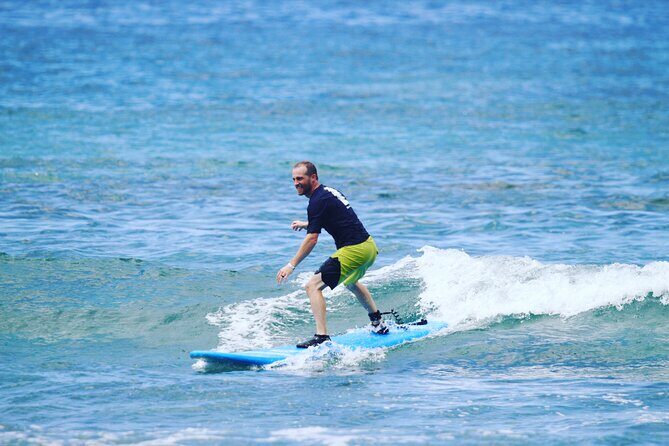
You should book this surf lesson if your main goal is to actually ride waves with coaching that keeps you confident. The small group size, gear included, and the repeated praise for patient instructors like Chad, Alex, and Elijah point to a lesson designed for real learning—not just a casual beach experience.
Skip it (or at least consider an alternative) if you’re booking a day with zero flexibility. The ocean is weather-dependent, and while you can cancel within 24 hours of start for a full refund only if you cancel more than 24 hours in advance, the bigger reality is that bad weather can push you to another date.
My final advice: treat this as a highlight activity. Plan it when you’re not exhausted, wear what you can get wet in, and bring a calm mindset. Surfing rewards people who try again after the first fall—and the coaching here is built to help you do exactly that.
FAQ
Where does the surf lesson start?
It starts at Kahalu’u Beach Park, 78-6702 Ali‘i Dr, Kailua-Kona, HI 96740, USA.
How long is the surf lesson?
The duration is about 1 hour 30 minutes.
How many people are in the group?
The experience has a maximum of 8 travelers.
What language are the lessons taught in?
Lessons are offered in English.
Is surf gear provided?
Yes. Everything you need is provided, so you don’t have to pack a surf kit.
What skill level is this best for?
Most travelers can participate, including beginners who want help catching their first waves.
What happens if the weather is bad?
If it’s canceled due to poor weather, you’ll be offered a different date or a full refund.
What is the cancellation rule for a full refund?
You can cancel up to 24 hours in advance for a full refund. If you cancel less than 24 hours before the experience starts, the amount paid is not refunded.