REVIEW · BIG ISLAND OF HAWAII
Kona Coast Hualalai Volcano-60Min Helicopter Tour-Door Off or On
Book on Viator →Operated by Rainbow Helicopters · Bookable on Viator
Volcano views hit different at flying height. In about 60 minutes, you get a tight loop over Kailua-Kona’s coasts, bays, farms, and the Hualalai volcano, with a pilot who talks you through what you’re seeing.
I especially like the variety packed into one flight, from Kaloko Fish Ponds and Kailua Bay to Kealakekua Bay Marine Preserve and the farther-out beaches. I also like the consistently professional feel from start to landing, with pilots praised by name for being calm and informative, including Jojo, Jeff, Donovan, and Turner.
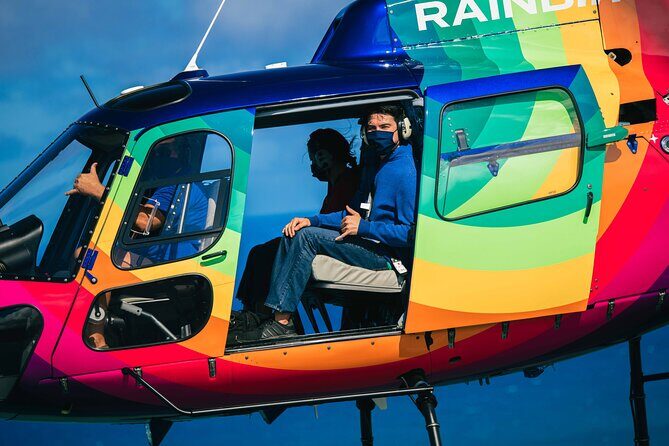
One thing to consider: if you book the doors-off experience, your seat may or may not be directly adjacent to an open door, so you do not automatically get the most wind-and-spray view angle.
In This Review
- Key Points Before You Go
- Kona Coast and Hualalai in One 60-Minute Flight
- What to Wear and How Weight Requirements Affect Your Seat
- The Big Aerial Picture: Kona Coast, Kailua Bay, and Alii Drive
- Kaloko Fish Ponds to Kealakekua Bay Marine Preserve
- Captain Cook Monument, Place of Refuge, and KaUpulehu Crater
- Hualalai Volcano and Puʻu Waʻawaʻa Forest Reserve
- Anaehoomalu Bay, Kiholo Bay, and Makalawena Beach to the Finish
- Pilots, Safety, and Why the Flight Feels Smooth
- Price and Practical Value at $640 Per Person
- Should You Book This Kona Helicopter Tour?
- FAQ
- How long is the Kona Coast Hualalai helicopter tour?
- Where do I meet for the tour in Kailua-Kona?
- What sights are included on the route?
- If I choose doors off, what should I wear?
- Is there a weight limit or extra cost for heavier passengers?
- Does the doors-off option guarantee that my seat is next to an open door?
- How big is the group?
- What happens if weather is bad, or if I cancel?
Key Points Before You Go
- A one-hour route that spans coast, culture, and volcano without you driving all day
- Kaloko Fish Ponds from above within the Kaloko-Honokohau National Historical Park
- Kealakekua Bay Marine Preserve and Captain Cook Monument on the same flight segment
- Hualalai Volcano visibility plus Puʻu Waʻawaʻa Forest Reserve in one continuous scenic arc
- Small group size, capped at 15 travelers, which helps keep the experience personal
- Doors-off comes with real clothing needs: closed-toe shoes, hair ties, and long pants recommended
Kona Coast and Hualalai in One 60-Minute Flight
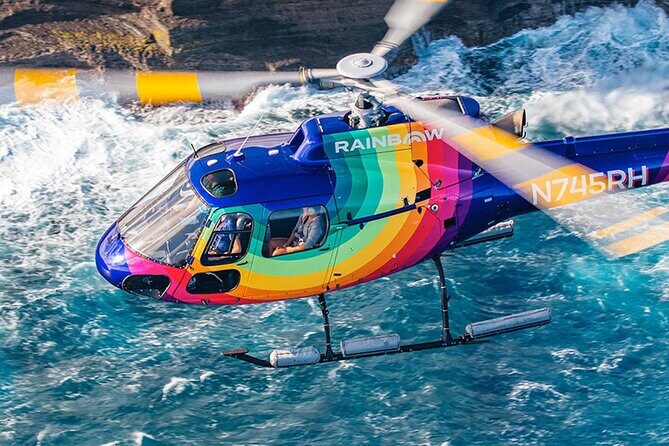
This is a high-wow, time-saving kind of helicopter tour. You’re in the air for about 1 hour, and you’re not just orbiting one area—you’re moving across the island’s coastline and volcanic interior viewpoints.
For me, the appeal is how efficiently it turns the Big Island into a single visual story. You see coastal forms, bays, and beaches from straight overhead, then you climb toward Hualalai and come back down toward forest and shoreline. It’s the kind of perspective you can’t replicate from a lookout, and it feels especially good if you’re short on days.
Other helicopter tours in Big Island of Hawaii
What to Wear and How Weight Requirements Affect Your Seat
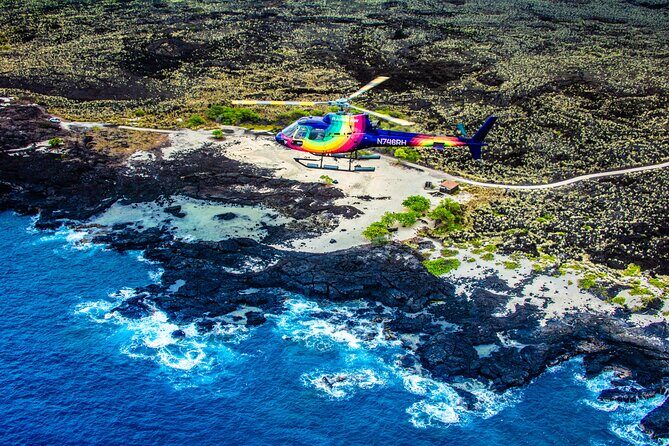
If you choose the doors-off option, plan around the gear list. Bring a jacket or sweatshirt, wear closed-toe shoes, use hair ties, and expect long pants to be recommended.
The other big practical piece is weight and balance. There is a total weight limit per passenger of 500 lbs. If you weigh 250 lbs or more, you’ll need a weight-and-balance fee: for 250–275 lbs, it’s 50% of the seat price; for 275 lbs or higher, an additional seat purchase may be assessed after booking.
These details matter because they can affect how smoothly things go the day of the flight. If you’re anywhere near those ranges, it’s worth confirming your situation during booking so there are no surprises.
Also note the safety policy: the operator prioritizes safety and can refuse service to passengers who appear to be intoxicated, with the charge staying full. For most people, that just reinforces the overall calm, professional tone that shows up in the experience.
The Big Aerial Picture: Kona Coast, Kailua Bay, and Alii Drive
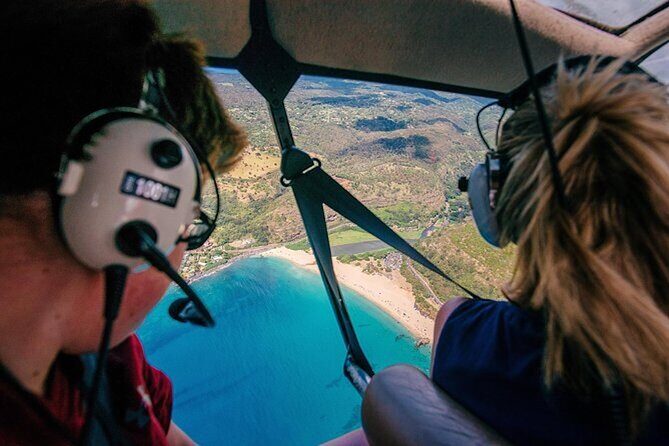
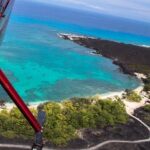
From the start, the flight is set up to give you “where am I?” orientation fast. You’ll be looking at Kailua-Kona’s coast from above, with stops and passing views tied to landmarks you can later picture on a map.
Early on, you get a long stretch of shoreline views that include Kona Coast, Kaloko Fish Ponds, Kailua Bay, and Alii Drive. Alii Drive is one of those places where, from the air, you can actually see how the road strings together beaches, towns, and historic areas.
Magic Sands Beach is another highlight in the mix. From overhead, you can really read the shape of the shoreline—how the white sand sits against the water—and you’ll get that “I’ve seen this, but never like this” feeling.
Kaloko Fish Ponds to Kealakekua Bay Marine Preserve
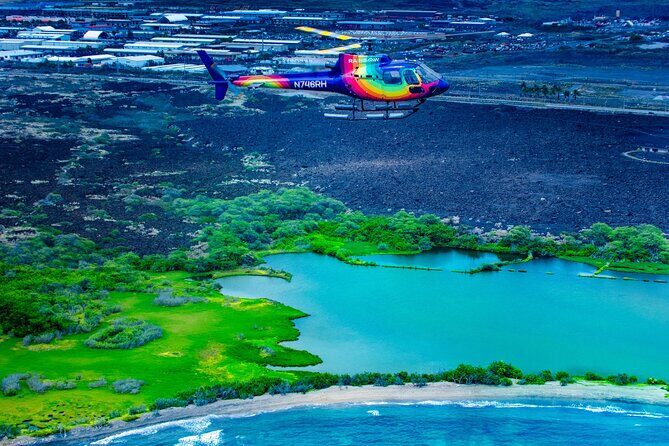
One of the most culturally meaningful parts of the flight is the chance to look down on the Kaloko Fish Ponds. These ponds sit in the Kaloko-Honokohau National Historical Park, and you’re seeing traditional aquaculture practices from above.
Overhead views make it easier to grasp layout and scale. Even if you’ve never studied Hawaiian aquaculture, the aerial perspective helps you understand this wasn’t a random patch of water—it’s part of a designed system.
Next, the route shifts toward Kailua Bay and then onward to Kealakekua Bay Marine Preserve. Kailua Bay is known for calm, clear water, and it’s the kind of place that makes you want to stop and snorkel. From the air, it also shows you why it’s a hub area for activity and why the coastline feels so approachable.
Kealakekua Bay Marine Preserve is a different kind of wow. You’ll see the coastline framed by coral reef areas and marine life support—views that are hard to fully appreciate from shore. If you like the idea of connecting geography to biology, this section delivers.
Captain Cook Monument, Place of Refuge, and KaUpulehu Crater
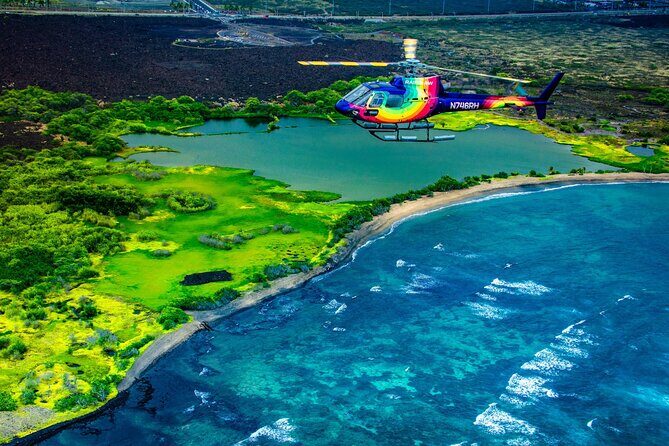
As you move along the route, you’ll also get sightlines to landmarks with deep historical weight. In the marine preserve area, you’ll spot the Captain Cook Monument—the commemorative landmark marking Captain Cook’s final resting place.
Right after that, the tour includes a poignant turn around the Place of Refuge. This is described as sacred grounds with rich cultural and historical significance to Native Hawaiians. From the air, it can feel almost quiet, even though you’re flying above it—the kind of moment where the viewpoint slows your brain down.
Then the scenery changes again with geological forms tied to volcanic activity. You’ll fly to the KaUpulehu Crater, where the volcanic textures become the subject. If you’re trying to understand how the Big Island’s “layers” connect—ocean edge to volcanic origin—this is one of those sections that makes the whole trip click.
Other helicopter tours in Big Island of Hawaii
Hualalai Volcano and Puʻu Waʻawaʻa Forest Reserve
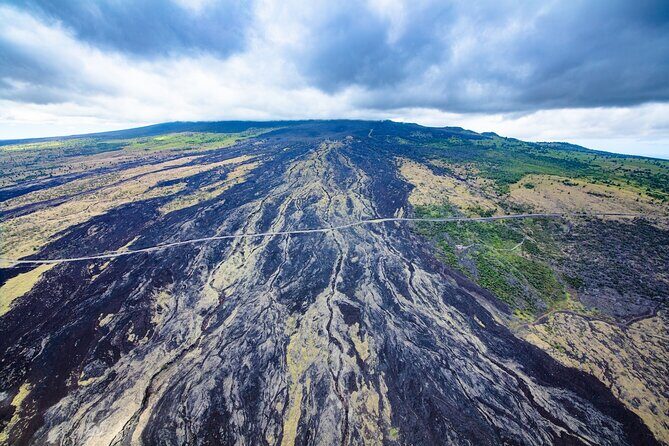
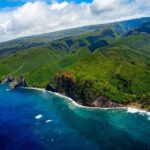
The star of the show is Hualalai Volcano. You’ll fly over it as part of the route, and the tour description notes the summit reaches 8,278 feet above sea level. It’s also one of the Big Island’s five shield volcanoes.
What makes this section memorable is contrast. The air gives you a clear view of how the terrain rises and then breaks into different texture patterns. It’s not just a peak—it’s a whole system of slopes and shapes that look different than anything you’d see by driving near it.
After the volcanic portion, the route continues to Puʻu Waʻawaʻa Forest Reserve. This is where the visuals shift again from exposed volcanic ground to lush vegetation zones. It’s a helpful pairing because it shows that the Big Island isn’t only “rock and rockiness.” It’s also forested and alive in ways that surprise people who only picture the coastline.
Anaehoomalu Bay, Kiholo Bay, and Makalawena Beach to the Finish
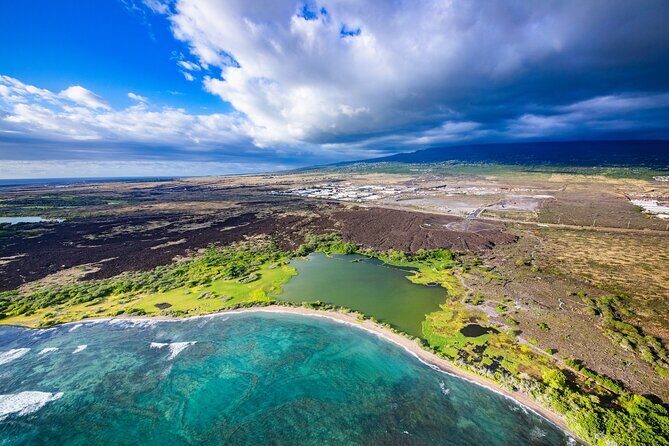
As the flight returns toward the coast, you’ll see more of the calmer, beach-and-bay side of Kona. One stop area is Anaehoomalu Bay, also referred to as A Bay, known for golden sand and calm waters.
Next comes Kiholo Bay, described as tranquil turquoise water and a spot for swimming and viewing wildlife. Wildlife isn’t guaranteed on every flight, but this is exactly the kind of area where the aerial viewpoint helps you spot where activity tends to gather—small dark movement lines on the water can be easier to notice from above than from shore.
Your finale leans into seclusion. You’ll end with a glimpse of Makalawena Beach, known for pristine white sands and crystal-clear waters. From the air, secluded beaches often look even more “untouched,” not because they are magically protected, but because you can see how far they sit from roads and nearby development.
Pilots, Safety, and Why the Flight Feels Smooth
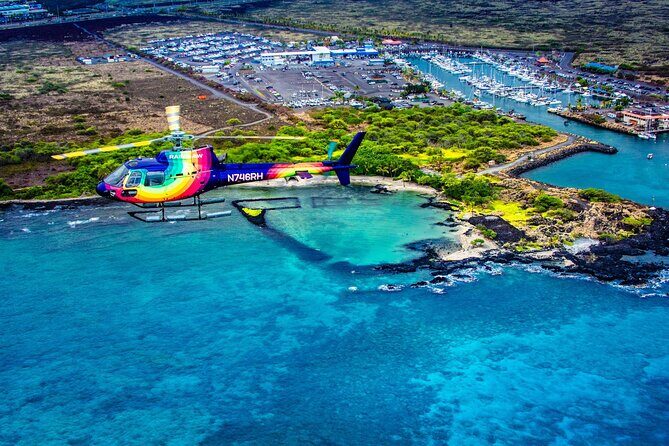
This tour lives or dies on the cockpit. The strong theme in the experience feedback is how safe and well-run the flight feels, and how much pilots explain as they fly.
In particular, pilots and team members have been credited by name in standout ways, including Jojo, Jeff, Donovan, Turner, and Wilson. What matters for you is not the celebrity factor. It’s that multiple people mention feeling safe the entire time and hearing history and land-based facts that made the views easier to understand.
There’s also a practical benefit to a knowledgeable pilot: spotting things on the ocean. One couple reported seeing whales and calves, and said the pilot helped them learn how to look for whales from the air. That doesn’t mean you should expect whales on your day, but it does mean you’re likely to get guidance if that kind of sighting is possible.
Finally, remember the aircraft experience is fast and focused. You’re not sitting on a dock with time to think. You’ll be looking outward almost constantly, and the pilot’s narration helps you turn “pretty views” into “I know what I’m seeing.”
Price and Practical Value at $640 Per Person
At $640 per person, this isn’t a budget activity. You’re paying for a one-hour flight time over very specific targets: fish ponds, marine preserve areas, coffee farmlands, and volcanic terrain—all in one continuous route.
Here’s why it can still feel like good value if helicopter travel fits your style. This route links places that are spread out and not easy to stitch together into one efficient day by car. Instead of spending hours driving and doing separate visits, you get a condensed aerial tour that turns distance into something you barely notice.
Also, you get a couple of small value add-ons: parking fees are included, and there’s a phone strap included. Those don’t replace the main cost, but they do reduce day-of hassle.
One more practical note: this tour is commonly booked about 31 days in advance on average. If you’re traveling in peak periods, that booking pattern is a hint that you should reserve earlier rather than later.
Should You Book This Kona Helicopter Tour?
Book it if you want a high-impact Big Island view in a short time. This flight is built for you if you like coastlines with names you can later recognize, you care about cultural sites like Kaloko Fish Ponds and Place of Refuge, and you want to see Hualalai Volcano without spending your day driving between lookouts.
Skip it or at least think twice if you’re sensitive to the rules and effects of the doors-off option. You’ll need closed-toe shoes, hair ties, and you should dress for wind. And because your seat might not be next to the open door even with doors off, the most intense view experience isn’t guaranteed by selection alone.
If your priorities are calm safety, expert narration, and a bucket-list viewpoint that actually feels different from a photo, this one is an easy yes.
FAQ
How long is the Kona Coast Hualalai helicopter tour?
It’s about 1 hour total.
Where do I meet for the tour in Kailua-Kona?
The meeting point is 73-4370 Paoo St, Kailua-Kona, HI 96740, USA. The tour ends back at the meeting point.
What sights are included on the route?
You’ll see views around Kailua-Kona’s coastline plus specific areas including Kaloko Fish Ponds, Kailua Bay, Alii Drive, Magic Sands Beach, Kona Coffee farms, Kealakekua Bay Marine Preserve, Captain Cook Monument, Place of Refuge, KaUpulehu Crater, Hualalai Volcano, Pu’u Waʻawaʻa Forest Reserve, Anaehoomalu Bay (A Bay), Kiholo Bay, and Makalawena Beach.
If I choose doors off, what should I wear?
For doors-off tours, the guidance is jackets and/or sweatshirts, closed-toe shoes, hair ties, and long pants are recommended.
Is there a weight limit or extra cost for heavier passengers?
There’s a 500 lbs total weight limit per passenger. If you weigh 250 lbs or more, a weight-and-balance fee applies: 50% of the seat price for 250–275 lbs, and for 275 lbs or higher an additional seat purchase may be assessed after booking.
Does the doors-off option guarantee that my seat is next to an open door?
No. If you book the doors-off experience, your seat may or may not be directly adjacent to an open door.
How big is the group?
The tour has a maximum of 15 travelers.
What happens if weather is bad, or if I cancel?
The experience requires good weather. If it’s canceled due to poor weather, you’ll be offered a different date or a full refund. You can cancel for a full refund up to 24 hours in advance; within 24 hours, the amount paid is not refunded.