REVIEW · BIG ISLAND OF HAWAII
Exclusive Landing with Spectacular Big Island Helicopter Tour
Book on Viator →Operated by Blue Hawaiian Helicopters - Waikoloa · Bookable on Viator
That 1200-foot waterfall landing sounds like a movie. This Big Island helicopter route strings together Kohala ranch valleys, Kīlauea’s volcanic power, and Hilo-area rainforests in about 2 hours of flying. I love the practical safety touches—Bose noise-cancelling headsets and clear two-way pilot communication—plus the fact that your pilot can also act as a State of Hawaii certified guide. One drawback to plan for: weather and wind can shift flight times and what you see, so the “volcano part” depends on conditions.
What makes this tour feel special is how it mixes big-picture Hawaii with one real, up-close stop. The Kohala Coast landing at Laupāhoehoe Nui is a rare chance to be on the ground near that waterfall for 20–25 minutes, not just hovering overhead. I also like that the tour is built for small groups (up to 6 people), which helps you hear the guide and ask questions without feeling lost in a crowd. The price is high, but you’re paying for access and time in the air plus the landing element that most flights skip.
In This Review
- Key Points You’ll Feel During the Flight
- Kohala’s Waterfall Landing: The Moment You’ll Remember
- Blue Hawaiian Setup: Headsets, Two-Way Comms, and Small-Group Comfort
- The Kohala Start: Ranching Country From the Air
- West Coast History Moment: King Kamehameha’s Final Years
- The Volcano Giants: Seeing Recent Lava From a Safe Distance
- Kīlauea and the Southeast Shore: Active Power Since 1983
- Hawaiʻi Volcanoes National Park From Above: 335,000 Acres in One View
- The Eastern Rift Zone Story: 1983 to 2018
- Hilo and the Rainforest Side: Akaka Falls and 84 Inches of Rain
- Price and Value: What $1,134.65 Buys on Big Island
- Who This Helicopter Tour Fits Best (and Who Should Rethink It)
- Should You Book the Big Island Helicopter Tour With Laupāhoehoe Nui Landing?
- FAQ
- How long is the Big Island helicopter tour?
- Where does the tour start and end?
- What language is the tour offered in?
- What’s included in the price?
- Is the waterfall landing included?
- What should I wear and not bring?
- Is there a weight limit?
- Can I buy the in-flight video or photo package?
- What’s the check-in time?
- Is there free cancellation?
Key Points You’ll Feel During the Flight
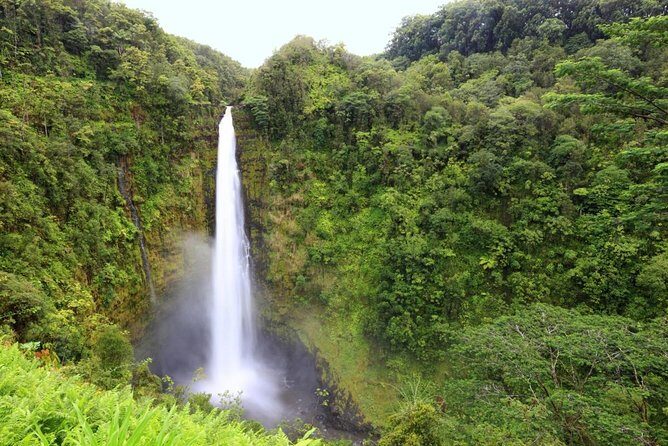
- Exclusive Laupāhoehoe Nui landing on the Kohala Coast with 20–25 minutes on the ground by a 1200-ft waterfall
- Bose Aviation-grade noise-cancelling headsets plus microphones for real two-way talk with the pilot
- Pilot Guide who’s also State of Hawaii certified, meaning you’re not just watching scenery, you’re getting context
- A tight route that connects Kohala → Kamehameha’s final-years area → volcanoes → Hilo & Akaka Falls
- Most tours cap at 6 travelers, which tends to make the experience feel more personal in a good way
Kohala’s Waterfall Landing: The Moment You’ll Remember
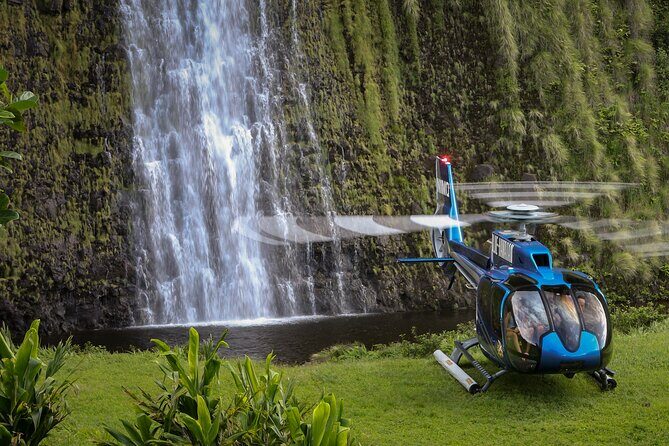
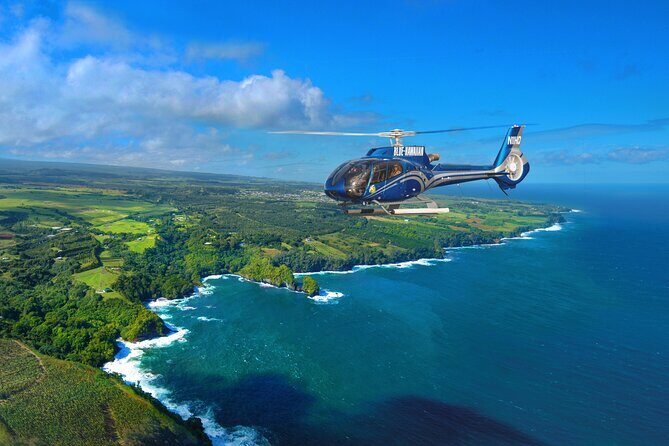
If you want one part of this tour to circle in your calendar, make it the Laupāhoehoe Nui landing on the Kohala Coast. You’re not stuck at a distant viewpoint. You’ll land near a 1200-foot waterfall, and you’ll get real time on the ground—20 to 25 minutes—so you can film, take photos, and actually feel like you’re in the rainforest by the coast.
This is the kind of stop that changes how the rest of the trip hits. When you spend time on the ground, you start recognizing patterns you wouldn’t notice from above: where the mist hangs, how the valley channels the sound, and how the coastline shape funnels everything in. The waterfall time also makes the price feel less abstract. You’re buying a “walking-into-the-moment” experience, not just seat time.
One small planning note: the landing is weather-dependent. The tour schedule can adjust when winds and conditions shift, so keep your expectations flexible. Even on a day where the flight portion varies, that waterfall stop is the feature most people remember.
Other helicopter tours in Big Island of Hawaii

Blue Hawaiian Setup: Headsets, Two-Way Comms, and Small-Group Comfort
This flight runs with gear that actually helps you enjoy the ride instead of tolerating it. You get Bose Aviation-grade electronic noise-cancelling headsets, plus microphones for two-way communication with the pilot. Translation: you’re more likely to hear directions and questions without shouting, and that makes a difference when you’re trying to track what’s below.
The tour also uses a pilot who acts as a State of Hawaii certified tour guide. That matters because helicopter sightseeing can turn into just “pretty views.” Here, you’re set up to understand what you’re seeing: how valleys formed, what makes each volcano distinctive, and why those rainforests and waterfalls look the way they do from above.
The group size is capped at 6 travelers. With that small number, you can settle into your seat, listen, and focus. It also tends to make the whole boarding flow feel smoother.
Practical stuff you should know before you go:
- Check in 1 hour prior to tour time for weight check, safety briefing, and boarding.
- Bring dark-colored clothing so you don’t reflect in photos.
- Hats and bags aren’t allowed, and you can’t bring large cameras or extending selfie sticks.
- Plan on bringing a credit card if you want to buy the post-flight video/photo packages at the heliport.
The Kohala Start: Ranching Country From the Air
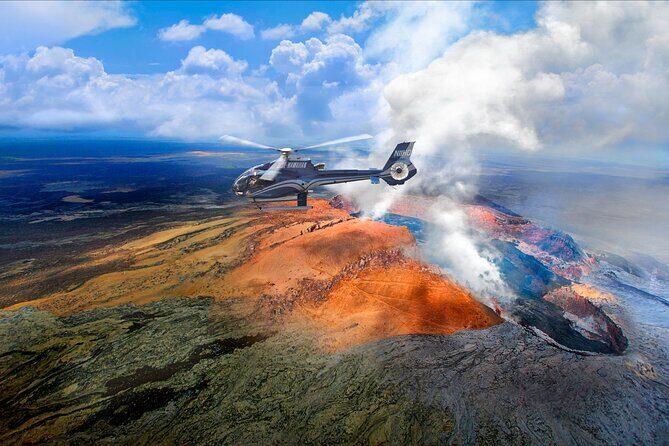
The flight begins with the Kohala area, known for ranching and some of the Big Island’s most striking valleys. From the air, Kohala doesn’t look like a “point of interest.” It looks like a whole system: ridgelines, drop-offs, and dry-to-green transitions that are hard to judge from road level.
This stop works as a warm-up. You’re still getting your bearings, but the aerial view quickly shows how Hawaii’s terrain shapes everything—where water collects, where roads and settlements make sense, and why some areas feel open and pastoral while others look like they’re holding onto moisture.
Drawback? If you’ve only got one day on the island, you’ll want to make sure you’ve got energy for a 2-hour flying experience with early check-in. It’s not a quick hop between stops; it’s a full sight-and-learn chunk.
West Coast History Moment: King Kamehameha’s Final Years
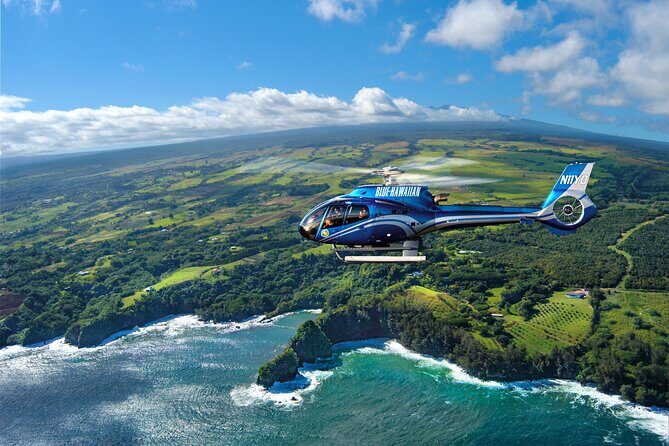
Next you’ll head to the west coast town on Hawaii Island where King Kamehameha spent his final years. Helicopters are great for historical context because coastlines and settlement patterns make sense from above. You can see how the shoreline connects to the broader island layout, not just the one street or monument on the ground.
This part isn’t about museums. It’s about geography. Watching the coastline and then understanding the role of that area in Kamehameha’s life gives the landscape a human timeline.
If you prefer history that’s tied to real places (not just dates), this stop is a nice fit.
The Volcano Giants: Seeing Recent Lava From a Safe Distance
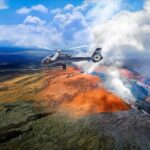
Then comes the volcanic shift—one of the island’s five volcanoes, described as one of the largest on Earth. This is where you get to see recent flows from December 2022 from a safe distance.
Seeing lava up close is for scientists and trained crews. From the air, you still get the main point: where the rock is fresh, how the flow paths trace downhill logic, and how volcanic activity redraws surfaces over time. It’s dramatic but also surprisingly instructive once your pilot ties the view to what’s happening on the ground.
Important expectation-setting: volcano visibility can depend on weather and flight conditions. If winds keep things tight, you may not get every angle. The upside is that when flying conditions are favorable, this is the part that feels like you’re looking at a living planet.
Other helicopter tours in Big Island of Hawaii

Kīlauea and the Southeast Shore: Active Power Since 1983
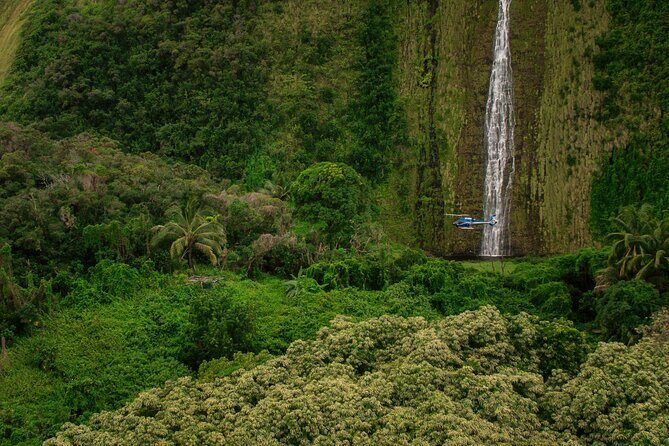
One of the stops focuses on an active shield volcano along the southeastern shore: Kīlauea, continuously erupting since 1983 and drawing more than 2 million yearly visitors. Even from above, the visuals communicate why Kīlauea is famous. You can spot the way eruptions alter patterns and create distinct textures in the land.
This is where two-way communication shines. When your pilot can point to features and explain what’s erupting and what’s older, you stop seeing the island as a single “volcano spot” and start seeing it as a set of processes.
Hawaiʻi Volcanoes National Park From Above: 335,000 Acres in One View
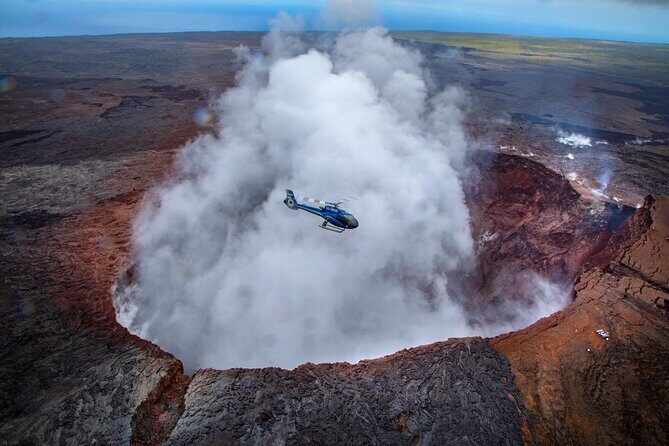
Next you’ll fly over Hawaiʻi Volcanoes National Park, described here as covering over 335,000 acres and rising from sea level to more than 13,000 feet. That’s a huge vertical range, and from the air you can literally see climate change happening across altitude.
You’ll also hear how the park includes six climate zones. That’s not just trivia. It helps you understand why the vegetation looks so different as you gain height—even though it’s the same island, under the same sun, nearby. From a helicopter, those zones read like layers.
If you’re the type who likes to match what you see with a framework, this segment gives you one. If you’re only chasing photos, you’ll still love it—but expect the best experience when you listen for what the pilot says.
The Eastern Rift Zone Story: 1983 to 2018
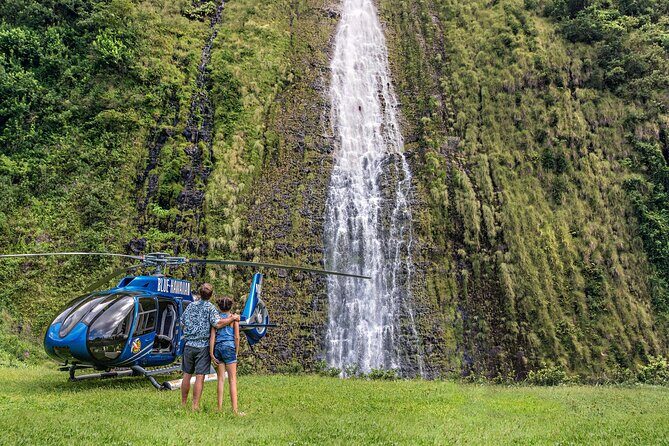
Along the eastern rift zone of Kīlauea, the tour highlights an eruption that lasted from 1983–2018—called the longest-lived rift-zone eruption of the last 2 centuries. From above, rift zones are hard to fully “read” unless someone explains how the structure works.
This stop is valuable because it turns geology into a story you can understand in a couple minutes. You see the results, then connect that to the timeline. It makes the volcanic scenery feel less random and more logical.
One consideration: helicopter sightseeing compresses a lot of big topics into a short time. If you love geology, plan to take your own notes and follow up later with a quick reading after your flight.
Hilo and the Rainforest Side: Akaka Falls and 84 Inches of Rain
After the volcanoes, the route shifts back toward water and greenery, with a vibrant northeastern town area known for fertile rainforests and dramatic waterfalls. From the air, the difference is obvious: clouds, shade, and how the vegetation drapes across slopes.
You’ll focus on Akaka Falls, which drops 442 feet into the valley below. The key thing here isn’t just the height. It’s the way waterfalls cut through rainforest patterns. The mist sits over the terrain, and the forest seems to cling to the water’s influence.
This region also averages nearly 84 inches of rainfall each year, which helps explain why everything looks so lush and why waterfalls carry so much flow. Helicopter angles make it easier to see drainage lines—the routes water takes through valleys.
If you’re thinking about balancing a trip between dramatic geology and classic Hawaii nature, this ending portion does that well.
Price and Value: What $1,134.65 Buys on Big Island
Let’s talk money honestly. At $1,134.65 per person for about 2 hours 20 minutes, this isn’t a casual splurge. It’s the kind of price that forces you to ask: what am I really paying for?
Here’s where the value comes from:
- You’re paying for time in the air over multiple major regions—Kohala, west coast history area, multiple volcano elements, and the Hilo/Akaka Falls side.
- You’re paying for high-quality audio and communication (headsets and microphones), so the flight isn’t just silence and sightseeing.
- You’re paying for a real ground landing near Laupāhoehoe Nui, with enough time to capture it properly.
The waterfall landing is the part that makes this feel like more than a standard “helicopter loop.” A number of people put the waterfall stop at the top of their experience ranking, and it’s easy to see why. When you compare this to helicopter tours that only fly overhead, the ground time gives you something you can’t recreate later from a viewpoint.
What’s not included—and matters for your budget—is transportation to and from the heliport, plus the optional USB photo/video packages you can buy at the heliport with a credit card.
Also, keep in mind the weight rules: total weight per passenger is 240 lbs, and if you’re over that, you need an adjacent empty seat to safely balance the aircraft. That adjacent seat is half off the regular tour price. If you’re booking for two, this can affect how you plan seating and cost.
In short: the price feels most justified if you value (1) the waterfall landing, (2) guided interpretation, and (3) doing a lot of Big Island in one flight without sacrificing understanding.
Who This Helicopter Tour Fits Best (and Who Should Rethink It)
This tour makes sense for:
- Couples and small groups who want a “once in a while” experience with time actually spent seeing and learning.
- People who get motion-sick easily should still consider it carefully, since you’re in a helicopter for the full flight time. (The data doesn’t list motion-sickness details, so you’ll want to judge your own tolerance.)
- Anyone who wants a safe way to witness volcanic change without hiking to viewpoints that may be weathered or crowded.
It may be less ideal if:
- You’re on a tight schedule and don’t want to deal with early check-in. You check in 1 hour before and late arrivals may not be accepted.
- You have strict preferences about what must happen in what order. Wind and weather can change timing and sites.
- You’re bringing a lot of gear. Hats, bags, large cameras, and extending selfie sticks aren’t permitted.
There’s also a specific no-go: no scuba diving within 24 hours of departure. If your itinerary includes diving, plan your helicopter day accordingly.
Kids: children 23 months and younger are complimentary as lap children, and the tour states most travelers can participate. If you’re traveling with a toddler, you’ll still want to be comfortable with the cabin setup and the need for early check-in.
Should You Book the Big Island Helicopter Tour With Laupāhoehoe Nui Landing?
Yes, I’d book it if you want one high-impact day that mixes coastline, ranch country, active volcano visuals, and a major waterfall stop—without turning your trip into a long drive-and-wait marathon. If you care about the difference between seeing Hawaii and understanding it, the pilot-guide format is a strong reason to choose this one. And if you’re trying to decide whether the landing is worth it, this is the kind of experience where that “on the ground” time changes the whole feel.
I’d think twice if you can’t be flexible about weather-driven route changes, or if you’re hoping for a low-cost outing. This isn’t that. You’re buying access, instruction, and a rare landing that’s the main event.
If you book, do two things to make it go smoothly: wear dark colors and arrive early for the weight check and safety briefing. Then focus on the pilot’s callouts—when you listen, the island stops being just scenic and becomes readable.
FAQ
How long is the Big Island helicopter tour?
The tour runs about 2 hours 20 minutes, though timing and included sights can vary with wind and weather conditions.
Where does the tour start and end?
It starts at Blue Hawaiian Helicopters at 68-690 Waikoloa Rd, Waikoloa Village, HI 96738. It ends back at the same meeting point.
What language is the tour offered in?
The tour is offered in English.
What’s included in the price?
Included are Bose Aviation-grade electronic noise-cancelling headsets, microphones with two-way communication with the pilot, a pilot guide who is also a State of Hawaii Certified Tour Guide, an after-tour in-flight video preview at the heliport, and all fees and taxes.
Is the waterfall landing included?
The tour includes an exclusive landing at Laupāhoehoe Nui on the Kohala Coast, with time on the ground for a photo and video opportunity.
What should I wear and not bring?
Wear dark colored clothing so it does not reflect in photos. Hats, bags, large cameras, and extending selfie sticks are not permitted.
Is there a weight limit?
Yes. Total weight per passenger is listed as 240 lbs. Guests over 240 lbs require an adjacent empty seat for balance; the second seat charge is half off the regular tour price if arranged after booking.
Can I buy the in-flight video or photo package?
Optional USB in-flight video and photo packages are available after the flight for purchase.
What’s the check-in time?
Check in is 1 hour prior to the tour time for weight check, safety briefing, and seating so the departure stays on schedule.
Is there free cancellation?
Yes, you can cancel up to 24 hours in advance for a full refund. If it’s canceled due to poor weather, you’ll be offered a different date or a full refund.