REVIEW · BIG ISLAND OF HAWAII
Big Island: Discover Hilo Helicopter Tour
Book on Viator →Operated by Blue Hawaiian Helicopters - Hilo · Bookable on Viator
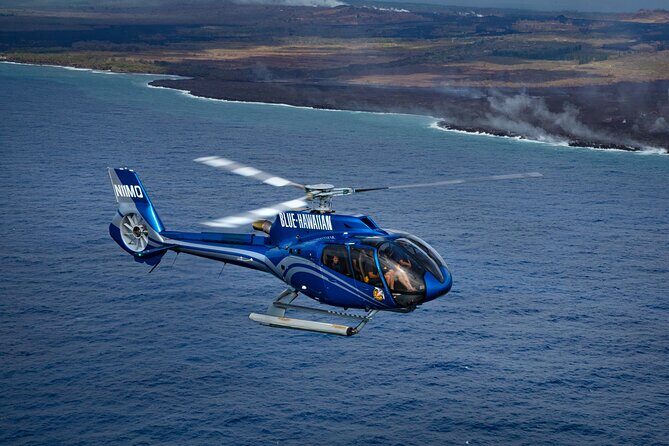
A volcano flight beats any map. This Hilo helicopter tour brings you close to Hawaii Island’s action with forward-facing seats and 180-degree views, plus headset communication so you can actually talk with the pilot. I love the Bose aviation-grade noise-canceling headsets and the way pilots keep things clear overhead, even while you’re staring at Kilauea and Mauna Loa from the sky. I also love that the helicopter caps the experience at just 6 passengers, so it feels more personal than a big plane.
One consideration: you’re flying in real weather and real flight conditions, so what you see (including volcano access) can shift with cloud cover and activity. When conditions limit visibility, you might not get the exact angles you hoped for, even if the flight still delivers stunning views of waterfalls, craters, lava flows, and the Hamakua Coast area.
In This Review
- Key Things That Make This Helicopter Tour Worth It
- The Core Idea: Why This 50-Minute Flight Works So Well from Hilo
- Seats, Headsets, and the 6-Person Limit That Changes the Vibe
- Stop 1: Hilo Town from Above, Including the 1100AD Connection
- Stop 2: The Shoreline Run—Rugged Coasts and the Volcano Edge
- Stop 3: Newly Formed Volcanic Ground and Historic Lava Flows
- What You’ll Commonly See Above Hawaii Volcanoes National Park
- Weather Can Change the Exact Volcano Angles (Plan for Flexibility)
- Price and Value: Is $482.90 for 50 Minutes Worth It?
- Logistics That Actually Matter: When to Arrive, What You Can Bring, and Weight Rules
- Pilots Make the Difference: Safety, Storytelling, and Real Names
- After the Landing: Turning a Flight into a Full Big Island Day
- Should You Book This Hilo Helicopter Tour?
- FAQ
- How long is the Big Island: Discover Hilo Helicopter Tour?
- How much does the tour cost?
- What’s the group size on this helicopter tour?
- Do you get headsets or communication with the pilot?
- Where does the tour start and end?
- How early should I check in?
- Is there a weight limit?
- What items aren’t allowed in the helicopter?
- What happens if poor weather prevents the flight or key sights?
Key Things That Make This Helicopter Tour Worth It
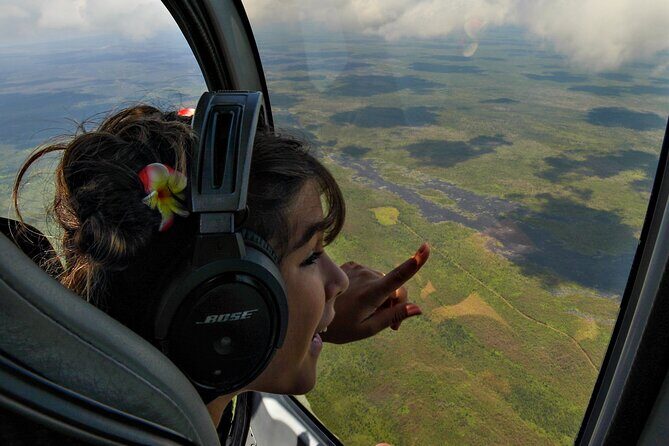
- Headset, mic, and two-way pilot communication so you’re not just passively listening.
- Max 6 passengers for a quieter, more hands-on feel in the cockpit area.
- Forward-facing 180-degree views that make waterfalls and shoreline bends pop.
- Route and sighting changes with weather (so flexibility is part of the deal).
- A pilot guide plus State of Hawaii certified tour-guide setup during the flight.
- Small details matter: no large bags/cameras/selfie sticks in the helicopter, and weight rules can affect seating.
The Core Idea: Why This 50-Minute Flight Works So Well from Hilo
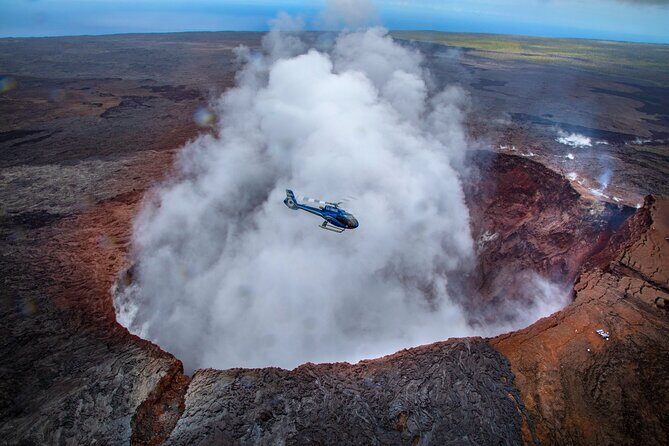
This tour is short on paper—about 50 minutes—but it’s set up for impact. You’re not spending hours in transit or waiting in a long line just to get a few good angles. Instead, you’re getting a focused aerial loop above Hawaii Volcanoes National Park and the surrounding areas, where the ground can be hard to reach by car.
From Hilo, that matters. You get the “how did they even get that view” feeling without committing your whole day to one long drive. If you only have a day (or half a day) on the Big Island, this kind of flight is one of the most efficient ways to understand how the volcano zone connects to the coastline.
Other helicopter tours in Big Island of Hawaii

Seats, Headsets, and the 6-Person Limit That Changes the Vibe
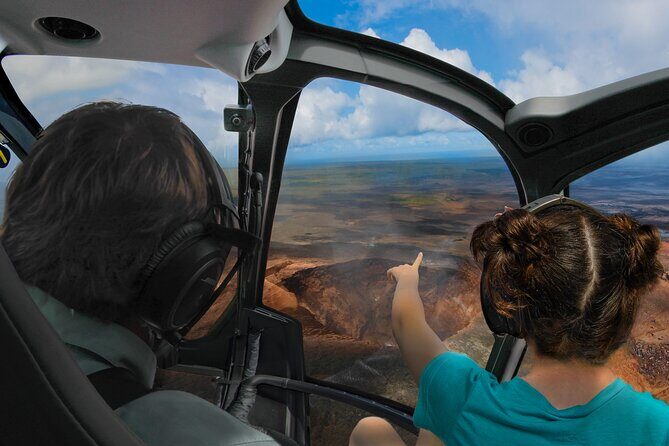
The aircraft has forward-facing seats, which is a big deal when you’re trying to see lava flow patterns, coastline geometry, and crater edges. You’re not stuck looking sideways at vague silhouettes. The views are 180 degrees, and that wide angle is what makes the scenery feel real instead of postcard-flat.
Then there’s the communication setup. You’ll wear Bose Aviation-grade electronic noise-canceling headsets with a microphone so you can hear the pilot’s commentary and interact if needed. That two-way setup is what turns this from a sightseeing flight into something closer to a guided conversation—especially when you’re flying low enough to notice details.
The helicopter also holds up to 6 travelers, which keeps the experience from turning into a noisy group chore. I like small-group formats for two reasons: you can hear the explanation better, and you’re less likely to feel rushed when the pilot spots something interesting.
Stop 1: Hilo Town from Above, Including the 1100AD Connection
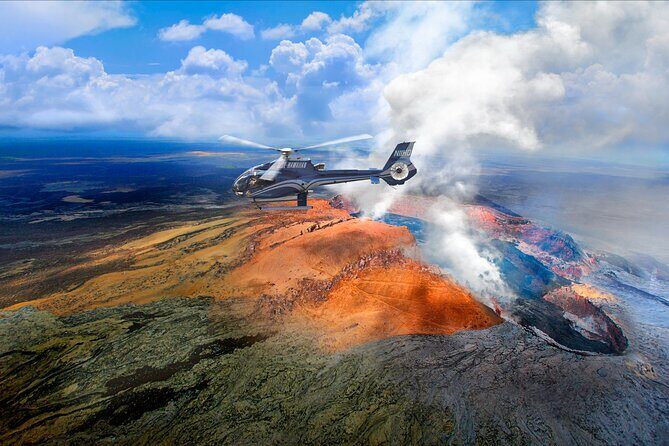
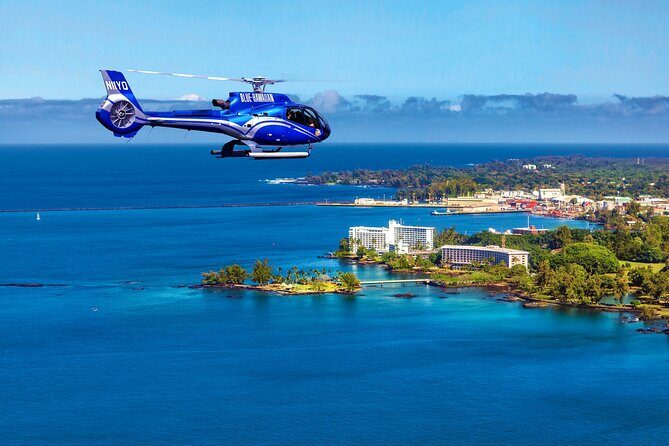
Your first look is over Hilo Town, with the tour noting that the area was first inhabited around 1100 AD. That historical anchor doesn’t mean you’ll get a museum lesson mid-flight, but it gives you a better way to read the shoreline and neighborhoods below.
From the air, Hilo’s layout feels different. You can see how the town sits relative to the volcano zone and the way the coast bends, which helps you understand why this part of the island became such a natural hub. If you’re the type who likes to connect places to time, this quick aerial overview is a good opener before you move into the more dramatic volcanic scenery.
A drawback to expect: aerial tours don’t slow down for detail the way ground stops do. You’re seeing Hilo Town fast, so if you want extra photo time for specific spots, plan to keep your camera ready and accept that you’ll capture highlights rather than every street.
Stop 2: The Shoreline Run—Rugged Coasts and the Volcano Edge
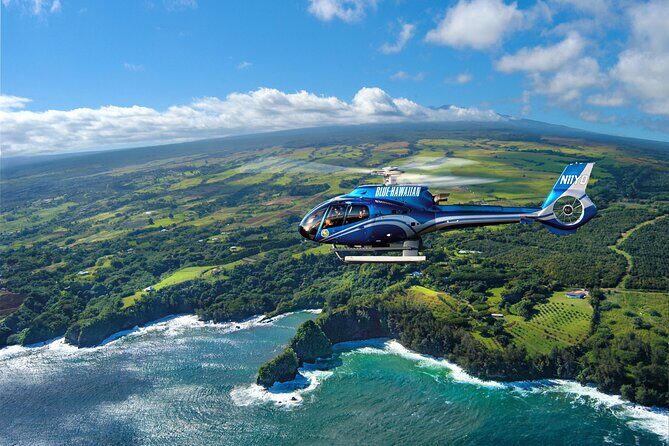
Next comes one of the tour’s most satisfying sections: a flight along the shoreline of the volcano area. The key promise here is that you’ll see the constantly changing, rugged terrain—the kind of terrain that shifts with volcanic activity and erosion and is hard to experience from a road viewpoint.
This portion is where you’ll start noticing the story the island is telling. The coastline isn’t just pretty; it’s a map of forces over time: rock types, cliff edges, and the way the land breaks toward the sea. The Hamakua Coast area is often included in what you can catch from the air, and the aerial perspective makes the curvature and textures much easier to understand.
If you’re sensitive to flying noise, this is also where the headset quality matters. Most people get through it comfortably thanks to the aviation-grade cancellation. Still, if you’re very noise-sensitive, keep in mind that some flying days can feel louder than others depending on conditions and aircraft vibration.
Stop 3: Newly Formed Volcanic Ground and Historic Lava Flows
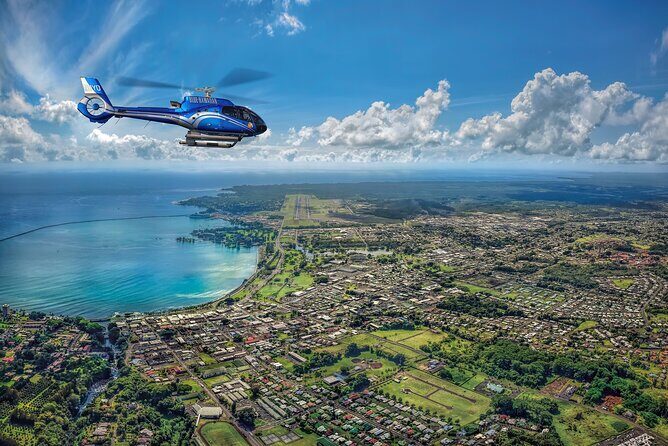
After the coastline segment, the flight focuses on volcanic terrain—newly formed volcanic landscapes and historic lava flows. This is the moment when the flight starts feeling less like a scenic loop and more like a living geologic lesson.
From the helicopter, lava flows aren’t just black streaks. You can sometimes see how they spread, where they cooled into different textures, and how later activity or erosion may have altered edges over time. That’s one reason the tour is marketed around views of Kilauea and Mauna Loa that are hard to reach by vehicle. Even if you’ve read about the volcanoes, the aerial angles help you picture the scale and connections.
One possible frustration to plan for: Kilauea access and visibility can depend on real-time conditions. In at least some real-world scenarios, pilots may adjust where they fly if eruptive activity or cloud cover doesn’t allow the best view. The tour still aims to deliver craters, lava features, and dramatic volcanic terrain, but you should treat volcano “close-up” expectations as conditional on weather and flight practicality.
Other helicopter tours in Big Island of Hawaii

What You’ll Commonly See Above Hawaii Volcanoes National Park
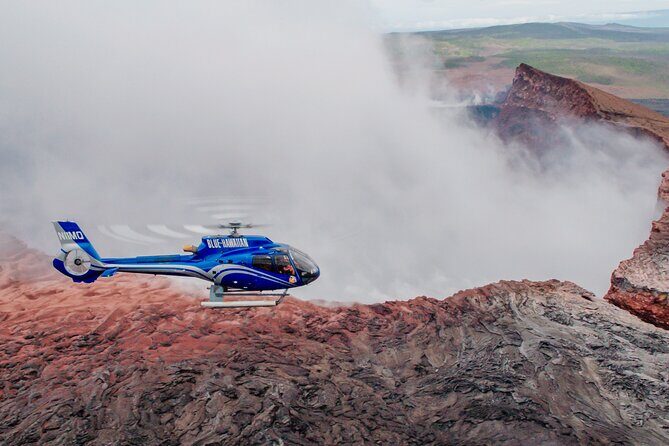
The typical sights tied to this route include Halemaumau Crater, Hawaiian waterfalls, and the volcano zone around Kilauea and Mauna Loa. You may also spot things like dramatic coastline sections and other volcanic markers, depending on what the pilot can safely access.
Here’s the practical takeaway: the tour is designed so that if one sight isn’t available, there are still plenty of visual anchors. Even when volcano views are limited, waterfalls, crater edges, and lava-flow textures can still make the flight memorable—because they’re visually distinct from a distance.
Also, the flight experience is a bit like chasing good light at sea. You can have a day with clearer views where everything snaps into focus, and another day where the pilot has to work around clouds. Weather doesn’t ruin the flight, but it can change how close to the action you get.
Weather Can Change the Exact Volcano Angles (Plan for Flexibility)
This tour requires good weather, and you’ll be told that up front. If the flight is canceled due to poor weather, you’ll be offered a different date or a full refund.
On the day itself, weather can still shape the route. Sights vary depending on weather, which means your experience may differ from someone else’s flight even if you both booked the same product. Some tours can deliver strong crater visuals and close views; others may focus more on the surrounding terrain and coast if the volcano area is clouded.
If you’re trying to match the flight to a specific eruptive moment, build in some mental flexibility. Helicopters are agile, but they still operate inside real limits: cloud layers, visibility, and what’s safe to fly through. If you want certainty, you won’t get it with any helicopter tour tied to active volcano conditions.
Price and Value: Is $482.90 for 50 Minutes Worth It?
At $482.90 per person for about 50 minutes, this isn’t a budget activity. You’re paying for three things at once: access to restricted-looking terrain, time savings, and the specialized helicopter + guided narration package.
In value terms, the big wins are:
- You can see what vehicles can’t reach in a short timeframe.
- You’re not paying for extra hours of transit and waiting.
- You get real guidance through two-way headset comm, not just a pre-recorded script.
One reason people feel it’s worth it is the small-group setup. With up to 6 passengers, the experience feels closer to a private aerial briefing than an assembly line. I’ve also seen evidence that seat choice matters; some folks said paying extra for a front seat upgrade was worth it when it gave them better angles.
Now the fair caution: the price can feel heavy if you end up with a day where weather limits volcano proximity or clarity. If you’re the type who will be disappointed unless you see a specific crater from a very close angle, you’ll want to keep your expectations grounded. The flight still aims to show volcano and coastline features, but the exact “wow” moment may vary with the sky.
Logistics That Actually Matter: When to Arrive, What You Can Bring, and Weight Rules
Check-in is 45 minutes prior to tour time. They also note that late arrivals will not be accepted and are non-refundable, so don’t treat that time like a suggestion. If you’re coming from another part of the island or getting picked up, plan extra buffer for traffic.
You’ll depart from and return to Blue Hawaiian Helicopters, Hilo, HI 96720. Transportation to and from the heliport isn’t included, and there’s a $10 USD parking fee at the heliport, which is not included.
Bags and gear rules are strict. Bags, large cameras, and extending selfie sticks are not allowed in the helicopter. That matters because it affects what you can bring and how easily you can move through check-in. Pack light and assume you’ll be moving quickly once they call your group.
There’s also a weight policy: total weight per passenger is 240 lbs. If you’re over 240 lbs (108 kg), you need an adjacent empty seat for safe balance, and the second seat is half off the regular tour price. This is one of those behind-the-scenes rules that keeps the flight safe, and it can affect your booking plan if you’re close to the limit.
Finally, there’s a medical-related restriction: no scuba diving within 24 hours of tour departure.
Pilots Make the Difference: Safety, Storytelling, and Real Names
What consistently drives satisfaction is the pilot’s skill and how clearly they explain what you’re seeing. In the real-world accounts tied to this operator, names like Ryan, Bastian, Chewy, David, and Ethan show up as standouts for smooth flying and strong narration.
That narration isn’t a minor detail. When you’re looking at craters and lava flows from above, you need someone to help you interpret what’s in front of you—like where a lava edge likely originated or why certain shapes matter. People also mention the feeling of safety with veteran pilots and well-run operations.
If you’re nervous going into the helicopter, pay attention to how the staff runs safety briefing and how the pilot handles the aircraft. That’s often where confidence starts.
After the Landing: Turning a Flight into a Full Big Island Day
When you land back at the heliport, you’re free to keep exploring. This matters because the tour is only about 50 minutes, so you’re not locked into the aircraft for the rest of the day.
A smart move is to plan a follow-up that matches what you saw. If you got strong crater visuals, you might want to spend the rest of the day on ground viewpoints related to that region. If the flight leaned more toward coast and waterfalls, build in time to see those areas by road or on shorter walks where possible.
Also, keep photo expectations realistic. The tour notes that there are in-flight video and photo packages available for purchase after the flight, but those are not included. So if you want photos, you can budget for that option—or just rely on your own camera setup within the allowed limits.
Should You Book This Hilo Helicopter Tour?
If you want the Big Island’s volcano scenery in a single hit, this is a strong choice—especially because the helicopter delivers views that are hard to get any other way, and the two-way headset makes it feel guided. The small group size (max 6) also raises the odds you’ll actually hear what the pilot is pointing out.
I’d especially book it if:
- You’re short on time and want high impact.
- You like aerial geography: coastline shape, crater edges, lava-flow textures.
- You value a well-run, safety-first operation with real narration.
Hold off or adjust expectations if:
- You need a guaranteed close-up of Kilauea at eruption-level action. Conditions can change.
- Weather is unreliable during your dates and you’d rather not gamble.
- You’re sensitive to aircraft noise and vibration; while headsets help, not every flight can feel the same.
Bottom line: this tour is a premium experience for a reason. It’s fast, it’s focused, and it shows parts of the volcano zone most people never see from above. If your schedule can handle a weather-shift plan, it’s one of the most satisfying ways to spend a day in Hilo.
FAQ
How long is the Big Island: Discover Hilo Helicopter Tour?
It’s about 50 minutes long, including time in the air.
How much does the tour cost?
The price is $482.90 per person.
What’s the group size on this helicopter tour?
Passenger counts are limited to a maximum of 6 travelers.
Do you get headsets or communication with the pilot?
Yes. You use Bose Aviation-grade, electronic noise-canceling headsets, plus microphones for 2-way communication and pilot commentary.
Where does the tour start and end?
It starts at Blue Hawaiian Helicopters, Hilo, HI 96720 and ends back at the same meeting point.
How early should I check in?
Check-in is 45 minutes prior to the tour time for weight check-in, safety briefing, and seating.
Is there a weight limit?
Yes. The total weight per passenger is 240 lbs. If you weigh over 240 lbs (108 kg), you need an adjacent empty seat to balance the aircraft (the second seat is half off the regular price).
What items aren’t allowed in the helicopter?
Bags, large cameras, and extending selfie sticks are not allowed.
What happens if poor weather prevents the flight or key sights?
The experience requires good weather. If it’s canceled due to poor weather, you’ll be offered a different date or a full refund. Tour sights can also vary based on weather on the day.