REVIEW · ISLAND OF HAWAII
Big Island: Night Swim with Manta Ray with Hot Chocolate
Book on GetYourGuide →Operated by Sea Quest Hawaii · Bookable on GetYourGuide
Glow lights, gentle giants, and warm cocoa after. This Big Island night swim takes you into Kona’s clear waters after dark to watch manta rays feed, up close, as they cruise around a floating light raft. You get the full wow factor of a manta ray feeding “ballet,” plus a cozy finish with hot chocolate and cookies.
What I like most is the setup: the snorkeling is built around attracting plankton with blue water lights, so the mantas reliably show up to snack. Second, the tour covers the stuff that usually makes snorkeling harder for people like me (and it will for you too): wetsuits, flotation devices, snorkel gear, and even Rx masks if you need them.
One thing to consider: this isn’t for casual swimmers. The tour limits participation to experienced snorkelers and swimmers only, and it’s not suitable for kids under 7 or anyone who uses a wheelchair.
In This Review
- Key things that make this night swim special
- Night Manta Ray Feeding: Why Keauhou Bay Works So Well
- Kailua-Kona Check-In to Boat Time: Keep It Simple
- Wetsuit, Rx Masks, and the Floating Light Raft Setup
- The Night Swim: What It’s Like When Mantas Feed Nearby
- Hot Chocolate and Cookies: Why the Warm-Up Matters
- Who This Tour Is Best For (and Who Should Skip It)
- Price and Value: Is $146 for 75 Minutes Worth It?
- Practical Tips So You Enjoy It More
- Should You Book This Kona Night Swim With Manta Rays?
- FAQ
- How long is the Big Island night swim with manta ray?
- Where is the check-in location?
- What is included in the price?
- What should I bring?
- Is transportation included?
- Who is this tour not suitable for?
- What happens if no manta rays are sighted on the tour?
- What languages are offered?
- What’s the cancellation policy and booking flexibility?
Key things that make this night swim special
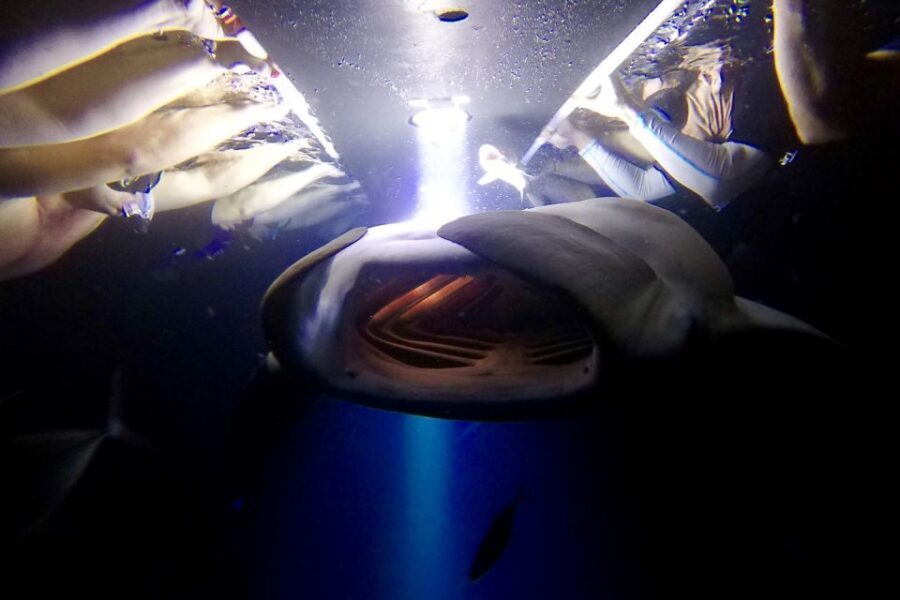
- Blue-lit flotation raft brings plankton to the surface so mantas can feed right where you’re watching
- Close-up behavior, not far-off sightseeing: you’re often watching rays glide near arm’s length
- All the comfort gear is included: wetsuit, flotation device, and snorkel equipment
- Guides guide you step by step and keep things organized in the dark water
- Warm finish with hot chocolate and cookies after the snorkel
Night Manta Ray Feeding: Why Keauhou Bay Works So Well
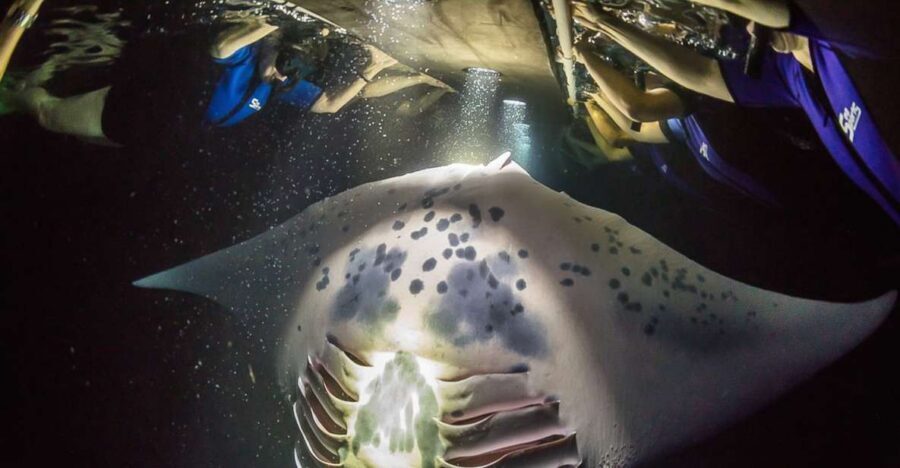
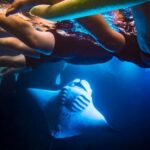
The magic of this experience is timing and food. After sunset, manta rays move toward areas where plankton concentrates near the surface. On this tour, the plankton is brought in by a floating platform with bright blue lights. You’re basically watching a natural feeding pattern, but with the lights positioned so you can see it clearly.
The departure area is near the mouth of Keauhou Bay, and it’s described as one of the island’s most successful and consistent manta ray viewing spots. That matters because mantas are wild animals. Even on a great night, nature controls the show. This is why the tour’s “rare no-manta” plan is a big deal: if you don’t see them on your outing, you get invited to go again another night at no extra cost, or on a confirmed afternoon snorkel tour for no additional charge.
Also, this is a nighttime snorkel. The water is usually clear and warm, but night changes everything: visibility is different, sound carries differently, and you tend to notice the motion of the rays more than the landscape around you. If you want the manta ray experience to feel like a real moment, not a quick stop for photos, nighttime is the way this tour is designed.
Other Manta Ray night snorkel tours in Island Of Hawaii
Kailua-Kona Check-In to Boat Time: Keep It Simple
Check-in is at 78-7138 Kaleiopapa St, Kailua-Kona, HI 96740. From there, the flow is straightforward: you’ll get outfitted on site (wetsuit and snorkel gear), then head out by boat. The whole tour is 75 minutes, so you want to arrive ready to go rather than scrambling for a towel at the last second.
The boat ride itself is short enough that most of your time is in the water. Still, the night conditions and the motion can affect people. If you’re prone to motion sickness, plan ahead. One of the practical takeaways from people who’ve done this is simple: if you get queasy on boats, consider taking something before you go rather than waiting until you’re already on the water.
What I’d treat as your main “logistics win” is that you’re not doing a long, complicated outing. You’re doing a focused experience: suit up, snorkel, watch feeding, get warm, done. For a lot of people on Kona, that’s perfect. It gives you a standout wildlife moment without eating your whole evening.
Wetsuit, Rx Masks, and the Floating Light Raft Setup
Once you’re on the boat and moving toward the water, the tour team handles the gear side. You get snorkel equipment (including Rx masks), wetsuit, and flotation devices. The tour also restricts participation to people who can swim and snorkel confidently, which helps keep the whole operation safer for everyone, including the mantas.
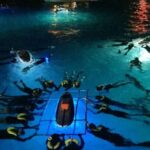
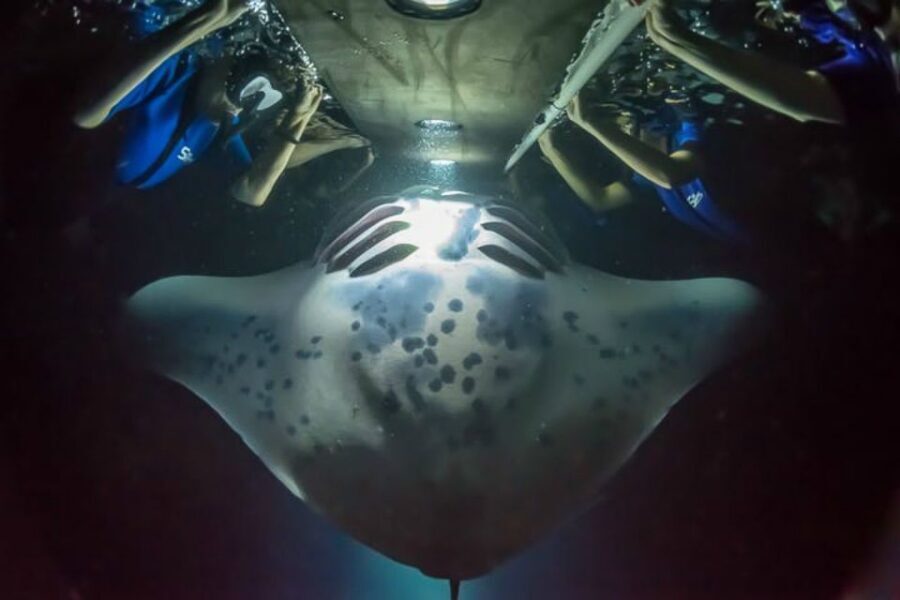
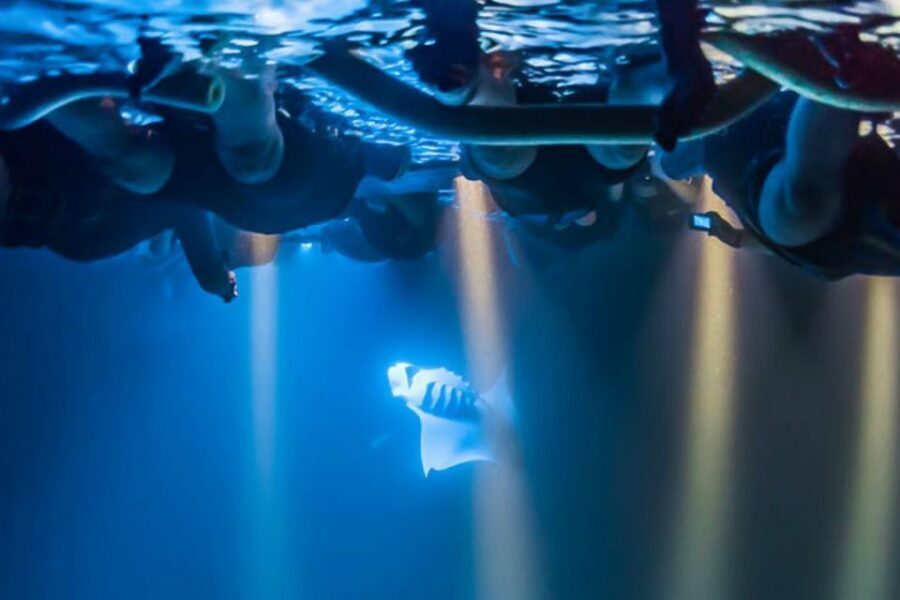
Then comes the key moment: the manta rays are feeding near you because of the floating light raft. The blue lights attract plankton, and mantas follow the food source. For you, that means you’re not searching reef after reef in the dark. You’re learning how to hold your position near the raft while the underwater action happens around you.
A detail worth knowing from real-world experience: people describe holding on to a board while lying on their stomachs, gripping handles so they stay steady. That technique matters because in night water you want stability more than movement. Your job is to stay calm, breathe normally, and let the manta rays pass through your viewing zone.
If you’re nervous about night snorkeling, this kind of structured setup is often what makes the difference between freezing up and actually enjoying it. You’re not alone in the water; the guides organize the group and keep watch so you’re not guessing how things should look.
The Night Swim: What It’s Like When Mantas Feed Nearby
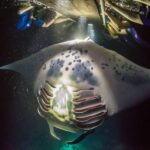
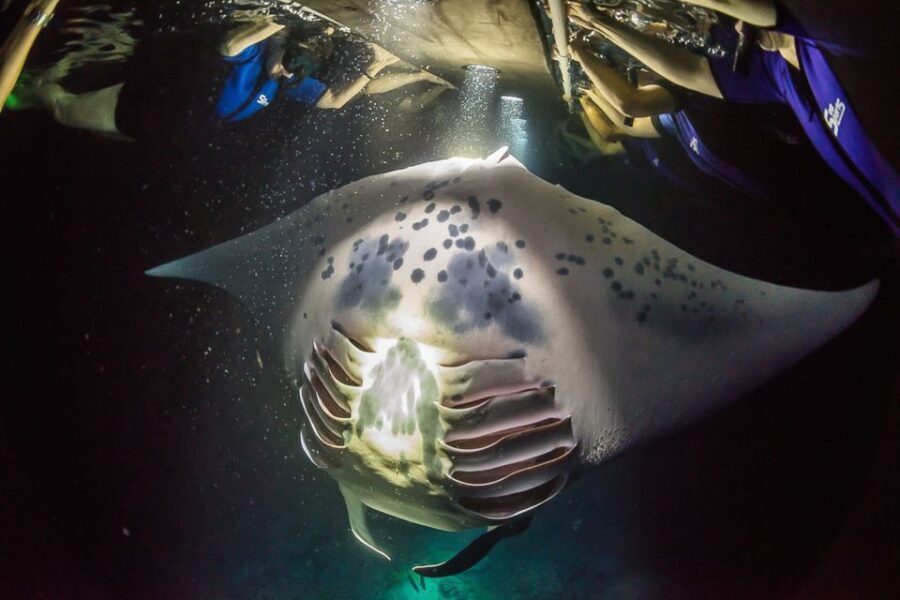
This is where the tour earns its reputation. After the safety briefing, you’ll enter the water and watch mantas glide in close. The feeding behavior is the headline: the rays come up with those enormous mouths open, feeding on plankton under the lights.
The “wow” part is not just that you see manta rays. It’s how close they can come. Many people describe mantas passing within inches or feeling like they’re almost at arm’s length. A big reason this feels so intense is size and closeness at night. Without daylight distractions, the manta’s shape reads clearly, and you notice the slow sweep of their wings as they move through your space.
The guides also set expectations around safety and behavior. A key reassurance repeated across experiences is that mantas are harmless—guides emphasize they don’t have teeth in the way people imagine and they’re not dangerous in the ways that fear stories sometimes suggest. That doesn’t mean you should get careless. It means your focus should stay on watching and staying steady while the guides keep you positioned.
If you’re the type who tends to over-correct—kicking, flailing, reaching for gear—try to slow down. Night water rewards calm control. You’ll get better views when you’re not trying to move toward the action.
One more practical note for cameras: a common mistake is getting too hands-on with gear. People have mentioned that bulky equipment or how you position a camera can cause disturbances. If you bring a waterproof camera, keep it stable and avoid sticking it forward at odd angles. Let the guides’ instructions run the show.
Hot Chocolate and Cookies: Why the Warm-Up Matters
After the snorkel, you head back to the boat and warm up with hot chocolate and cookies. It sounds small, but it’s not. Night water can feel chilly fast, especially once you’re out of the wetsuit environment and the air has cooled. Having something warm right after helps you feel human again, not just relieved.
This snack also gives the night tour a clear ending. You’re not left shivering while trying to process what you saw. You get a little reset moment, then you’re done.
If you’re planning the rest of your evening in Kona, this finish is convenient. You leave the water experience with a quick comfort stop built in, which means you can keep your plans without needing to scramble for food or warmth.
Other coffee and farm tours in Island Of Hawaii
Who This Tour Is Best For (and Who Should Skip It)
This is a serious snorkel swim at night, even though it’s not long. The tour limits participation to experienced snorkelers and swimmers only for safety. It’s not suitable for:
- Children under 7
- People with mobility impairments
- Wheelchair users
- Non-swimmers
- People without snorkel experience
If that doesn’t describe you, and you’re comfortable in open water, this tour fits well for people who want a high-impact wildlife experience without days of planning. It’s also ideal for anyone who likes structure: you’ll get equipment, briefings, and a controlled feeding setup instead of wandering in the dark.
There’s another group this tour tends to work for: people who get turned off by “tourist snorkeling” that feels generic. Here, the feeding behavior is the point, and the guides organize the experience so you actually get time to watch.
Price and Value: Is $146 for 75 Minutes Worth It?
At $146 per person for a 75-minute experience, the price can feel steep at first glance. But you’re not paying only for “being in the water.” You’re paying for a guided nighttime operation with:
- Snorkel gear and wetsuits
- Flotation devices
- Optional Rx masks
- A setup designed around manta feeding
- Hot chocolate and cookies after
- A guide in English
Also, the “no manta on your tour” policy adds real value. That’s not a guarantee you’ll always see mantas, but it does show the operator isn’t treating mantas sightings as a lottery ticket with no support.
One more value point: the time. You’re not spending half a day to maybe see something. You’re doing a focused slot near Kona that targets manta behavior specifically. If you’re on a tight schedule and you want one standout ocean moment, this style of tour can make sense even at a premium price.
Transportation isn’t included, so budget for getting yourself to check-in and back from the meeting point. That’s the only obvious “gotcha” listed here.
Practical Tips So You Enjoy It More
A few things will make this tour smoother, based on what tends to matter when snorkeling at night.
- Bring a towel and swimwear. You’ll be glad you didn’t forget.
- If you get seasick, consider pre-planning. Motion sickness came up in real experiences, and it can end your snorkel early.
- Stay calm and still in the water. The mantas come to the food source. You don’t need to chase.
- Keep camera handling low and controlled. If you’re trying to get the perfect shot, do it without blocking movement or poking forward.
- Listen to the guide before you enter. Their instructions help you position yourself for the best viewing.
Finally, go in with the right mindset. This is a wild-animal event. You’re not controlling the number of rays. What you can control is how well you stay relaxed, follow the plan, and enjoy the close-up moments when they happen.
Should You Book This Kona Night Swim With Manta Rays?
I’d book it if you check three boxes: you’re a confident swimmer/snorkeler, you want an up-close manta experience (not a distant viewing), and you appreciate a short, organized tour that ends with a warm snack.
Skip it if you’re not comfortable in the water at night or you’re unsure about your snorkel ability. The experience is limited for safety reasons, and the whole operation depends on guests being able to stay steady while mantas feed nearby.
If you’re on the fence, think about what you want most from Big Island. If manta rays are your top ocean goal, this is one of the more focused ways to make that happen near Kailua-Kona and Keauhou Bay. The $146 price lands better when you remember what’s included and how the feeding setup increases your chances of seeing the real action.
FAQ
How long is the Big Island night swim with manta ray?
The tour duration is 75 minutes.
Where is the check-in location?
Check-in is at 78-7138 Kaleiopapa St, Kailua-Kona, HI 96740.
What is included in the price?
Included: a guide, the night swim, snorkel gear (including Rx masks), wetsuits and flotation devices, and hot chocolate and cookies.
What should I bring?
Bring swimwear and a towel.
Is transportation included?
No. Transportation is not included.
Who is this tour not suitable for?
It’s not suitable for children under 7, people with mobility impairments, wheelchair users, non-swimmers, and people without snorkel experience.
What happens if no manta rays are sighted on the tour?
On the rare occasion where no manta rays are sighted, the local partner invites you to return another night at no additional cost, or on a confirmed afternoon snorkel tour at no additional charge.
What languages are offered?
The tour guide is in English.
What’s the cancellation policy and booking flexibility?
You can cancel up to 24 hours in advance for a full refund, and you can reserve and pay later to keep plans flexible.