REVIEW · BIG ISLAND OF HAWAII
Guided 3-Hour Hike in Volcanoes National Park
Book on Viator →Operated by Volcanoes Hiking Guides · Bookable on Viator
Lava steam pulls you right in. This 3-hour hike down into Halemaumau Crater lets you spot steam vents and sulphur deposits in the first mile, then reach the bottom for dramatic views of the Kīlauea lava lake, with a licensed guide like Jennifer who ties the science to the Hawaiian place stories. One catch: you’ll need moderate fitness, and the park expects good weather, so rain can make the rocky crater surfaces feel more work than wow.
I also like that this is a small group (max 10), so the hike doesn’t turn into a photo sprint with no time to ask questions. And yes, they include trekking poles and a backpack, which takes some of the stress off what you have to pack before you drive out.
The route runs down and back to the starting point at the Kīlauea Visitor Center. If you’re lucky with conditions, you may even catch an eruption glow, with views stretching toward Moana Loa in the distance.
In This Review
- Key things to know before you go
- The Halemaumau Crater descent: why this hike feels different
- Steam vents and sulphur deposits: the first mile’s big wow factor
- Tree ferns, ʻōhiʻa, and honey creeper birds in a volcanic world
- Reaching the bottom: what it means to see the Kīlauea lava lake
- Coming back up with crater views and Moana Loa in the distance
- Price and what $120 buys you (plus the fees you should expect)
- Who should book this guided crater hike—and who should skip it
- Should you book this 3-hour Volcanoes National Park hike?
- FAQ
- What is the duration of the hike?
- Where does the tour start and end?
- How much does it cost?
- Is the tour offered in English?
- What fitness level do I need?
- How many people are in the group?
- What fees are not included in the price?
- What happens if weather is poor or I need to cancel?
Key things to know before you go
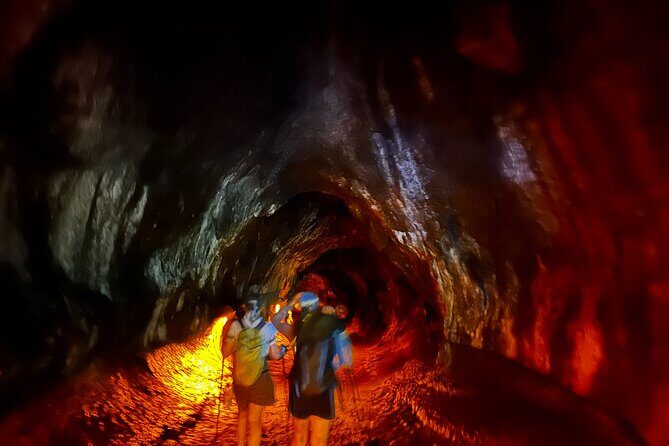
- First-mile geology you can see clearly: steam vents and sulphur deposits show up early, not after you’re tired.
- Licensed guide, small group size: max 10 travelers means more conversation and fewer bottlenecks.
- Crater-floor rainforest mix: tree ferns, ʻōhiʻa trees, and honey creeper birds make the hike feel alive.
- Lava lake viewing at the bottom: you’re going to a place where the volcano’s power is the main character.
- Rain matters: the experience depends on good weather, so bring gear you’ll actually want on.
- English-speaking tour: helpful if you want explanations without a language hurdle.
The Halemaumau Crater descent: why this hike feels different
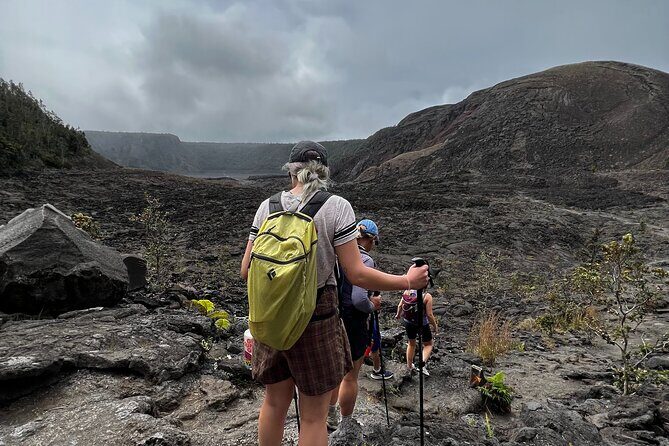
A lot of volcano tours show you a viewpoint from the road. This one is about walking into the crater and seeing how the ground changes as you go. You start at the Kīlauea Visitor Center (1 Crater Rim Drive, Volcano, HI 96785) and spend about three hours on the move, descending deep into Halemaumau Crater of Kīlauea.
What I like most is the pacing of the story. The first stretch grabs your attention with active-looking volcanic features like steam vents and sulphur deposits. Then the trail shifts into a rainforest scene inside the crater, with tree ferns and ʻōhiʻa trees that feel like the volcano is making room for life. That shift is the whole point: Kīlauea isn’t just rock and heat. It’s change, layer by layer.
The tour ends back where it started, so you’re not stuck planning transportation at the far end of the island. And because it’s a small group, the hike feels more like a shared lesson than a production line.
If you’re someone who likes your travel with a little structure, this works well. There’s a natural arc: early geology, rainforest middle, lava-lake climax, crater views to wrap. You’ll finish tired, but in the satisfying way.
Other Volcanoes National Park tours in Big Island of Hawaii



Steam vents and sulphur deposits: the first mile’s big wow factor
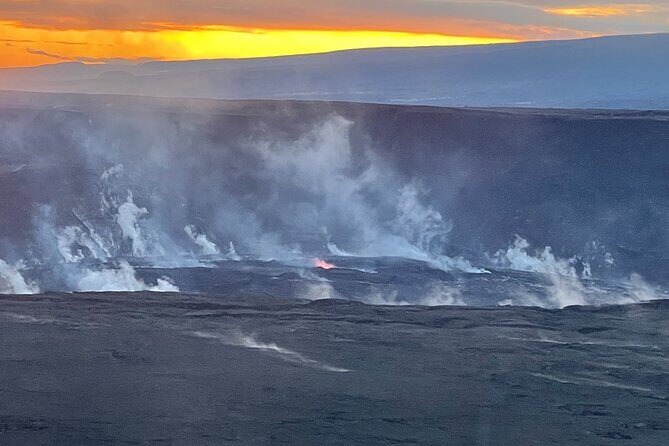
The very early part of the hike is the easiest way to understand what you’re dealing with. In the first mile, you’ll see remnants of an active volcano, including ethereal steam vents and sulphur deposits. Even if you don’t call yourself a geology person, this is the kind of visual that makes the explanations click fast.
Steam vents do two things for your brain. First, they show that the volcano is still active in small, ongoing ways. Second, they create an atmosphere. The crater air can feel different as you approach these features, and you start paying attention to where you place your feet, not just where you point your camera.
Sulphur deposits add a second layer. They’re not just pretty science. They’re evidence of what’s happening underfoot and around you. You’ll also get context from your licensed guide, who can explain why these areas look the way they do and how the environment around them affects what grows nearby.
One thing I’d keep in mind: steam and sulphur can make the air feel heavier or cooler than you expect. If you run hot, you might want light layers. If you run cold, you’ll probably appreciate having something warm-ish ready. (Even one rainy hike still felt interesting for the right reason: the guide kept the focus on what you were seeing, not on the weather.)
Tree ferns, ʻōhiʻa, and honey creeper birds in a volcanic world
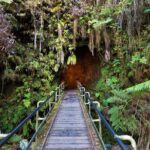
After the initial volcano features, the trail moves into a rainforest setting inside the crater. This is where the hike turns from geology lesson into ecology lesson.
You’ll look for tree ferns—tall, ancient-looking plants that love stable moisture and shelter. You’ll also see ʻōhiʻa trees, which are closely tied to Hawaiʻi’s volcanic landscapes. The guide will likely connect the plants to the crater environment, including how this unusual setting shapes what can survive here.
Then there are the honey creeper birds. You may hear them before you see them, especially when the canopy and humidity are doing their thing. Either way, this part matters because it changes your relationship with the crater. It stops being just a scary place and becomes a living system adapting to heat and ground chemistry.
I love when tours explain not only what something is, but why it’s there. Reviews highlight that guides like Jennifer and Yvonne connect what you’re seeing to Hawaiian legends and culture, not just names from a field guide. That’s the difference between walking through a park and actually understanding the place you’re in.
If birding is your thing, keep your expectations flexible. The tour is about a full hike, not a dedicated bird-watching session. But the chance to spot honey creepers and hear the rainforest soundscape is a real bonus.
Reaching the bottom: what it means to see the Kīlauea lava lake
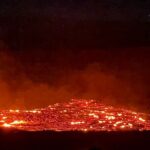
The biggest moment comes when you reach the bottom of the Kīlauea crater. This is where you get the chance to see the lava lake—the raw power of Kīlauea in a way that feels far more immediate than photos.
Even if you’ve seen lava images online, watching a live volcanic feature in person hits differently. You get scale cues from your own body next to the crater terrain. You also get a sense of motion and heat that’s hard to capture on a screen. The guide’s role here is to help you understand what you’re looking at—what it is, why it looks the way it does, and what the crater environment is doing around it.
This is also the moment where it pays to be ready for a sensory mix: bright glare, steam, uneven ground, and the feeling that you’re standing near something that doesn’t care about your itinerary. That’s not meant to scare you. It’s meant to help you plan mentally. Bring the right mindset: curious, slow, and focused.
The tour then transitions from “climax view” to “wrap-up views,” meaning you’ll come away with both the dramatic lava-lake moment and wider crater perspectives. If conditions line up, there’s even a shot at seeing an eruption—more on that in a minute.
Coming back up with crater views and Moana Loa in the distance
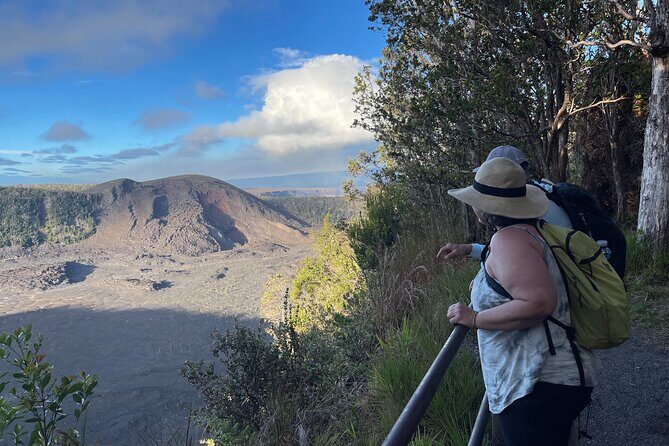
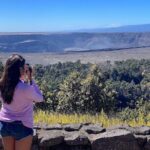
On the way back up, you get something that’s easy to overlook on active hikes: the chance to step back and see the bigger picture. You’ll finish with breathtaking views of the Kīlauea crater, and you may also get sight lines toward Moana Loa in the distance.
That matters because it turns the crater from a “place you visited” into a part of a larger volcanic system. Instead of only thinking about the lava-lake moment, you start seeing how Kīlauea fits into Hawaiʻi’s geography.
Also, the return is where you learn how good this tour’s structure is. Since it’s guided, you’re not trying to navigate a complex crater environment on your own. You’re moving with a plan, and that keeps the experience calmer even when the terrain asks for attention.
One review note stands out to me: even when rain soaked the hike, the group still found it very interesting because the guide stayed focused on explaining what was in front of them. That’s a real-world reminder. Weather can’t be scheduled. But good guiding can make bad weather stop feeling like a wasted day.
Other guided tours in Big Island of Hawaii




Price and what $120 buys you (plus the fees you should expect)
At $120 per person for about three hours, you’re paying for a guided descent, a licensed guide, and supplied hiking support like trekking poles and a backpack. For me, the value isn’t just “someone leads you.” It’s that you’re getting interpretation—how the crater works, what the plants are telling you, and how Hawaiian culture ties to the landscape.
The small group size (max 10) adds value too. It’s easier to stay engaged when you’re not fighting for space. It’s also easier to hear explanations when the group isn’t stretched out.
Now, don’t forget the park costs. The national park entrance fee is listed as $15, and there’s also a Volcanoes National Park admission fee listed as $15 per person. Those are not included in the tour price, so budget for them when you plan your day.
If you’re trying to keep your spending under control, do the math early. The hike itself is mid-priced for a guided crater experience; the park fees are the piece many people discover at the last moment.
One more practical note: this kind of hike tends to book ahead. The average booking window is about 71 days in advance, so if your trip dates are firm, I’d start looking sooner rather than later.
Who should book this guided crater hike—and who should skip it
This tour is best for people who want an active walk with strong guiding and clear explanations. If you like seeing the evidence of an active volcano up close, not just from behind a fence, you’ll probably feel right at home.
It’s also a solid choice if you care about the “why.” Reviews praise the way guides like Jennifer and Yvonne explain what you see—plants, volcano behavior, and Hawaiian legends. That turns the hike into more than exercise.
You should consider passing if:
- You don’t want a hike that requires moderate physical fitness.
- You’re uncomfortable walking on uneven surfaces in changing weather.
- You’re expecting a long stop-and-stare itinerary. This is a 3-hour hike, so you’ll spend much of your time moving.
It also suits couples and small families who want an organized experience without being rushed. And because it stays English-speaking, it works well for visitors who want interpretation without relying on translation apps.
If you’re the kind of traveler who hates overplanned days, this is nicely balanced. There’s structure, but it’s still outdoors, and the volcano is doing its own thing the entire time.
Should you book this 3-hour Volcanoes National Park hike?

If you want one guided way to experience Kīlauea that feels hands-on, book it. I’d choose it especially if you’re curious about how the crater environment supports rainforest life and you want a guide to connect the dots between steam vents, sulphur, tree ferns, ʻōhiʻa, and the lava-lake view.
I’d skip or rethink if you don’t handle weather uncertainty well. The experience requires good weather, and the tour can be canceled due to poor conditions, with a rescheduled date or a full refund offered.
One final nudge: check the forecast for your travel day and pack for it like you actually plan to use it. And if the sky opens up, don’t panic. Even a rainy hike has still delivered a meaningful, interesting experience when the guide keeps the focus on the crater itself.
FAQ
What is the duration of the hike?
It runs for about 3 hours.
Where does the tour start and end?
It starts at the Kīlauea Visitor Center (1 Crater Rim Drive, Volcano, HI 96785, USA) and ends back at the same meeting point.
How much does it cost?
The price is $120.00 per person.
Is the tour offered in English?
Yes, the tour is offered in English.
What fitness level do I need?
The tour is described as suitable for travelers with a moderate physical fitness level.
How many people are in the group?
The hike has a maximum of 10 travelers.
What fees are not included in the price?
The national park entrance fee is listed as $15.00, and there is also a Volcanoes National Park admission fee listed as $15.00 per person.
What happens if weather is poor or I need to cancel?
This experience requires good weather. If it’s canceled due to poor weather, you’ll be offered a different date or a full refund. Cancellation is free up to 24 hours in advance for a full refund.