REVIEW · BIG ISLAND OF HAWAII
Hilo Big Island-Volcano Day tour & Hotel PU from Honolulu Oahu
Book on Viator →Operated by Tournet Hawaii, Inc. · Bookable on Viator
Volcano views from sunrise to black-sand sea.
What makes this day trip click is that it bundles inter-island airfare with a full run through Hawaii Volcanoes National Park, then finishes with classic Hilo stops so you’re not stuck just staring at a volcano and calling it a day.
I love that the guiding is built around real, specific moments: the Kilauea Overlook, steam vents, and the rare crater-close view at Volcano House. I also love the change of scenery—Chain of Craters Road and a short lava-tube walk, then markets, gardens, and ocean turtles in Hilo.
One key consideration: it’s an early-start, long-day plan—expect about 12–13 hours total, with Waikiki pickup around 4:30AM.
In This Review
- Key Things That Make This Tour Worth Your Time
- Flying Honolulu to Hilo: The Smart Way to Do This Day
- 4:30AM Waikiki Pickup and a 12–13 Hour Clock
- Hawaii Volcanoes National Park: Kilauea Up Close Without Extra Fuss
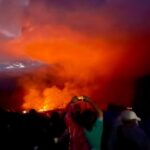
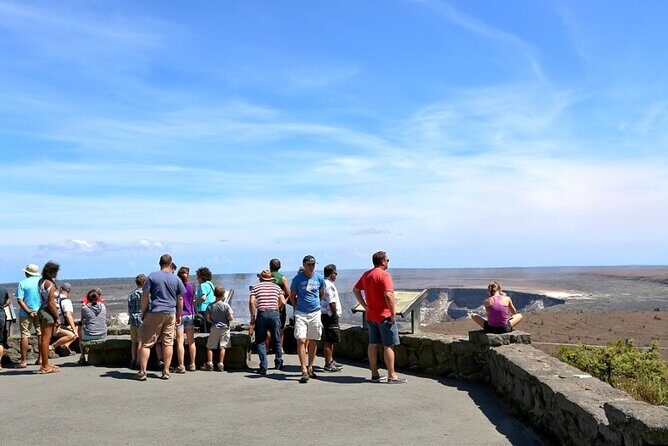
- Kilauea Overlook: The “Active” View
- Steam Vents: Heat You Can Feel
- Volcano House: The Crater-View Moment
- Chain of Craters Road: Lava, Petroglyphs, and Ocean Crossing
- Pauahi Crater and the High-Elevation Feel
- Lava Tube Walk at Nahuku–Thurston, Then Rainbow Falls
- Nahuku–Thurston Lava Tube: A Quick Cave Walk With Ferns
- Rainbow Falls: 80 Feet, Steps, and Possible Rainbows
- Hilo Highlights: Farmers Market, Sea Turtles, Gardens, and Macadamias
- Hilo Farmers Market
- King Kamehameha Statue Photo Stop
- Richardson Ocean Park: Black Sand and Green Sea Turtles
- Liliʻuokalani Japanese Garden
- Big Island Candies Factory Stop
- Weather, Lava Guarantees, and What to Pack
- Good Weather Is Required
- Lava Flows and Eruptions Are Not Promised
- What I’d Bring for This Kind of Day
- Price and Value: Is $585 Fair for a Full Day Like This?
- Who This Hilo Volcano Day Tour Is Best For
- Should You Book This Hilo Volcano Day Tour?
- FAQ
- How long is the Hilo Big Island volcano day tour?
- Where does the tour start and end?
- Is hotel pickup included?
- What if I’m staying outside Waikiki?
- Are flights and park tickets included?
- Are meals included?
- What should I bring for the weather?
- Is an eruption or lava flow sighting guaranteed?
- How big are the groups?
- Do I need an ID or passport?
Key Things That Make This Tour Worth Your Time
- Flights + volcano admissions are packaged so you spend less time planning and more time looking at lava.
- Volcano House gives you a close crater moment without needing special permits or extra tours.
- Chain of Craters Road is the big “wow” drive, with stops along lava zones, petroglyph fields, and a coast where lava meets the sea.
- Nahuku–Thurston Lava Tube is a short walk (about 10 minutes) through a tunnel-like cave with ferns at the entrance.
- Rainbow Falls adds a rainforest hike option with stairs that take you to the area behind the falls and up to the top viewpoint.
- Small group size (usually 2–12, up to 24) makes it easier to ask questions and move at a human pace.
Flying Honolulu to Hilo: The Smart Way to Do This Day
This tour is designed for people staying on Oahu who still want the Big Island’s geology and Hilo’s laid-back vibe. Instead of you having to figure out flights, car rentals, and timing on your own, the package handles round-trip inter-island airfare (HNL–HILO) plus tour transport once you land.
That matters because the timing on the Big Island is strict. Hawaii Volcanoes National Park is a long drive away from Hilo, and visibility for volcano areas can change with weather. Having flights “built into the day” helps keep the schedule from falling apart.
Also, you’re not just getting one attraction. You’re getting a day that mixes volcanic sights (Kilauea’s features, a lava tube, and Rainbow Falls) with Hilo culture basics: the farmers market, Japanese gardens, and a local candy stop. It’s a good balance if you’re curious, not just chasing one photo.
Other Big Island day trips and highlights tours


4:30AM Waikiki Pickup and a 12–13 Hour Clock
Let’s be real: the hardest part here is the wake-up time. Pickup in Waikiki is typically around 4:30AM (the exact time depends on your flight), and the tour runs roughly 12–13 hours end-to-end.
That early start affects what you should bring:
- Keep your day flexible. The schedule can shift depending on air schedules and weather.
- Pack for more than one kind of weather. Even if the morning feels calm, volcanic-area conditions can turn damp fast.
If you’re staying outside Waikiki, you’ll meet the guide at Hilo International Airport instead. And regardless of where you start, the day ends back at your meeting point.
One more practical note I like: the group is usually small—2–12 travelers, with a ceiling around 24 if demand is high. In a long day, that can be the difference between a tense cattle-car vibe and a calm ask-anything ride.
Hawaii Volcanoes National Park: Kilauea Up Close Without Extra Fuss
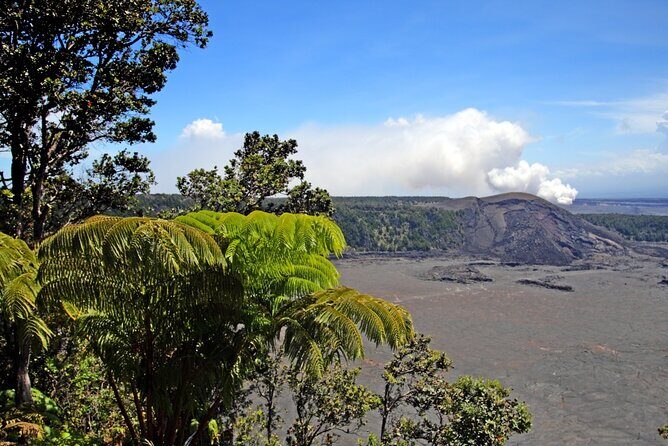
The big centerpiece is time in Hawaii Volcanoes National Park. You’ll get about 2 hours of sightseeing inside the park, and the route is designed to hit a handful of high-impact Kilauea experiences in a logical order.
Here’s what you can expect, stop by stop:
Kilauea Overlook: The “Active” View
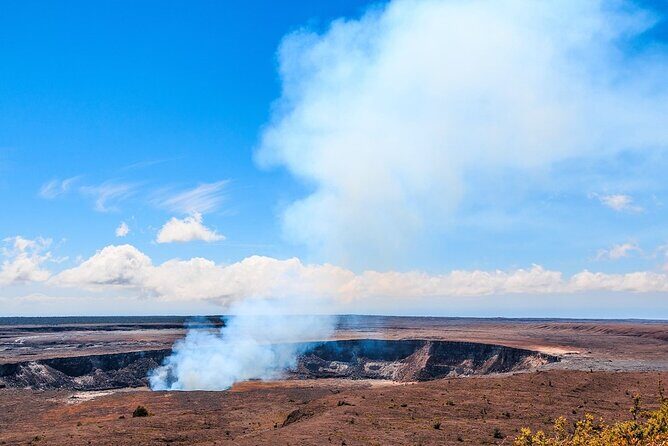
At the Kilauea Overlook, you’re set up for a front-row look at ongoing volcanic activity—when it’s visible. It’s one of those places where you quickly understand why this volcano gets called one of the world’s most active.
Keep expectations grounded: eruptions aren’t guaranteed, so you’re really paying for the chance to see Kilauea in action, not for a guaranteed blast.
Steam Vents: Heat You Can Feel
Next comes the steam vents, where hot steam rises through cracks tied to geothermal activity. The appeal here isn’t just visuals. It’s that direct sense of heat coming up from the ground—an instant reminder you’re standing on a living system.
These stops are short, around 15 minutes, but that’s a feature, not a bug. You’re moving between different zones without getting stuck waiting for the day to “warm up” to one particular spot.



Volcano House: The Crater-View Moment
Then there’s Volcano House, a historic lodge with one of the best crater-view experiences you can manage during a normal visit. Even if you’re not staying overnight, it’s a chance to linger a little: photos, a breather, and a view that feels dramatically close compared to many overlooks.
This is also where the guide’s context helps. When you understand what you’re looking at—how the crater relates to the broader Kilauea system—you can slow down your watching instead of just snapping pictures.
Chain of Craters Road: Lava, Petroglyphs, and Ocean Crossing
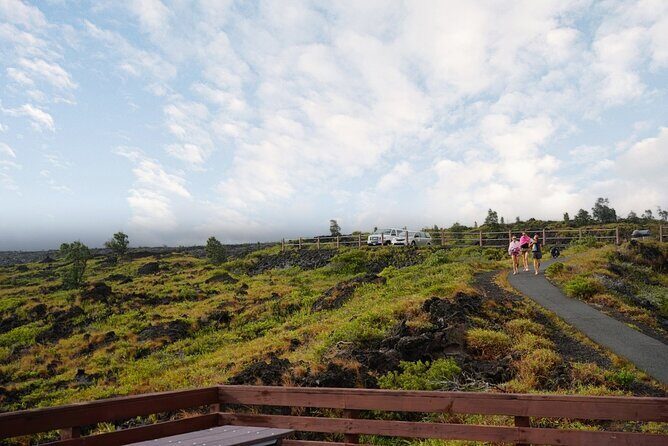
After the main park stops, you’ll head onto Chain of Craters Road, about 31 km / 18.3 miles across the park’s eastern lift and coastal area.
What’s special is the drive tells a story. It starts near lava zones, runs past a large petroglyph field, and continues toward the place where lava crosses the road in the sea. That last part is the kind of sight that makes you stop talking for a minute.
You’ll also catch the viewpoints that break the drive up:
- Kealakomo Overlook is midway along the road and offers wide ocean views plus long stretches of dark lava along the coast.
- There are picnic tables, which is useful if you want a quick snack moment without leaving the route.
- The overlook also references the 1969 Mauna Ulu eruption, when the original road was buried.
Pauahi Crater and the High-Elevation Feel
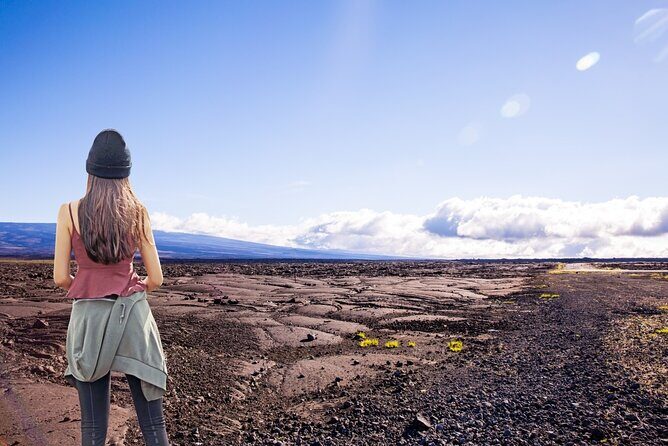
Between the drive viewpoints, you’ll stop at Pauahi Crater. This cinder-cone-style crater sits on the slopes of Mauna Kea (as described for this stop), and it has that “otherworldly” high-elevation look: sparse vegetation, strong color from red/black volcanic ash and fragments, and a wide-open view feel.
Again, the stop is brief—around 15 minutes—so the trick is to use it like a guided photo walk with context. If the guide explains what formed the features and why it looks that way, you’ll leave with more than a picture. You’ll leave with an understanding of what you’re seeing.
Lava Tube Walk at Nahuku–Thurston, Then Rainbow Falls
After the crater-and-road portion, the tour adds two experiences that feel very different from the open-air volcano views.
Nahuku–Thurston Lava Tube: A Quick Cave Walk With Ferns
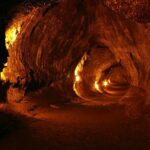
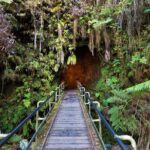
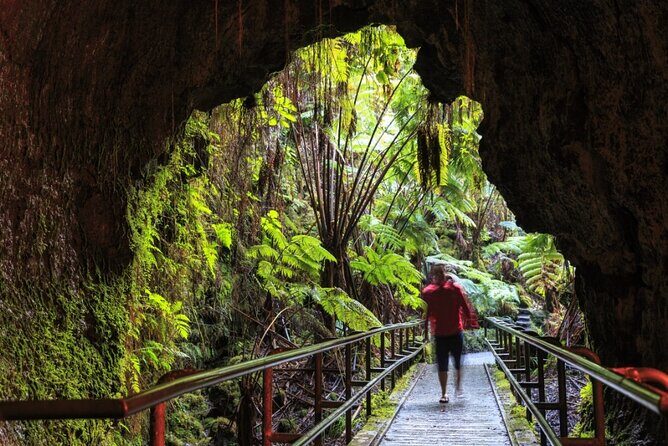
At Nahuku–Thurston Lava Tube, you walk a paved path for about 10 minutes to see the tunnel entrance and then explore inside. The feature described here is a lava tube formed naturally after a major eruption centuries ago.
The wow moment is the contrast: outside light and plants, then that darker, cave-like interior. The entrance is framed with big ferns, which makes the tube feel almost staged—except it’s completely natural.
This is one of the stops I’d recommend to anyone who wants something beyond overlooks. It’s hands-on, feet-moving, and it gives you a different angle on volcanic power.
Rainbow Falls: 80 Feet, Steps, and Possible Rainbows
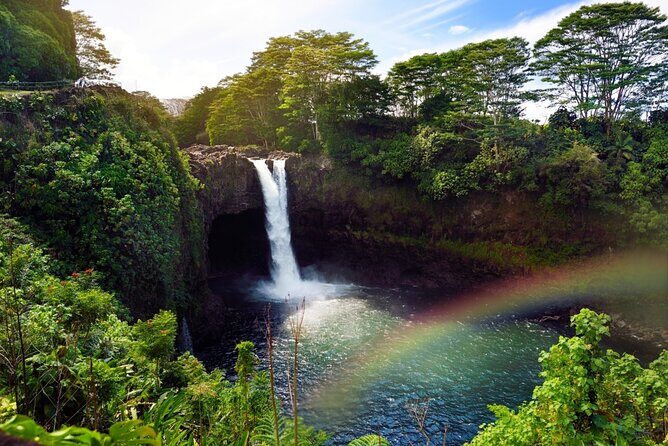
The day ends (at least for the big nature hits) with Rainbow Falls at a state park. The waterfall drops about 80 feet and often shows rainbows when conditions line up.
You’ll have time to view it close-up, visit the pond area, and then walk the stairs for an option behind the falls and another up to the top viewpoint. Even if you don’t catch a rainbow, the lush-feeling forest walk is a solid way to decompress after the volcano intensity.
Hilo Highlights: Farmers Market, Sea Turtles, Gardens, and Macadamias
Once the volcano segment is done, the tour shifts gears into Hilo. The goal here is to show you what makes Hilo feel different from a typical tourist town: older buildings, local food, and easy ocean scenery.
Hilo Farmers Market
You’ll stop at the Hilo Farmers Market, an open-air downtown market known for locally grown produce, flowers, and crafts. It’s a good place to slow down and pick up something small—like fruit, snacks, or a gift—without feeling rushed.
King Kamehameha Statue Photo Stop
Next is a quick King Kamehameha I statue stop for photos in downtown Hilo. It’s short (about 10 minutes), but it gives context for Hawaiʻi’s story and helps you place what you’re seeing later in the day.
Richardson Ocean Park: Black Sand and Green Sea Turtles
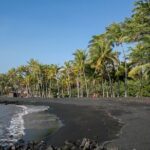
At Richardson Ocean Park, you’ll see black lava rock and a black sand shoreline. This is one of the Big Island spots where you can sometimes spot Hawaiian green sea turtles resting near the shore.
This is worth treating respectfully. From what’s described here, turtles are a natural bonus. You’ll get the ocean-and-lava scenery even if you don’t see one at that exact moment.
Liliʻuokalani Japanese Garden
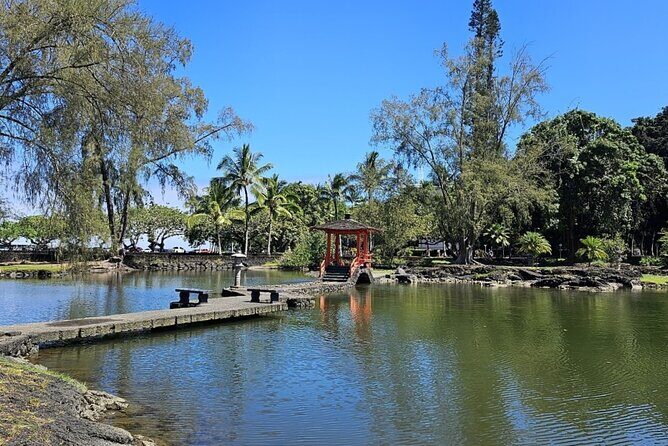
Then comes Liliʻuokalani Gardens (a Japanese garden created in 1968). You get bridges over fishponds, rock gardens, pagodas, Japanese stone lanterns, and a teahouse.
This stop is a nice counterbalance. After volcanic chaos, it’s quiet, pretty, and easy to walk through without needing hiking gear.
Big Island Candies Factory Stop
The last known stop is Big Island Candies, where you can visit the factory/retail area. It’s especially known for Macadamia Nut Chocolate Dipped Shortbread Cookies, and the stop is a practical souvenir idea: sweet, local, and easy to pack.
Weather, Lava Guarantees, and What to Pack
Two things can affect your experience here, and it’s smart to plan for both:
Good Weather Is Required
The tour needs good weather to run. Also, Hawaii Volcanoes National Park may have construction or maintenance work, which can cause temporary closures and itinerary changes.
Lava Flows and Eruptions Are Not Promised
You might see dramatic activity, but sightings are not guaranteed. The tour is built around the chance to view Kilauea’s features, steam vents, and crater areas. Plan to be flexible, not disappointed.
What I’d Bring for This Kind of Day
The tour recommends a lightweight rain jacket or a regular light jacket. I’d add a small common-sense approach: wear comfortable shoes for stairs at Rainbow Falls and for uneven park ground, and bring a warm layer for the early morning air, especially if you’re flying in and moving right away.
Also, bring your valid ID or passport. The inter-island flights are part of this tour, and the name must match your government ID exactly due to TSA/FAA requirements.
Price and Value: Is $585 Fair for a Full Day Like This?
$585 per person sounds steep at first glance. But in this case, it’s not just a guided day on a single island. The price includes major cost anchors:
- Round-trip inter-island airfare (Honolulu to Hilo and back)
- Professional guiding
- Hotel pickup in Waikiki (round trip)
- Hawaii Volcanoes National Park admission
- Rainbow Falls admission
- Air-conditioned vehicle and bottled water
Meals are not included, so you’ll still pay for lunch and anything else you eat that day. But even with that in mind, the tour can be good value if you’d otherwise spend time and money building the whole plan yourself—especially the flight piece and the park entry side.
One more value angle: the schedule is designed to prevent wasted time. With volcanic stops, the difference between “good pacing” and “missed time” can be huge. The guide’s role isn’t just information; it’s keeping the day from drifting.
Also note: the tour tends to be booked ahead. On average it’s reserved about 40 days in advance, so if your dates are firm, don’t wait until the last minute.
Who This Hilo Volcano Day Tour Is Best For
This tour fits best if you:
- Want a Big Island day but you’re staying in Oʻahu.
- Like structure and someone else handling the hard parts (flights, park entry, routing).
- Prefer a small group pace where you can ask questions.
- Want both volcano power and easy Hilo culture stops in one day.
It’s not described as a hike-heavy day, and it says most people can participate, but it also notes it’s not recommended if you did scuba diving the day before.
Should You Book This Hilo Volcano Day Tour?
If you want a full Big Island taste in one shot, I’d lean yes. The combination of Hawaii Volcanoes National Park highlights (including Volcano House and a lava tube) plus Hilo basics (farmers market, Japanese gardens, ocean park) is the kind of pairing that saves days of planning.
One caution that matters: this is an early-start, long-day format. If you’re the type who hates waking up before the sun and waiting around airports, you’ll feel it. Also, you’re paying for access and viewpoints, not for a guaranteed eruption.
My practical recommendation: if your dates align, your paperwork is ready (name exactly as on ID), and you can handle a long day, this is a strong way to do Hilo and volcano country without turning your trip into a logistics project.
FAQ
How long is the Hilo Big Island volcano day tour?
The duration is about 12 to 13 hours.
Where does the tour start and end?
The activity starts at Hilo International Airport and ends back at the meeting point.
Is hotel pickup included?
Yes, round-trip hotel pickup is offered in the Waikiki area only, typically around 4:30AM depending on the flight time.
What if I’m staying outside Waikiki?
If you’re not in Waikiki, you meet the guide at the Hilo Airport.
Are flights and park tickets included?
Yes. Inter-island round-trip airfare (HNL–HILO), Hawaii Volcanoes National Park admission, and Rainbow Falls admission are included.
Are meals included?
No. Breakfast, lunch, and dinner are not included.
What should I bring for the weather?
A lightweight rain jacket or a regular light jacket is recommended.
Is an eruption or lava flow sighting guaranteed?
No. Volcanic eruptions and lava flow sightings are not guaranteed.
How big are the groups?
The tour is usually a small group of 2 to 12, and it can be up to 24 depending on demand.
Do I need an ID or passport?
Yes. You must bring valid ID or a passport for boarding, and your booking name must match your government ID exactly.