REVIEW · BIG ISLAND OF HAWAII
Kailua-Kona Haunted History Walking Ghost Tour
Book on Viator →Operated by American Ghost Walks - Hawaii · Bookable on Viator
Spooky tales start at Kona Pier. This 5:30 pm walking tour mixes Haunted History with real place-based stories, so the city feels like a living timeline. You’ll hit oceanfront spots and major landmarks while hearing why certain events, objects, and legends still matter in Hawaiʻi.
I especially like the way the guide ties each stop to Hawaiian culture and belief, not just generic fright stories. I also love the small-group vibe, with a max of 30, plus the built-in time to ask your questions as you walk.
One thing to consider: this is history-forward, and the “ghost” portion can land differently depending on the guide and the story mix. If you want nonstop scary moments, you may find it more legend-and-context than pure paranormal hype.
In This Review
- Key things I’d circle before you book
- A 5:30 pm Kona walk that uses night timing well
- Price and value: what $59 really buys in Kona
- Where you meet, how long you walk, and what the route feels like
- Kailua Pier: steamship Mauna Loa and a very uncomfortable ghost wash
- Kamakahonu National Historic Landmark and the kiʻi akua question
- Huliheʻe Palace and sacred artifacts: what is a pohaku?
- Kona Inn Shopping Village: former hotel hauntings and a sports legend
- Mokuaikaua Church: early Christianity and miracles with weird timing
- Courtyard by Marriott Kona Beach Hotel: spirited stays on the Kona Coast
- Kamakahonu Beach: UFO sightings and spiritual interpretations
- Lost Coast Tattoo Studio: why tattoos mean more than decoration
- How to get the most out of this history-plus-hauntings style
- Should you book the Kailua-Kona Haunted History Walking Ghost Tour?
- FAQ
- What does the Kailua-Kona Haunted History Walking Ghost Tour cost?
- How long is the tour?
- What time does the tour start?
- Where do I meet the tour?
- How many stops will we visit?
- Is admission included for the locations on the route?
- Is the tour in English?
- Are service animals allowed?
- What happens if the weather is bad or I need to cancel?
Key things I’d circle before you book
- Eight downtown stops in about two hours, with a steady pace and lots of quick context
- Small group size (30 max), which makes questions feel less awkward
- Free admission at each featured location, so your $59 goes to the storytelling
- Cultural anchors at every stop, from kiʻi akua to sacred artifacts and spiritual meanings of tattoos
- A mix of haunting themes: steamship ghosts, hotel spirits, church miracles, UFO sightings, and more
- You might get a standout guide, with multiple names praised for clear, personable narration (like Heather, Tricia, Gabby, Cosmin, and Costman)
A 5:30 pm Kona walk that uses night timing well
Kailua-Kona at evening has a different rhythm than daytime. You’re not trying to “power through” landmarks in bright sun; you’re moving through them while the air, the streetlights, and the oceanfront views do some of the mood-setting for you.
This works best if you’re the type of traveler who likes stories that connect to specific corners of the city. The tour doesn’t treat Kona like a backdrop. It treats Kona like a character.
And yes, it’s a ghost tour in the sense that hauntings, mysteries, and unexplained events are part of the route. But it’s also a guided walk through Hawaiʻi’s past and spiritual ideas, which is where a lot of the value sits.
Other walking tours we've reviewed in Big Island of Hawaii

Price and value: what $59 really buys in Kona
At $59 per person for about 2 hours, you’re paying mainly for guidance, pacing, and the “why this place matters” connections. You’re not paying for lots of paid entrances, because the stops listed are ticket-free for admission.
That matters. In tours that bundle in museum fees, you can feel like your money goes to door tickets, not to the guide. Here, you’re paying for an organized route that strings together historic sites and legend-heavy interpretations.
It also helps that the group cap is 30 travelers, which typically keeps the tour from feeling like a school field trip. If you’re the kind of traveler who wants to ask follow-up questions, that structure is a real advantage.
Where you meet, how long you walk, and what the route feels like
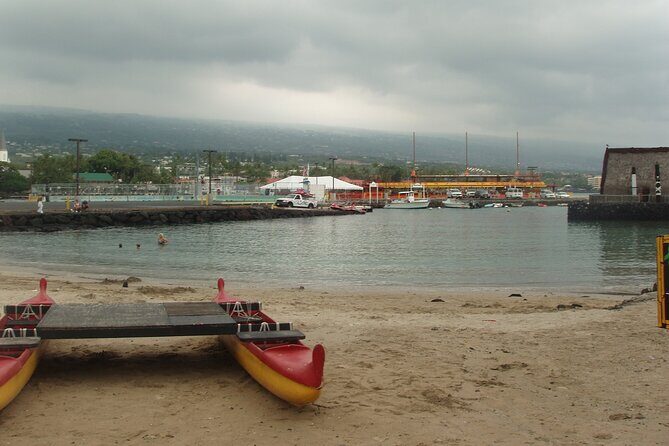
You start at the Courtyard by Marriott King Kamehameha’s Kona Beach Hotel, 75-5660 Palani Rd, Kailua-Kona, HI 96740, at 5:30 pm. The tour ends back at the same meeting point.
The schedule is built around short stops of around 15 minutes each, which adds up to that roughly two-hour total. That means you’ll see a lot of Kona, but you won’t linger long enough for deep research at each location.
Two practical notes:
- Dress for the weather. The experience requires good weather, and since you’re walking outside, wind or chill can matter along the coast.
- Wear shoes you trust on city sidewalks. You’re moving from pier to church to hotels to beach areas.
The tour also notes English as the language, uses a mobile ticket, and runs with a maximum of 30 people. Service animals are allowed, and it’s near public transportation.
Kailua Pier: steamship Mauna Loa and a very uncomfortable ghost wash
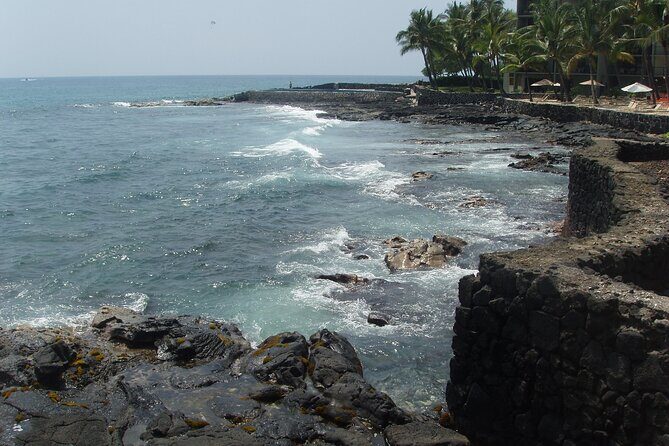
The tour’s first stop is Kailua Pier, which is a strong start for this kind of storytelling. Oceanfront locations make the ghost themes feel less forced, and you get immediate visual grounding for the tales you’ll hear next.
Here, you’re told turn-of-the-century accounts involving the steamship Mauna Loa and a haunting described like a choking ghost wash. The story also brings in okolehao, a ti-leaf liquor, and it puts a question in your head about what people believed could heal or protect.
What I like about starting here: it gives you a theme right away. The guide isn’t just listing haunted sites. They’re setting up how fear, folklore, and daily life can overlap on the coast.
Potential drawback: pier areas can be breezy. If you’re the type who gets cold quickly, plan for that first 15 minutes.
Kamakahonu National Historic Landmark and the kiʻi akua question
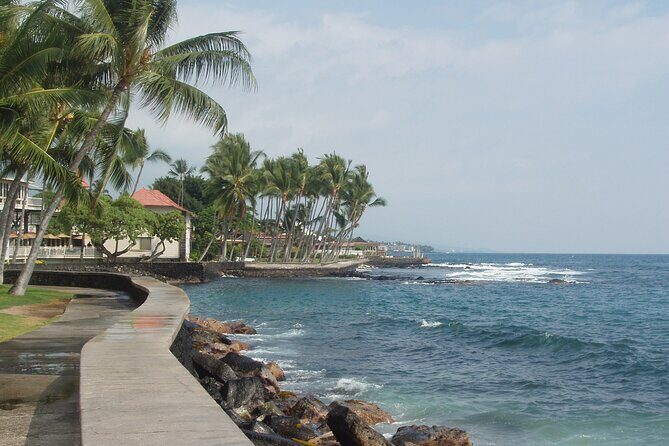
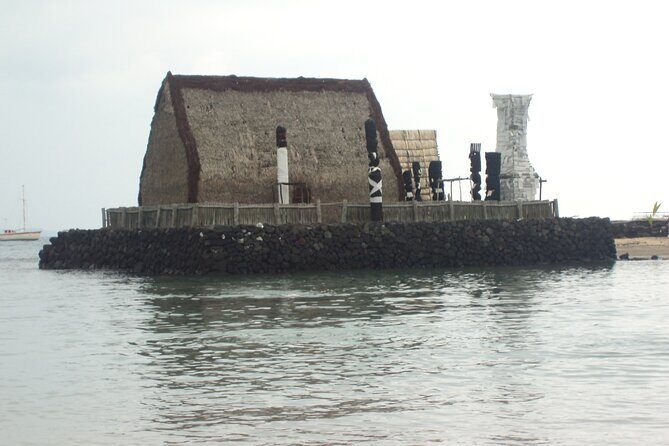
Next you’re at Kamakahonu National Historic Landmark, tied to Kamehameha’s compound, including the fact that he died there in 1819. This isn’t treated like a quick photo stop. You’re pointed toward the meaning of what you’re seeing.
The story focuses on the giant wooden statues called kiʻi akua and asks what their significance is. That’s the kind of prompt that helps you avoid the common “pretty object, no context” problem.
If you like history that actually changes how you look at a place, this stop tends to do that. It reframes the landmark as something spiritual and political, not only historic.
Possible consideration: because it’s a significant site, you may not have endless time to linger or read every detail yourself. Use the guided explanation to get the meaning, not just the location.
Other historical tours in Big Island of Hawaii




Huliheʻe Palace and sacred artifacts: what is a pohaku?
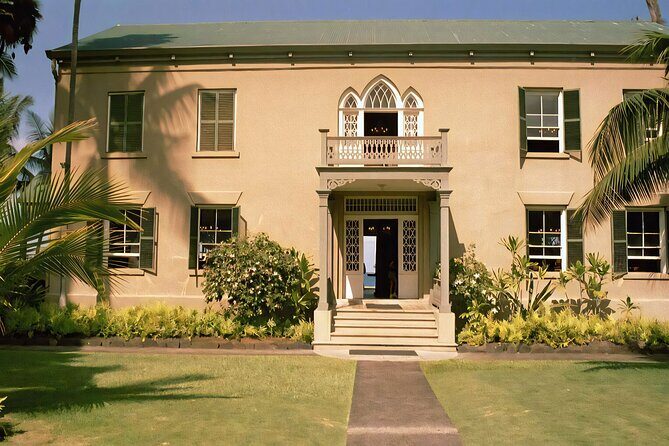
At Huliheʻe Palace, the tour shifts from kings and compounds to questions about sacred objects. You’ll hear about the secret power of certain museum-held items and a basic question: what is a pohaku?
Even if you don’t know the term now, the way the tour sets it up matters. It encourages you to see objects as connected to belief systems and relationships between the visible and spiritual worlds.
This stop is a good fit if you want cultural context that isn’t locked behind a lecture. The storytelling style is built for walking pace, with enough time to ask questions before you move on.
The “watch-out” here is simple: palace grounds can be emotionally and culturally sensitive. Go in with respect, and you’ll get more out of the experience.
Kona Inn Shopping Village: former hotel hauntings and a sports legend
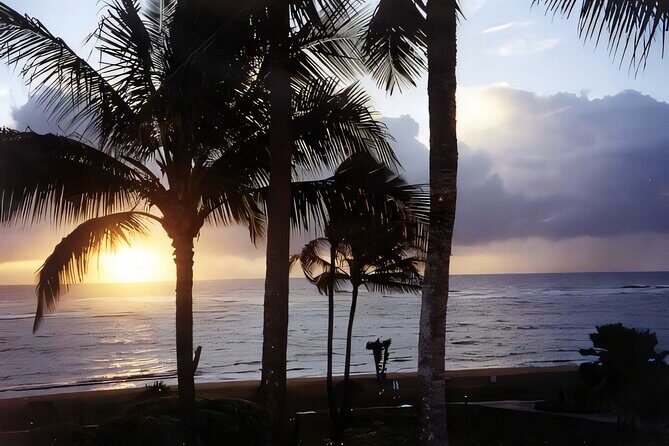
You’ll then reach Kona Inn Shopping Village, which used to be a hotel and now anchors a new kind of stop: a haunting framed around strange events and local heritage.
The tour also ties the location to the special heritage of a Hawaiian sports legend, and it raises questions about whether his abilities were supernatural. That blend is part of the point—Kona’s legends aren’t only about ghosts. They’re also about people, reputation, and what communities choose to remember.
What’s useful for you here: it turns a shopping stop into a story stop. If you plan to browse after, you’ll do it with better context about why certain tales attach to certain corners of town.
Potential drawback: depending on the moment, you may be in and out while other people are walking through normally. The guide’s job is to connect it all quickly, so pay attention to their transitions.
Mokuaikaua Church: early Christianity and miracles with weird timing
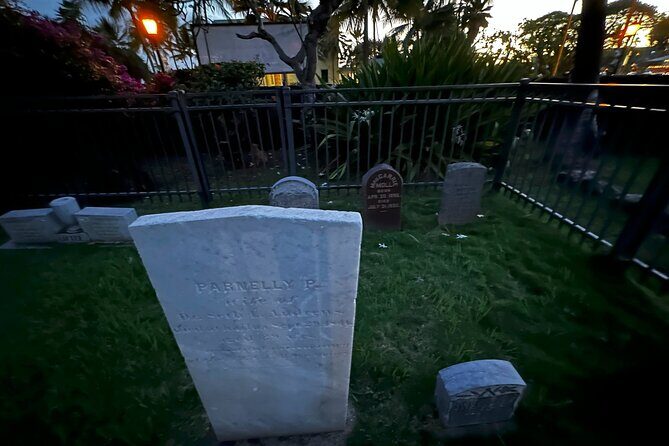
At Mokuaikaua Church, the tour points you to the first Christian church in Hawaiʻi. From there, the theme becomes miracles—old and new—and it includes the story of fish behaving strangely.
This stop works well if you like myth and belief that touches everyday life. Strange fish is the kind of detail that sounds odd until you realize it’s often meant to explain something bigger: divine messages, moral warnings, or community meaning.
It’s also a tonal shift. If you want your ghost tour to include spiritual and cultural layers rather than only spooky effects, this is where that mix becomes clear.
Consideration: if you’re hoping for theatrical scares, a church stop won’t play like a haunted house. It plays like a guided interpretation.
Courtyard by Marriott Kona Beach Hotel: spirited stays on the Kona Coast
At the Courtyard by Marriott King Kamehameha’s Kona Beach Hotel, you return to the kind of “hotel haunting” that makes ghost tours fun. You’ll hear creepy accounts from guests who experienced spirited stays, with the question of who haunts the Kona Coast.
This is one of the stops that leans most directly into the paranormal vibe. It also helps you compare themes across the walk: some hauntings are tied to historical ships or leaders, while others are linked to places of lodging and everyday human routines.
If you like when a guide makes connections across different story types, you’ll probably enjoy this pacing. It balances the heavier cultural stops.
Possible drawback: ghost stories are inherently subjective. If your idea of a ghost tour is about jump-scares, this won’t replace a horror movie. It’s more about storytelling and place.
Kamakahonu Beach: UFO sightings and spiritual interpretations
Then it’s Kamakahonu Beach, where the tour shifts again into the unknown—unidentified flying objects reportedly seen from this area. The story frames questions like: are these gods, warnings, spirits of the dead, or a curse?
Even if you’re skeptical, this kind of theme is interesting because it shows how communities interpret anomalies. It’s not presented as just a sci-fi plot. It’s presented as a mystery people tied to spiritual and moral meaning.
If you like your haunted history with a wide range of possibilities, this stop gives you that. It also provides a natural contrast to the more anchored historic sites.
Practical thought: beach stops can be windy and the sound can carry. The guide’s approach matters here, so keep your attention on how the narration is timed with where you are standing.
Lost Coast Tattoo Studio: why tattoos mean more than decoration
The final stop is Lost Coast Tattoo Studio. This isn’t treated like a quick photo opportunity or a souvenir stop. The tour connects Hawaiian tattooing to beliefs about how the physical and spiritual realms intertwine.
The story emphasizes that Hawaiian tattoos carry deep-seated meaning, not just style. That matters because it helps you leave with an understanding that some visual culture is anchored in worldview.
What I like: this finale turns the tour from “where things happened” into “how belief can show up in the body.” It’s a thoughtful last step before you head back to the hotel.
How to get the most out of this history-plus-hauntings style
To enjoy this tour, come with the right mindset. This isn’t a standalone theatrical ghost show. It’s a guided walk that treats haunting stories as one part of Kona’s broader cultural and historical conversation.
Here are a few ways to make it better for you:
- Ask questions early, not at the end. The structure gives you chances along the way.
- If you care about culture, listen for object-based explanations like kiʻi akua, pohaku, and the tattoo meaning at Lost Coast.
- If you’re specifically hunting for paranormal mood, pay attention to how the guide frames the difference between legend, spiritual belief, and unexplained events.
Also, guide quality seems to matter a lot. Multiple high ratings in the provided feedback mention guides such as Heather, Tricia, Gabby, Cosmin, and Costman for being personable, answering questions, and mixing history with local stories. So if you’re picky about narration, try to pick a departure where you’ve seen consistent guide notes.
Balanced expectation check: some people found it more historical than ghostly, and a couple felt the ghost beats were lighter or that a guide’s approach reduced the paranormal vibe. That doesn’t mean the tour is bad. It just means you should decide what you want most: context, scares, or both.
Should you book the Kailua-Kona Haunted History Walking Ghost Tour?
Book it if you want Kona to feel connected and specific. This tour is a strong choice if you like walking routes, place-based storytelling, and learning what different objects, landmarks, and local beliefs might mean. The eight-stop, 2-hour format is practical, and the fact that site admissions are free at the stops helps your value.
Skip or adjust your expectations if your top priority is heavy, nonstop ghost theatrics. The route leans history and legend, and the paranormal tone can vary with the guide’s style and how they balance the story mix.
If you’re a couple, a solo traveler, or a curious family group who can handle a short walking loop and prefers stories over jump scares, I’d call this a worthwhile Kona evening plan—especially if you like questions as much as answers.
FAQ
What does the Kailua-Kona Haunted History Walking Ghost Tour cost?
It costs $59.00 per person.
How long is the tour?
The tour is listed as approximately 2 hours.
What time does the tour start?
The start time is 5:30 pm.
Where do I meet the tour?
The meeting point is Courtyard by Marriott King Kamehameha’s Kona Beach Hotel, 75-5660 Palani Rd, Kailua-Kona, HI 96740.
How many stops will we visit?
The tour includes 8 stops.
Is admission included for the locations on the route?
Admission tickets are listed as free for the featured stops.
Is the tour in English?
Yes, the tour is offered in English.
Are service animals allowed?
Yes, service animals are allowed.
What happens if the weather is bad or I need to cancel?
The experience requires good weather. If it’s canceled due to poor weather, you’ll be offered a different date or a full refund. Free cancellation is allowed up to 24 hours in advance for a full refund. If you cancel within 24 hours of the start time, there is no refund.