REVIEW · ISLAND OF HAWAII
Mauna Kea: Stargazing Experience with Free Photos
Book on GetYourGuide →Operated by Epic Tours Hawaii: Big Island Adventures · Bookable on GetYourGuide
Mauna Kea turns the lights out for real. This tour takes you away from the usual roadside viewing and into a far darker spot on the slopes, where an expert uses a green laser to guide you through the sky. You get a hands-on experience that feels more like astronomy with a host than a bus stop at midnight.
I especially like two things: first, the access to a remote area miles from any highway, which makes a visible difference when you want the night sky to look crisp. Second, you get pro astro-photographer photos of you, not just a lecture and a few phone pics. You can later review the images that were edited for you.
One drawback to consider: it’s not for everyone health-wise or physically. The experience isn’t suitable for people with back problems, mobility impairments, heart or respiratory issues, wheelchair users, or those over 264 lbs (120 kg), and you’ll be outside in chilly summit conditions.
In This Review
- Key Things I’d Bookmark Before You Go
- Why This Mauna Kea Stargazing Spot Feels Different
- Two Hours, Step by Step: Laser, Photos, and Your Best Stargazing Poses
- What You Get in the Photo Package (and What Upgrades Cost)
- Price and Value: Is $299 for 2 Hours Worth It?
- The Cold, the Walking, and the Clothing Rules That Matter
- Who This Tour Fits Best (and Who Should Skip It)
- The One-Guide Advantage: James’s Style of Hosting
- Should You Book This Mauna Kea Stargazing Experience?
- FAQ
- How long is the Mauna Kea stargazing experience?
- What does the tour cost?
- What’s included in the price?
- Are photos included, or do I have to buy them?
- Can I upgrade my photos to higher resolution?
- Who is the tour guide?
- Where do I meet the group?
- What should I wear?
- Is this tour suitable for everyone?
- How flexible is cancellation?
Key Things I’d Bookmark Before You Go
- Remote dark-sky location: you stargaze miles from a highway, unlike most tours that stop near busy roads
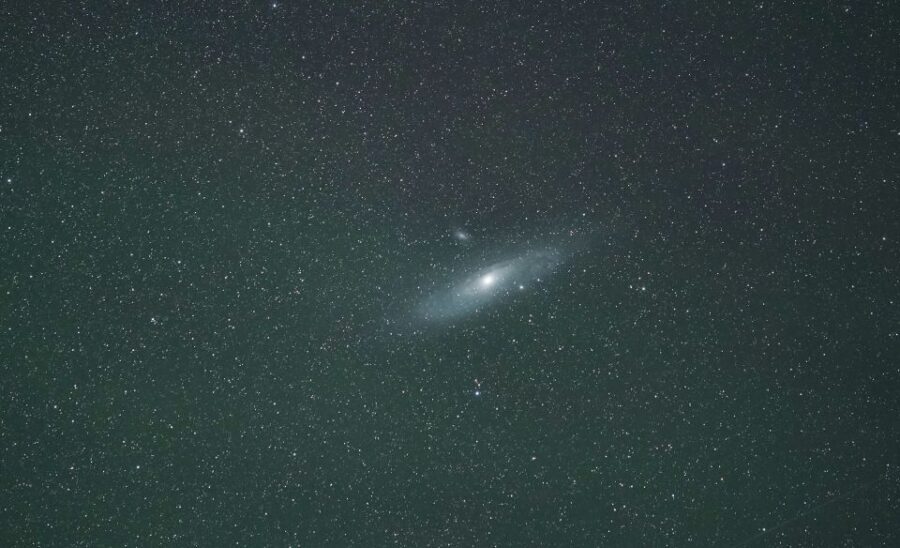
- Laser-guided sky viewing: your guide points out constellations, planets, and space objects using a green laser
- NASA-linked analog astronaut guide (James): the host is an Analog-Astronaut working with NASA
- You in the frame, not just the stars: the tour includes posed astro-photo images during the session
- Free photo editing with Lightroom: you receive 2–3 medium-resolution images that get touch-ups at no extra cost
- Warm gear provided: parka jackets are included so you can last through the cold
Why This Mauna Kea Stargazing Spot Feels Different
Most Mauna Kea stargazing you hear about happens near the roadside, where convenience wins and darkness is harder to protect. This one is built around the opposite idea: go to a secluded spot on the slopes that’s far from the highway noise and light. That matters because your eyes and camera both behave better when the sky is truly dark. You’re not fighting ambient glow the whole time.
The other reason it feels different is how the evening is structured. Instead of handing you a blanket and hoping you enjoy the dark, you get guided direction with a green laser. That turns “I think I see something” into “I know what I’m looking at.” You’ll hear about constellations, planets, and other space objects, and the guide keeps the experience interactive.
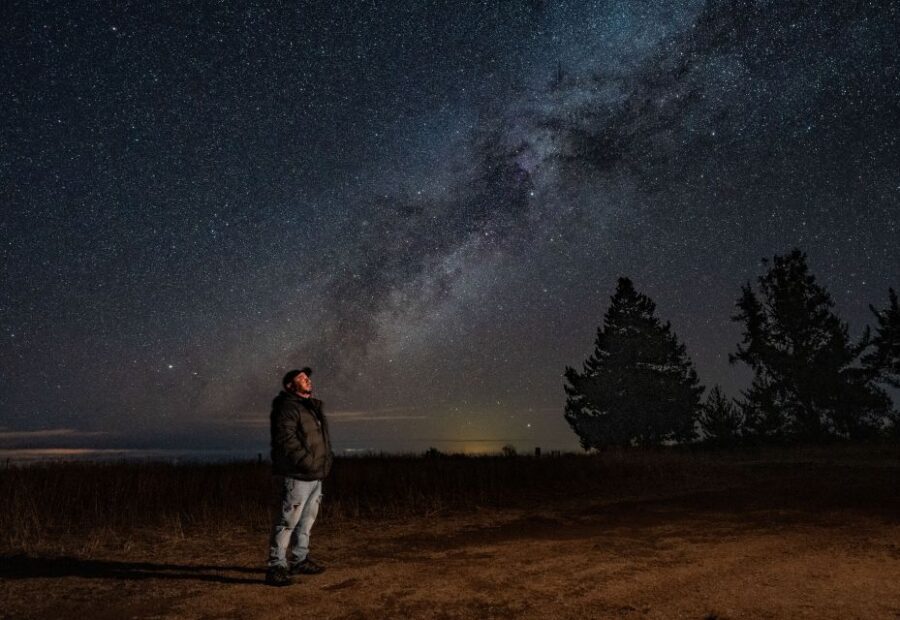
And yes, the pro-photo angle is a big part of the value. You’re not just there to observe; you’re also there to be photographed in front of the stars. When you get tired, you can switch from scanning the sky to posing. When you want to learn, you switch back to the laser pointers and guided descriptions.
Other Mauna Kea stargazing and summit tours in Island Of Hawaii
Two Hours, Step by Step: Laser, Photos, and Your Best Stargazing Poses
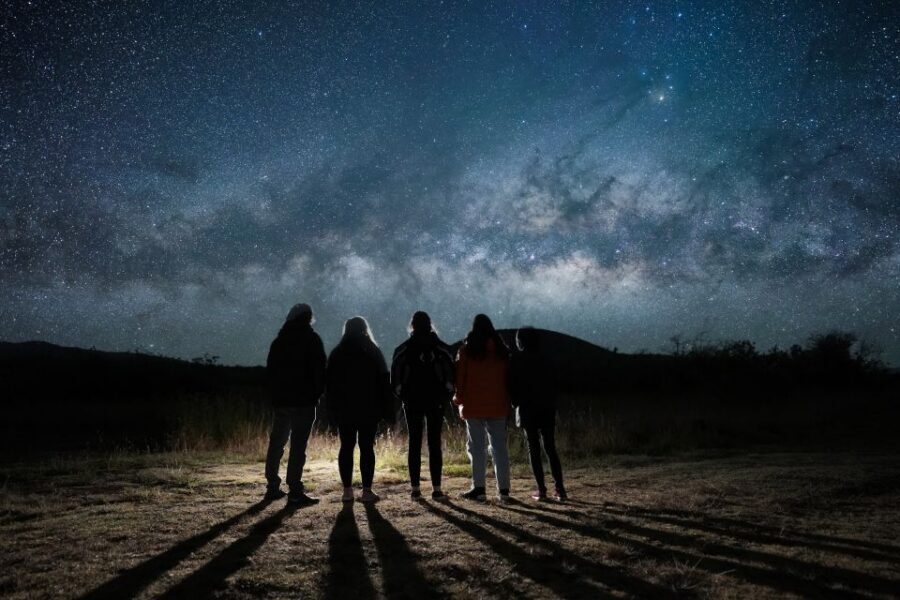
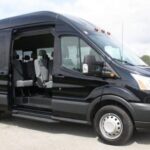
Your night starts at the meeting point, where you’ll look for your guide, James, near an Epic Tour 4×4 van. The meeting point can shift 5–15 minutes depending on weather and crowds, so build in a little buffer rather than arriving at the last second. There’s no hotel pickup included, so plan your own way to the start.
Once you’re with the group, you grab what you need to stay warm: a parka jacket is provided. That’s important on Mauna Kea. You don’t want to spend your energy battling the cold when the whole point is looking up.
Then comes the guided stargazing portion. James uses a green laser to point out:
- constellations
- planets
- space objects
- and the chance of fast-moving shooting stars
The laser part isn’t just a show. It helps you make sense of the sky quickly. You also get context, so the stars don’t feel like random dots. You’ll look longer because you understand what you’re hunting for.
At the same time, the tour includes astro-photography work from the guide (and the broader team). Your guide will take photos of the best objects using an astro-modified camera and lens. You’ll be able to look over those results later as part of the photo package.
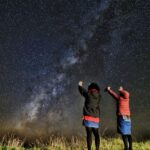
Next is the part most people remember: the posing for astro-photos. You’ll step into position so a camera can capture you against the starry sky. This is where the tour pays attention to “you” as well as “the sky.” If you’ve ever photographed the Milky Way and ended up with a grainy shadow of yourself, this is built to avoid that.
The tour lasts about 2 hours total. The guide sends you 2–3 medium-resolution photos after the trip. Those images are touched up with Lightroom editing at no extra cost, so you don’t have to handle the awkwardness of asking yourself whether the camera got it right.
What You Get in the Photo Package (and What Upgrades Cost)
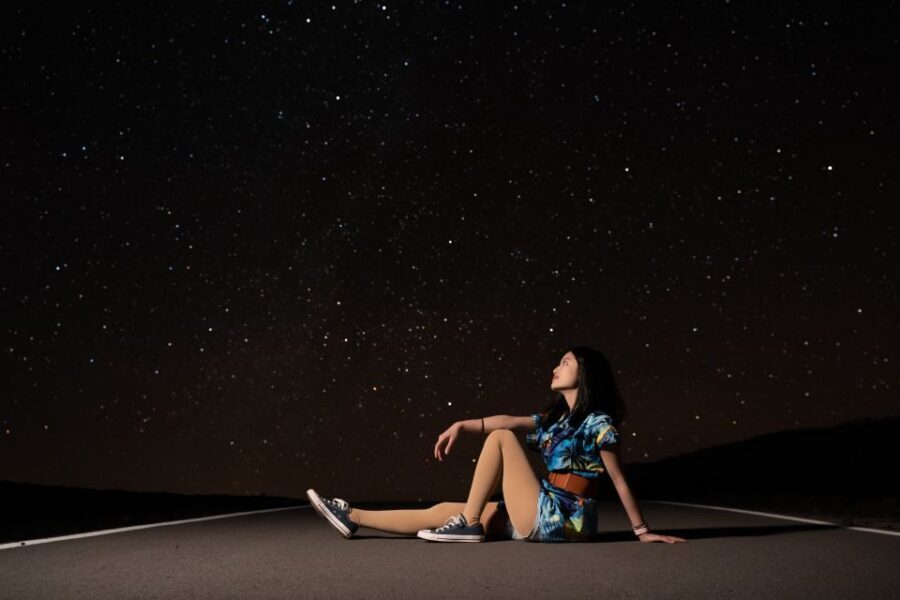
The standard photo setup includes 2–3 medium-resolution photos from your session. That’s a compact package, but it’s designed to be usable. Medium-resolution is often enough for sharing online and for casual prints, and you also get the benefit of editing rather than relying on a phone screenshot.
The editing matters more than you might think. A good astro-photo needs correct exposure and cleanup, and the tour includes that step for free. You’re not trying to learn apps and settings in the dark.
If you want higher resolution, photo upgrades are available:
- a $99 high resolution photo upgrade
- a $199 ultra high resolution photo upgrade
That upgrade pricing is worth considering if you’re the type who prints photos, frames images, or wants maximum detail for keepsakes. If you mainly want memories for your camera roll and social feed, the included medium-resolution set may be the sweet spot.
Price and Value: Is $299 for 2 Hours Worth It?
At $299 per person for a 2-hour stargazing session, this isn’t a budget activity. So here’s how I’d judge the value in plain terms: you’re paying for three things that most free or cheaper stargazing alternatives don’t package well.
First, you’re paying for access to a remote, darker spot rather than the usual roadside viewing area. That’s not just a marketing line. Better darkness can mean clearer viewing and better photo conditions.
Second, you’re paying for guided astronomy. The green laser and explanations reduce the learning curve. You don’t need to know the sky ahead of time to enjoy it; you can follow along in real time.
Third, the price includes pro astro-photography of you, plus editing. Most stargazing experiences hand you gear or instructions and leave you to figure out the camera part. Here, you show up, get placed, and get photos delivered after.
One thing to be clear about: hotel pickup and drop-off aren’t included, and you can’t go in wearing shorts. If you’d need extra transportation and proper clothing anyway, factor that into your real total cost.
The Cold, the Walking, and the Clothing Rules That Matter
This is an outdoors-at-night situation on a high mountain. You’re in the role of observer and subject, and both require comfort.
What to bring (simple and practical):
- Long pants
- Closed-toe shoes
What not to bring:
- Shorts aren’t allowed
The tour provides a parka jacket, which helps a lot, but the “wear long pants and closed-toe shoes” rules mean you still need your legs and feet covered for the cold. In other words, don’t count on the jacket to fix everything.
If you’re prone to motion discomfort, also pay attention to suitability. This activity isn’t listed as good for people with back problems or mobility impairments, and it’s not for wheelchair users. It’s also not suitable for heart problems or respiratory issues, and it’s not suitable if you have pre-existing medical conditions. If any of those apply, don’t try to gamble. A sky tour is still physical, even when the main action is standing and looking up.

Who This Tour Fits Best (and Who Should Skip It)
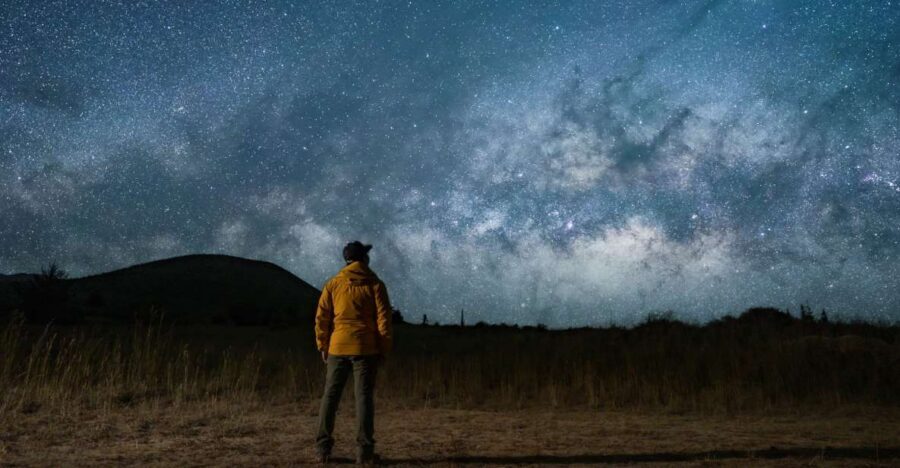
This is the kind of night I’d point to for people who want three outcomes at once: good skies, a real guide, and photo keepsakes.
It fits especially well if you:
- want stargazing that feels fun for all ages (as described by the experience)
- care about getting photos where you’re actually part of the scene
- like learning what you’re seeing, not just taking a look and moving on
- want a guided experience instead of trying to figure out the night sky alone
I’d steer you away if:
- you have back problems, mobility impairments, or use a wheelchair
- you have heart or respiratory issues
- you have pre-existing medical conditions
- you’re over 264 lbs (120 kg)
Also consider your comfort with cold. Even with a parka jacket included, you’re outdoors at night for the full 2 hours.
One more practical note: the meeting point is near an Epic Tour 4×4 van, and the exact meeting point can change a bit with weather and crowds. If you don’t like last-minute plan changes, arrive ready to follow the guide’s instructions.
The One-Guide Advantage: James’s Style of Hosting
The tour is led by James, and the experience credits him as an Analog-Astronaut who works in association with NASA. That doesn’t mean you’ll need a science degree. It means the guide likely has a deep understanding of how to explain what you see without drowning you in technical language.
In the reviews you’d probably pick up a strong theme: James and his colleagues genuinely enjoy hosting and teaching. You can feel that in how the evening is structured—laser pointing first, guided explanations second, and then fun posing and photos so the night isn’t all “sit and listen.”
You’ll probably get more out of the tour if you treat it like a conversation with someone who cares about the stars, not like a checklist. Ask questions when you can, and don’t worry about whether you know the sky. The whole setup is meant for people who want help.
Should You Book This Mauna Kea Stargazing Experience?
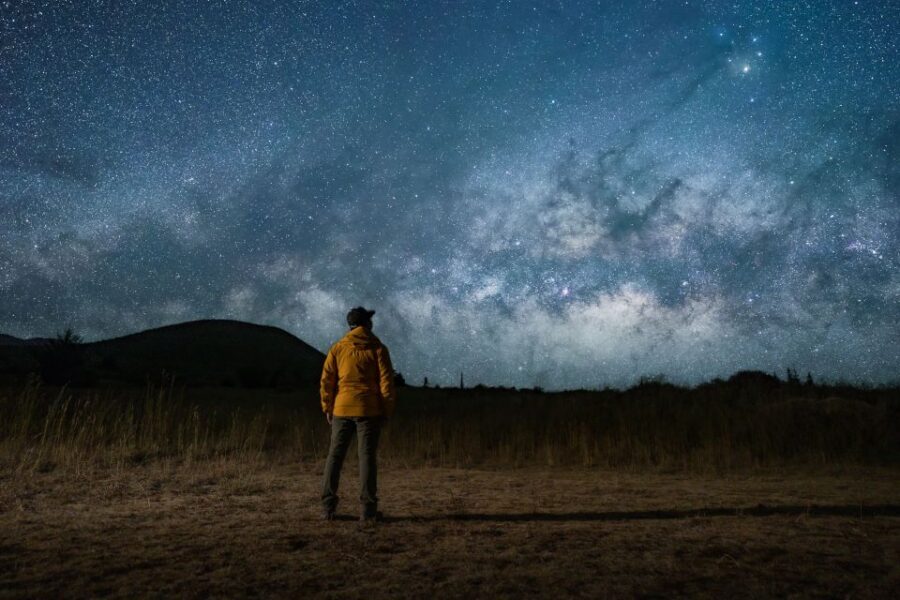
If you’re choosing between a quick roadside stargazing stop and something that takes the darkness seriously, I’d lean toward booking this. The access to a remote spot matters, and the included pro astro-photos with Lightroom touch-ups turn it into more than a one-time look up.
I’d book if:
- you want guided stargazing with a laser and explanations
- you want photos that actually include you
- you’re okay paying $299 for a guided, photo-included night
I wouldn’t book if:
- you’re affected by cold and long outdoor time, or you fall into the medical/mobility restrictions
- you need hotel pickup or want a fully hassle-free meet-up (there’s no pickup listed)
- you’re only interested in taking your own photos with your phone and don’t care about the paid photography and editing
If you want a night that feels intentional—dark sky, real guidance, and keepsake photos—this is a strong pick for Mauna Kea.
FAQ
How long is the Mauna Kea stargazing experience?
It lasts about 2 hours.
What does the tour cost?
The price is $299 per person.
What’s included in the price?
You get 2–3 medium-resolution photos, use of parka jackets, and a tour guide (James), who is an Analog-Astronaut working in association with NASA.
Are photos included, or do I have to buy them?
Photos are included: you’ll receive 2–3 medium-resolution photos after the trip, with Lightroom editing included at no extra cost.
Can I upgrade my photos to higher resolution?
Yes. A $99 high resolution upgrade and a $199 ultra high resolution upgrade are available.
Who is the tour guide?
The guide is named James.
Where do I meet the group?
Look for your guide, James, near an Epic Tour 4×4 van. The meeting point might shift to an alternative location 5–15 minutes away depending on weather and crowds.
What should I wear?
Bring long pants and closed-toe shoes. Shorts are not allowed.
Is this tour suitable for everyone?
It is not suitable for people with back problems, mobility impairments, wheelchair users, heart problems, respiratory issues, people over 264 lbs (120 kg), or people with pre-existing medical conditions.
How flexible is cancellation?
Free cancellation is available up to 24 hours in advance for a full refund.