REVIEW · BIG ISLAND OF HAWAII
Kona Manta Night Snorkel: Swim with Mantas, Small Group (6 max)
Book on Viator →Operated by The Manta & Snorkel Co - Kona · Bookable on Viator
Mantas in your face at night. This Kona experience puts you in the water after dark, floating above custom light boards that attract plankton and manta rays. It’s one of those rare Big Island activities that feels like nature’s own magic trick.
I really like the small group size (6 max). You get more hands-on attention, and it feels calmer than the big boats you may see offshore. I also like how the guides keep things simple and reassuring, with Erica and Levi specifically called out for helping everyone feel comfortable and explaining what to do.
One thing to consider: you do need snorkeling experience and you must feel comfortable swimming without assistance. You also want decent weather, since poor conditions can mean a reschedule or refund option.
In This Review
- Key Things I’d Focus On
- Kona Manta Night Snorkel: How the Manta Action Happens
- Keauhou Bay Start: Getting Oriented Before You Swim
- Floating Above the Light Boards: What You’ll Actually See
- Snorkeling at Night: Comfort Rules That Matter
- Small Group (6 Max) for a Better Feel in the Water
- Guides Erica and Levi: Clear Coaching, Less Guessing
- Duration and Timing: Why 1 Hour Works
- Price on Kona’s Manta Night Snorkel: Is $160 Worth It?
- Weather and Sea Conditions: The Real Scheduling Factor
- Who Should Book This (and Who Should Skip It)
- Should You Book Kona Manta Night Snorkel?
- FAQ
- How long is the Kona Manta Night Snorkel?
- What group size is the small-group manta snorkel?
- Do I need to be a strong swimmer?
- Where does the tour start?
- What’s included in the experience?
- What happens if the tour is canceled due to weather?
Key Things I’d Focus On
- 6 max small group for a more personal, less crowded feel
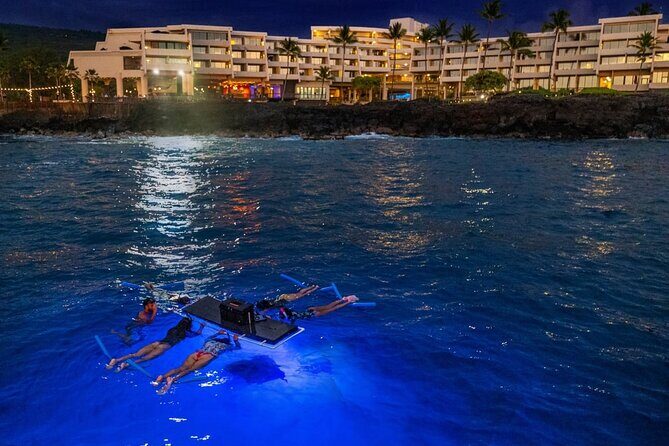
- Custom light boards that pull in plankton, which draws manta rays
- Premium gear plus expert guidance right in the water
- Short scenic boat ride from Keauhou Bay before you enter the water
- Erica and Levi noted for comfort-first coaching and clear instruction
Kona Manta Night Snorkel: How the Manta Action Happens
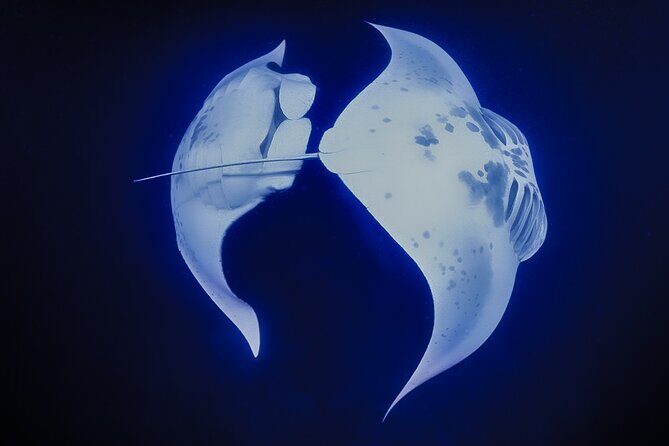
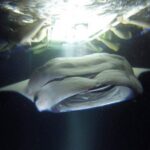
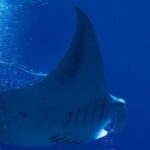
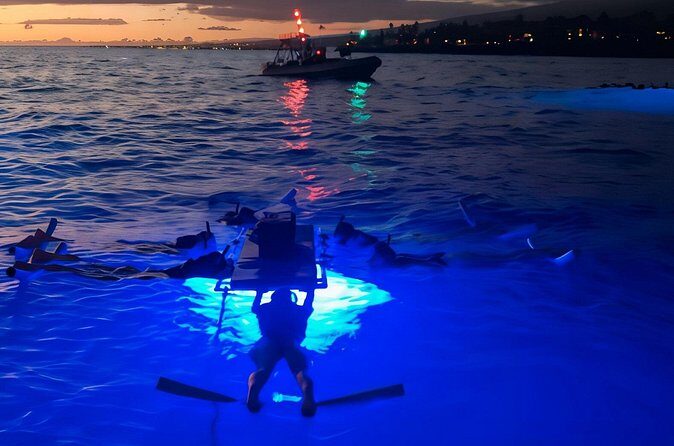
At night in Kona, the manta rays show up because of food. The tour uses custom light boards that attract plankton, and the mantas feed right where you’re floating. That means you’re not just hoping for luck and distance shots. You’re set up to experience the manta rays close—described as gliding just inches beneath you.
It’s also a tour concept that makes sense once you think about it. Light draws plankton. Plankton draws bigger predators. You’re essentially positioned at the meeting point between the ocean’s night buffet and the gentle giants that hunt it.
This also explains why timing matters. Night is the whole trick. If you’re thinking of this as a casual swim, reset your expectations. You’re doing a guided nighttime snorkeling session with a clear purpose: see mantas with good visibility and the right nighttime conditions.
Other evening experiences in Big Island of Hawaii
Keauhou Bay Start: Getting Oriented Before You Swim
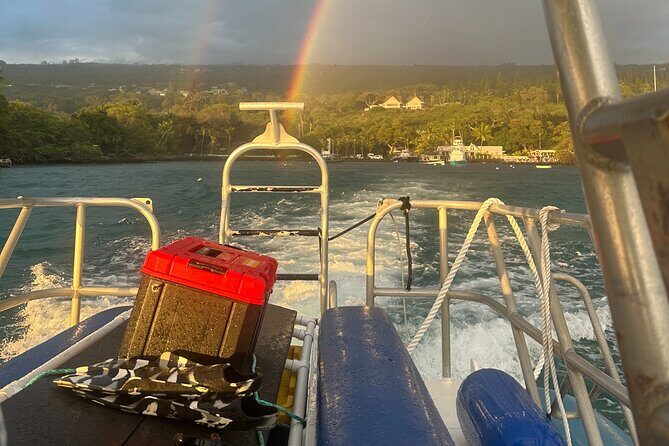
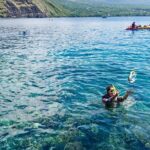
The experience starts and ends at 78-7130 Kaleiopapa St, Kailua-Kona. From there, you’ll head out for a short, scenic boat ride from Keauhou Bay. That ride isn’t just travel time. It’s the setup moment where you get in the right headspace: darkness, ocean, and the fact that you’ll soon be floating on the water’s surface while the lights do their job.
This tour lasts about 1 hour (approx.), so you’ll want to treat the start time seriously. If you’re late, you’ll compress the time you have to get comfortable in the gear, listen to the guidance, and settle into calm snorkeling.
One practical plus from the info you’re given: it’s offered in English, confirmation is received at booking, and it’s near public transportation. That makes it easier to plug into a Kona day without turning the morning into a logistics puzzle.
Floating Above the Light Boards: What You’ll Actually See
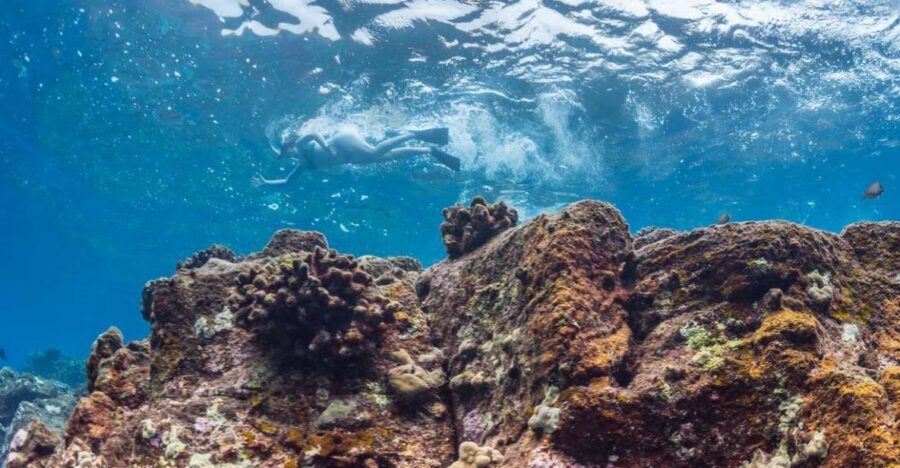
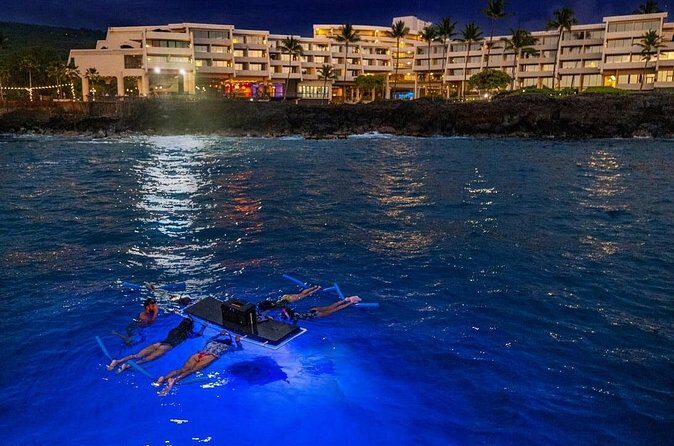
Here’s the heart of the Kona manta night snorkel: you enter the water and float above custom light boards. The boards are designed to attract plankton. When plankton concentrates, manta rays move in to feed.
The experience is guided, so you’re not left guessing. You’re positioned for viewing while the lights do the work. The manta rays are described as gliding just inches beneath you, which is exactly what makes this feel so special. You’re not waiting for a distant silhouette. You’re watching a huge animal move through its feeding zone close to your breathing space.
From the past experience shared, you may see multiple mantas on the night you go. In one example, three manta rays were seen. That kind of result isn’t guaranteed, but it tells you what’s possible when conditions line up and the feeding activity is active.
Also, remember what you’re feeling in the moment. Night snorkeling can feel different from daytime. Your attention tends to lock onto the lights, the movement under you, and the guide’s cues. If you’ve ever been unsure about snorkeling at night, this is a good reason to double down on comfort and practice in daylight before you come here.
Snorkeling at Night: Comfort Rules That Matter
This tour comes with clear participation requirements: you must have snorkeling experience, and you don’t need to be a strong swimmer. But you do need to feel comfortable swimming without assistance.
That’s a big deal. Night plus open water means you should already know how you’ll handle your breathing, how long you can stay calm while floating, and how you’ll clear your mask without panic. If you’re still learning the basics, save this for a day tour or a beginner-friendly snorkeling session first.
The upside? Once you’re comfortable, the rest of the experience is about watching and listening. Premium gear and expert guidance are part of the package, and the guides’ job is to help you stay relaxed so you can enjoy the mantas as they glide beneath you.
If you’re the kind of traveler who needs everything explained to feel safe, this tour aligns well. Erica and Levi were specifically praised for making people feel comfortable and walking everyone through what to expect.
Small Group (6 Max) for a Better Feel in the Water
A lot of manta tours can look similar on paper: you’re in the water at night, and you’re hoping mantas show up. The difference is often how crowded it feels when you’re trying to keep your body still and scan the water below.
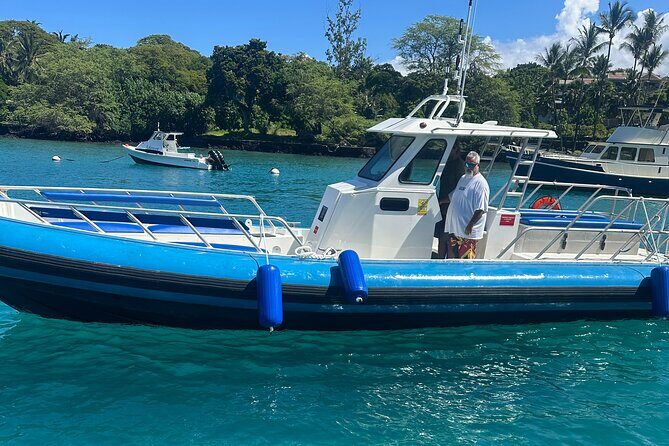
I like the 6 max setup because it reduces jostling and keeps the group more manageable. You’re more likely to get individual attention when you need it, and you spend less time threading around other snorkelers. One of the strongest points from the experience shared is that people preferred the smaller boat and group compared to larger groups they saw.
That matters more than you might think. In a nighttime setting, small details take on extra importance: spacing, how you hold position above the light board, and how quickly you can respond to a guide’s instruction.
If you’re traveling as a pair, solo, or with friends who all handle snorkeling similarly, this group size can make the whole vibe feel less stressful and more wonder-focused.
Guides Erica and Levi: Clear Coaching, Less Guessing
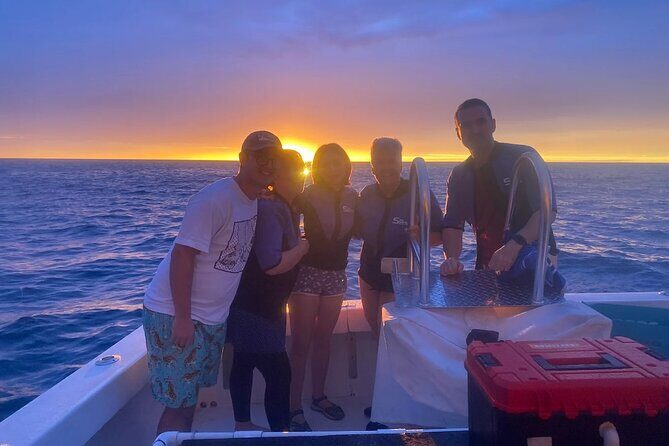
The guides are a central reason this tour earns a strong reputation. Erica and Levi are specifically mentioned for doing two key things well:
- making participants feel comfortable
- explaining everything clearly so nobody feels lost when the lights come on
That’s exactly what you want on a night snorkel. You don’t need complicated lectures. You need practical directions for your body position, your breathing, and what to do when you notice movement in the water.
You can think of the guides as your translator between you and the ocean’s timing. Mantas move, plankton patterns shift, and the environment changes fast. Good coaching helps you stay calm and present instead of second-guessing your gear or your water position.
And since the tour is only about an hour, there isn’t much time to waste on confusion. The best guides help you get your bearings fast.
Duration and Timing: Why 1 Hour Works
This is an approx. 1-hour experience. That might sound short, but it’s the right length for a night snorkel with a food-driven animal encounter. The key window is nighttime activity and manta presence, and the tour is built around that.
If you’re planning your Big Island day, give yourself a buffer so you don’t rush. You’ll want time to park your brain in the right mode: listen, suit up, follow guidance, float, watch, and then wrap up back at the meeting point.
Also note that this experience is booked about 50 days in advance on average. That tells you two things: demand is real, and your best odds are better when you lock in ahead of time rather than treating it like an optional last-minute add-on.
Price on Kona’s Manta Night Snorkel: Is $160 Worth It?
At $160 per person, this isn’t a budget snorkel. But it also isn’t a generic activity. You’re paying for:
- a guided nighttime setup
- premium snorkeling gear
- custom light boards and the right environment for mantas
- a small-group format (6 max), which usually means more guide time and less crowding
The value question comes down to what you want from your trip. If you’re chasing photos only, you might wonder if one hour justifies the cost. But if you want a high-odds, once-in-a-lifetime wildlife encounter with close viewing, the price starts to make sense.
The experience is also rated very highly, with a 5-star average and a 100% recommendation figure in the summary. I treat that as a helpful signal, not a guarantee. Still, it suggests you’re likely to leave satisfied—especially if manta rays are your goal.
One more value angle: the group size. In this kind of water-based activity, crowding can ruin the feel. Spending more for less chaos is often a smart trade, and this tour’s small format supports that.
Weather and Sea Conditions: The Real Scheduling Factor
This tour requires good weather. If it’s canceled because of poor weather, you’ll be offered a different date or a full refund. That’s the right setup for a night ocean activity, because visibility and water conditions matter a lot when you’re trying to see mantas below you.
Plan like a realist. If you’re in Kona for a short stay, don’t put this on the last night unless you’re comfortable handling a possible reschedule. If you can pick a date when you’re not rushing to leave the island, you’ll sleep better.
The other constraint noted is a minimum number of travelers. If the minimum isn’t met, you’ll be offered a different date/experience or a full refund. Either way, you want to book soon enough to avoid last-minute issues, and that’s supported by the fact many people book roughly 50 days out.
Who Should Book This (and Who Should Skip It)
This experience fits best if you:
- already have snorkeling experience
- feel comfortable swimming without assistance
- want a guided night wildlife encounter, not just a casual beach activity
- prefer a small group over large crowds
It’s described as suitable for most travelers, and it’s offered in English with mobile ticketing. If you’re comfortable in the water and you like animal encounters with a strong chance of close-up action, you’ll probably enjoy it.
I’d skip it (or at least get more snorkeling practice first) if:
- you’re brand-new to snorkeling
- you feel uncertain about swimming when conditions are darker and visibility is different
- you hate the idea of being coached and adjusted while you’re floating in open water
Also, if you’re sensitive to water time or cold night temps, give it thought ahead of time. The tour itself doesn’t mention special options for that, so your best bet is to judge what night ocean snorkeling feels like for you.
Should You Book Kona Manta Night Snorkel?
If manta rays are high on your Big Island checklist, I think this is a strong choice—especially because of the 6-max group and the clear manta-focused setup with light boards. The fact that Erica and Levi are highlighted for comfort and instruction is a good sign that the experience is handled with care, not chaos.
Book it if you’re comfortable snorkeling and want a guided nighttime wildlife moment that feels close and personal. Pass if you’re not confident in the water or you’re looking for a zero-experience option.
If you want the best odds of a smooth night, plan ahead, pick a date when you can handle possible rescheduling, and go in with the mindset that you’re there to float, watch, and follow the guide’s cues. That’s when the magic tends to happen.
FAQ
How long is the Kona Manta Night Snorkel?
It’s about 1 hour (approx.).
What group size is the small-group manta snorkel?
The tour has a maximum of 6 travelers.
Do I need to be a strong swimmer?
No strong swimmer is required, but you must feel comfortable swimming without assistance, and you must have snorkeling experience.
Where does the tour start?
It starts at 78-7130 Kaleiopapa St, Kailua-Kona, HI 96740, USA, and ends back at the same meeting point.
What’s included in the experience?
You’ll do a guided night snorkel with manta rays after a short scenic boat ride from Keauhou Bay, float above custom light boards, and use premium snorkeling gear.
What happens if the tour is canceled due to weather?
If it’s canceled due to poor weather, you’ll be offered a different date or a full refund.