REVIEW · ISLAND OF HAWAII
MaunaKea Stellar Explorer From Kona
Book on GetYourGuide →Operated by KapohoKine Adventures · Bookable on GetYourGuide
Solar to stars in one Kona night. This MaunaKea Stellar Explorer trip strings together daytime solar viewing and night-sky telescope time, plus a stop at Boiling Pots and a proper dinner in between. It runs about 6 hours and keeps the group small, so the science talk and sky time don’t feel rushed.
I love how the day part is not just driving and waiting. You get an NPS-trained guide’s narration on the volcano geology of Mauna Kea and Mauna Loa, including lava flows and what you pass along Saddle Road. I also love that telescope time focuses on real viewing, using Dobsonian setups with fast optics for wide, dramatic views.
One drawback to plan around: you do not visit the Mauna Kea summit or the Visitor Center, and nighttime viewing depends on weather and light conditions (clouds happen, and a bright moon can cut contrast).
In This Review
- Key highlights to know before you go
- From Kona to the stars: how this 6-hour flow feels
- Pickup from major hotels and why small group size matters
- Daytime solar viewing: seeing the sun through a real telescope
- Saddle Road geology: Mauna Kea vs. Mauna Loa in plain language
- Boiling Pots: a break before the dark-sky portion
- Dinner before stargazing: eating well helps you enjoy the cold
- Night sky setup with Dobsonian telescopes
- Weather, clouds, and the full-moon reality check
- What to wear and bring so you stay comfortable
- Not going to the Mauna Kea summit: why you still get a great night
- Price and value: is $239 per person fair?
- Who should book this MaunaKea Stellar Explorer tour
- Should you book this tour or pass?
- FAQ
- How long is the MaunaKea Stellar Explorer from Kona?
- Where does pickup happen?
- What’s included in the ticket price?
- Does this tour visit the Mauna Kea summit or the Visitor Center?
- What should I bring and wear?
- How big is the group?
- What if clouds affect stargazing?
- Is there a cancellation window?
Key highlights to know before you go
- Solar viewing in true color: See sunspots, prominences, and current sun activity through a solar telescope, weather permitting.
- Saddle Road volcanology talk: You’ll hear about Mauna Kea and Mauna Loa and how lava and environments shaped what you’re seeing.
- Boiling Pots stop: A quick change of pace that breaks up the drive before the nighttime astronomy.
- Dobsonian stargazing: Expect wide-field deep sky views through a large-aperture Dobsonian when conditions allow.
- Small group attention: Limited to 13 people, with time for questions and telescope guidance.
- Dinner included: You’re not doing this on an empty stomach before the cold, dark hours.
From Kona to the stars: how this 6-hour flow feels
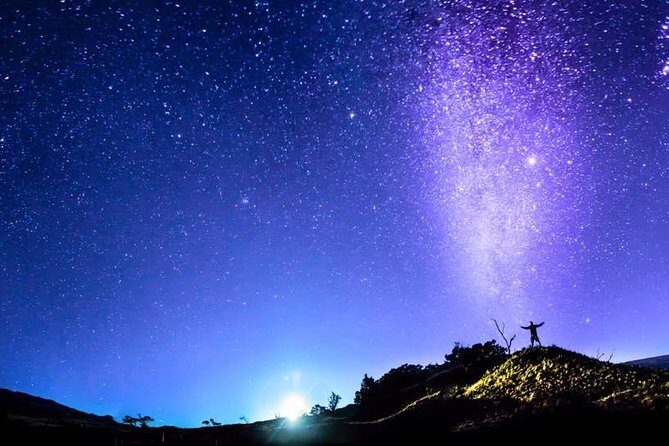
This tour is built for a simple goal: stack the best astronomy moments in one outing. You start with daylight solar viewing, then you move through the volcanic corridor between Mauna Kea and Mauna Loa, with guided explanations along the way. After that, it’s dinner, then dark-sky time at a preferred Mauna Kea-area viewing location.
What makes this format work is pacing. You’re not only chasing the sky at night; you get an astronomy “warm-up” in the afternoon, so the evening doesn’t feel like a single long wait. For a 6-hour duration, the plan also avoids the super-early, all-day grind some stargazing trips can turn into.
You’ll be picked up from major hotels in Kona, and the group stays small (up to 13). That matters because telescope sessions live or die on time and attention.
If you're still narrowing it down, here are other tours in Island Of Hawaii we've reviewed.
Pickup from major hotels and why small group size matters
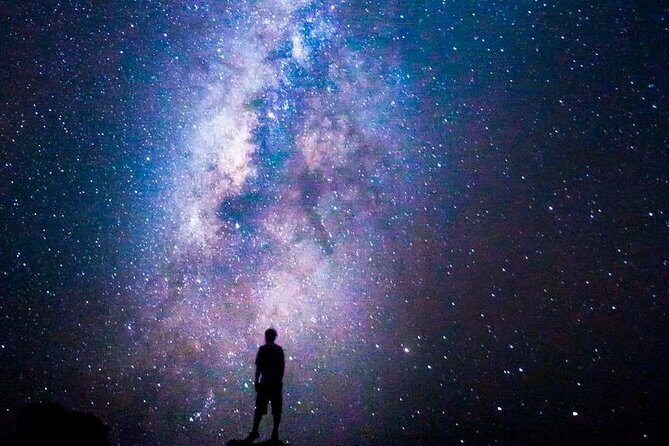
Pickup is included from major hotels, which keeps the start from turning into a logistics problem. When you’re going up-country and dealing with dark conditions, “meet at a random spot” is the kind of hassle that can drain your night fast.
With a group capped at 13, your guide can actually manage the telescope flow. That typically means less standing around and more of the stuff that turns stargazing from nice into memorable: clear directions, a chance to ask questions, and enough time for the telescope to be pointed correctly for each target.
If you’re the type who likes asking questions as you go, the small group format is one of the quiet reasons the whole night tends to land well.
Daytime solar viewing: seeing the sun through a real telescope
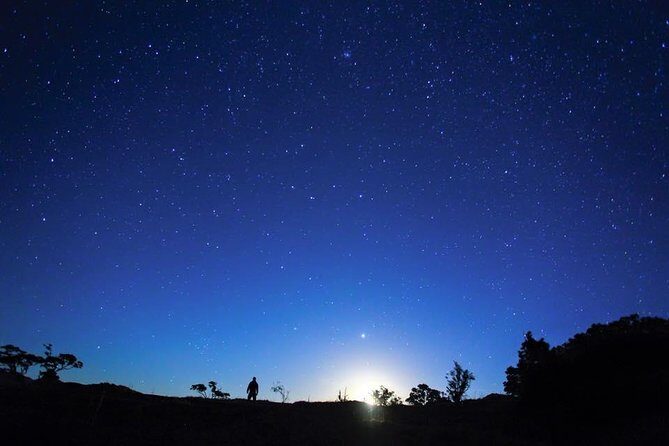
The tour’s daytime highlight is solar telescope viewing. Your guide sets up a state-of-the-art solar scope and shows you the Sun in true color, weather permitting. This is where you stop thinking about the Sun as a bright blob and start seeing it as an active place.
Depending on what’s happening that day, you’ll likely see features like sunspots and prominences. The sky isn’t dark yet, but the visuals are still the big “wow” moment—especially if you’ve never seen solar activity through proper equipment.
Practical tip: you’ll be wearing more than just light layers. Even if it’s warm in Kona, you’ll want your jacket and long pants ready early. The sun part may feel “comfortable,” but the evening change is real.
Saddle Road geology: Mauna Kea vs. Mauna Loa in plain language
Between Mauna Kea and Mauna Loa sits Saddle Road, and this tour uses that drive as the science lesson. A National Park Service trained guide narrates volcanology, geology, and history, and ties the talk to what you’re passing as you travel.
This is the kind of astronomy tour that also respects the ground you’re standing on. You’re learning why this place produces such dramatic landscapes and sky conditions, instead of treating stargazing like it’s floating above everything else. The guide’s narration covers lava flows and mentions flora and fauna along the way, so you’re not stuck listening to one long lecture with nothing to connect it to.
Two personal-style takeaways I’d use if I were planning your expectations: the talk is meant to be usable, and it’s timed to your drive so you’re not just hearing facts—you’re connecting them to the route.
Boiling Pots: a break before the dark-sky portion
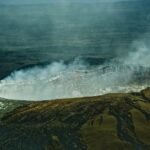
You’ll also visit Boiling Pots as part of the day’s itinerary. This stop gives you a change of pace between the guided drive and the telescope-heavy night segment.
Even without the summit or Visitor Center, this tour still keeps a “field trip” feel. You get to move, look around, and reset your focus before the sky session starts. It also helps break up the sensory shift from daytime visuals to night adaptation, which matters because dark viewing takes patience.
If you tend to get antsy on long scenic drives, the Boiling Pots stop is a good anchor point: a defined moment where you’re doing something, not just waiting for night.

Dinner before stargazing: eating well helps you enjoy the cold
Dinner is included, which is honestly one of the smartest parts of this tour. Stardome plans can run late, and if you’re cold, hungry, or both, your attention shrinks fast.
One review-style detail that’s especially helpful: dinner stops can include easy access to bathrooms, which makes the overall experience feel smoother. After you eat, you still have daylight travel, a stop, and then the dark part—so you’ll want to be comfortable and unhurried when you start bundling up.
If you’re bringing teens or anyone who gets tired easily, the included meal is a big advantage. It keeps the night from turning into a survival test.
Night sky setup with Dobsonian telescopes
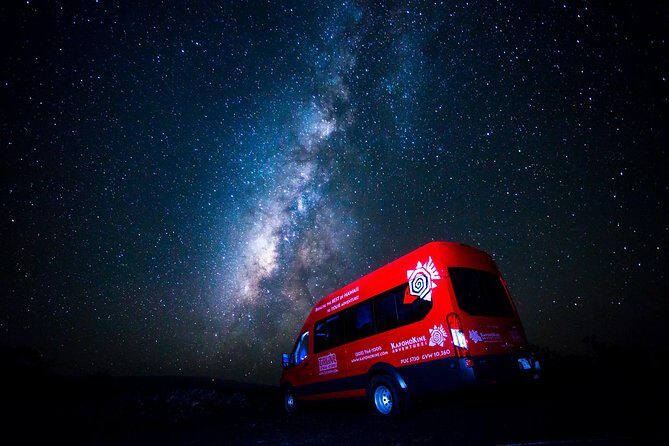
After dark, the goal becomes simple: look at objects you can’t properly see from most places. The tour uses a large-aperture Dobsonian telescope at one of the preferred Mauna Kea-area locations, aiming for some of the darkest and most pristine skies around.
The Dobsonian setup is a big deal because it’s designed for wide-field viewing. In practice, that means your experience isn’t only point-and-stare at tiny objects. You get sprawling deep-sky views that feel more like you’re stepping into the scene than just spotting a dot.
Depending on current sky conditions and weather, you may observe:
- galaxies and nebulae
- star clusters
- planets
- double star systems
- the Moon
You should also expect your guide to explain what you’re seeing clearly enough to follow along. In past groups, guides like Marcus and Nate have been especially praised for turning the night sky into something you can name, not just admire.
If you’re into photos, you might also find the setup helpful for imaging attempts. But the core value here is visual: the telescope time plus a guided pointing session.
Weather, clouds, and the full-moon reality check
This is Hawaiʻi, but it still pays to respect the weather. Clouds can cut viewing fast, and the sky can change during the tour window. On cloudy nights, guides may adjust your viewing plan or relocate to a different spot, and they may wait for conditions to improve.
Also, a bright moon changes the math. On nights near a full moon, the sky is still viewable, but contrast drops, and you may see fewer faint targets. One practical lesson from guides dealing with this: your experience is shaped by what’s up there at the time, not just what the calendar says.
So if you’re choosing dates, you’re not just booking stargazing—you’re booking the chance for darkness. When you can, pick dates when conditions look better. And if you’re going on a moon-bright night, go in expecting “different” rather than “ruined.”
What to wear and bring so you stay comfortable
The tour is outdoors, often with cold air once you’re higher up. Here’s what the tour data is explicit about:
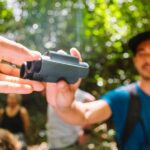
- Bring binoculars
- Wear closed-toe shoes (no open-toed shoes)
- Plan for long pants and a jacket
What I’d add from real-world comfort experience planning: bring gloves if you run cold. One group noted it was cold and warm gear like extra jackets helped. That’s a strong sign the weather at viewing time can surprise you.
Also, keep your night vision in mind. After you start stargazing, bright phone screens and flashlights can wreck your adjustment. Use red-light mode if your device has it, or keep screens dim until you’re done with the telescope session.
Not going to the Mauna Kea summit: why you still get a great night
This tour does not visit Mauna Kea’s summit or the Visitor Center, out of respect for Native Hawaiian concerns. That’s a key expectation to keep your planning grounded.
From a practical travel perspective, this choice can actually make the experience more comfortable. You avoid the highest, most sensitive access areas and the altitude stress that can hit some people. And you still get telescope viewing and guiding at a preferred night-sky location that’s meant for astronomy.
In other words, you’re not buying access to observatories. You’re buying a guided astronomy experience that stays focused on seeing the sky.
Price and value: is $239 per person fair?
At $239 per person for about 6 hours, this isn’t the cheapest thing on the island. But the value comes from what’s included and what you’re not paying extra for.
Your money is covering:
- all entrance fees
- dinner
- all telescope equipment
- a live English guide
- pickup from major Kona hotels
It also includes a small-group setup (max 13). If you tried to recreate this on your own—driver, access fees, professional guiding, telescope time—you’d usually end up spending in the same range or more, with more uncertainty around timing and where you’ll actually observe.
The main “price hesitation” point is that you don’t go to the summit or Visitor Center. If summit access is your top priority, this won’t match that goal. But if your priority is telescope viewing plus clear explanation plus a smooth, guided day-to-night arc, the price starts to look more reasonable.
Who should book this MaunaKea Stellar Explorer tour
This is a strong pick if you want:
- both solar viewing and night stargazing in one outing
- guided narration that ties the sky to volcanic Hawaii
- a small group where questions are easy to ask
- an experience that stays away from summit-area access while still delivering telescope time
It also tends to work well for families and teens, as long as everyone is willing to dress warmly. Stargazing isn’t just “pretty”—it’s patience plus cold-weather comfort.
If you’re a hardcore astronomer who needs specific observatory access or summit viewpoints, you may find the no-summit approach limiting. If that’s you, look for a different kind of access-based option.
Should you book this tour or pass?
Book it if you want a well-structured science-meets-sky experience from Kona, with dinner and telescope equipment included, and you’re happy with viewing from a preferred Mauna Kea-area location rather than the summit.
Pass or re-think dates if you know you’re very sensitive to cold, strongly want full-summit access, or you’re only satisfied when the sky is perfectly clear and moonless. Weather and lunar brightness are real factors here, and the tour can only respond so much.
If you’re flexible, though, this is exactly the kind of trip that turns a “someday I’ll see the stars” plan into a real, guided night with actual telescope viewing.
FAQ
How long is the MaunaKea Stellar Explorer from Kona?
The tour lasts 6 hours.
Where does pickup happen?
Pickup is included from all major hotels in Kona.
What’s included in the ticket price?
You get all entrance fees, dinner, all telescope equipment, and a live English guide.
Does this tour visit the Mauna Kea summit or the Visitor Center?
No. It does not visit the summit or the Visitor Center out of deference to Native Hawaiian concerns.
What should I bring and wear?
Bring binoculars. Wear closed-toe shoes, long pants, and a jacket. Open-toed shoes are not allowed.
How big is the group?
The group is small, limited to 13 participants.
What if clouds affect stargazing?
Weather can change during the trip. The guides may adjust plans or viewing location and wait when possible, so you still get the best chance for viewing under current conditions.
Is there a cancellation window?
Yes. You can cancel up to 24 hours in advance for a full refund.