REVIEW · BIG ISLAND OF HAWAII
Volcanoes Hawaii Wonders National Park – Full Day
Book on Viator →Operated by Nomad Hawaii Private Tours · Bookable on Viator
The Big Island puts geology on display all day. A private Volcanoes National Park adventure, it mixes Kīlauea stories with hands-on stops from steam to coast.
What I like most is the way it gives you both the big picture and the up-close details, with a guide who keeps the day flowing. Private also means your group can move at a pace that actually works.
I love the contrast between the Thurston Lava Tube walk and the walking-heavy Kīlauea Iki loop. One feels underground and cool; the other feels like you’re stepping across an ancient molten lake.
The main thing to consider is time on your feet. You’re looking at a 4-mile loop plus two different 2-hour trail stretches, so sturdy shoes and a realistic plan for effort matter.
In This Review
- Key highlights at a glance
- A day built around Kīlauea’s real power (and why that’s worth it)
- 7:00 am start: how the timing supports a calmer, more meaningful visit
- Stop 1: Kilauea Visitor Center sets the story straight
- Stop 2: Steam Vents puts heat where you can feel it
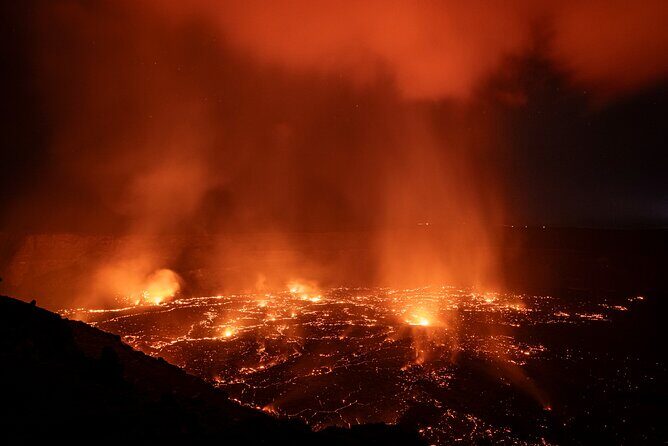
- Stop 3: Kīlauea Crater and Halemaʻumaʻu—panoramas with cultural weight
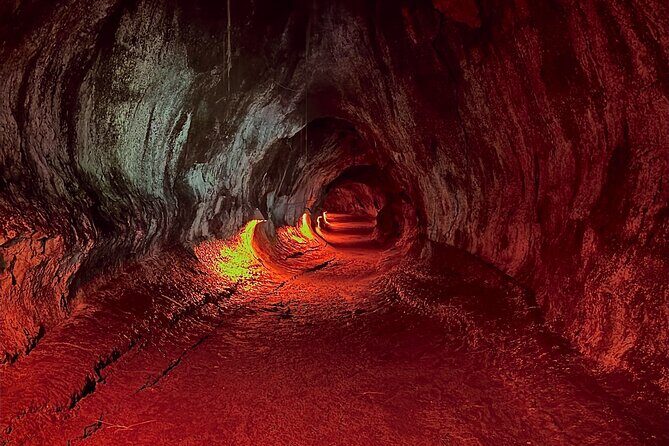
- Stop 4: Nahuku–Thurston Lava Tube walks you through cooled lava
- Stop 5: The Kīlauea Iki 4-mile loop hike (the day’s main workout)
- Stop 6: Devastation Trail shows resilience after the 1959 eruption
- Stop 7: Hōlei Sea Arch ties the volcano to the ocean
- Rom’s role: the difference between seeing and understanding
- What you should bring for a full day of hikes and volcanic stops
- Price and value: $2,900 per group up to 14
- Who should book this Volcanoes National Park full-day tour?
- Should you book it?
- FAQ
- How long is the full-day Volcanoes Hawaii Wonders tour?
- What time does the tour start?
- Is pickup offered?
- Is this a private tour?
- How big can the group be?
- What does the tour include for entrance fees?
- What language is the tour offered in?
- Is the tour dependent on weather?
- What is the cancellation window for a full refund?
Key highlights at a glance
- Private group up to 14 with pickup offered and a guide who stays close to your questions
- Start at the Kilauea Visitor Center to learn the geology and Hawaiian cultural context early
- Steam Vents + Kīlauea Crater views for the wow factor in both heat and sweeping panoramas
- Nahuku–Thurston Lava Tube walk through a tunnel formed by past lava
- Kīlauea Iki trail loop: a 4-mile hike from lush forest down to old lava-lake ground
- Finish at Hōlei Sea Arch where ocean waves shape a volcanic coastline
A day built around Kīlauea’s real power (and why that’s worth it)
This isn’t a quick drive-by. It’s a full-day, 10-hour arc that starts with the basics, then moves into the park’s most intense volcanic scenery: places shaped by heat, lava, and change over time.
What you’re really buying is context plus access. You get time at the Kilauea Visitor Center for the geology and Hawaiian cultural history, then you’re out at the steam vents and crater viewpoints where that story becomes visible. And because this is private, you’re not stuck waiting behind a busload of strangers who all want the same photo angle.
One more perk: the guide behind this tour, Rom, comes through in a practical way. In the day’s pacing, he stays attentive to questions and comfort, and he’s the type to connect the visible scenery to Hawaiian legends like Pele. That matters, because Volcanoes National Park isn’t just “rocks and smoke.” It’s a living place with meaning.
A few more Big Island of Hawaii tours and experiences worth a look
7:00 am start: how the timing supports a calmer, more meaningful visit
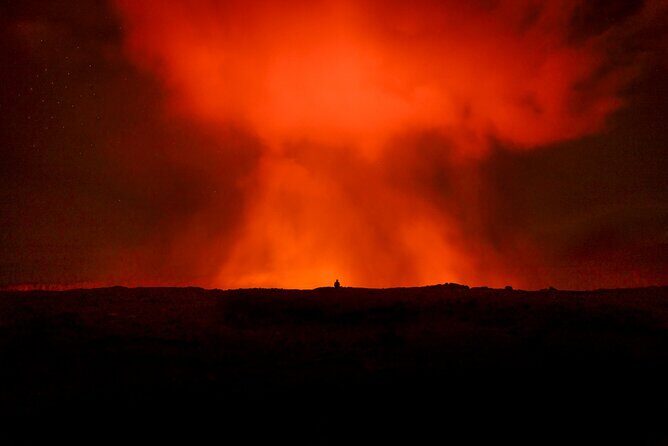
Starting at 7:00 am is smart here. The park is big, and you’re combining viewpoints with hikes. An early start helps you fit in the longer walking parts (like the Kīlauea Iki loop) while still having enough daylight for the end of the route.
Also, you start and end back at the meeting point, and pickup is offered. That reduces friction on a day that already has a lot going on. You show up, get organized, and then spend the day focusing on the sights and not on logistics.
The tour runs about 10 hours, and it’s designed like a sequence: quick learning stops, then longer walking and payoff views. It feels like you’re moving through the park’s “chapters” instead of hopping randomly between highlights.
Stop 1: Kilauea Visitor Center sets the story straight
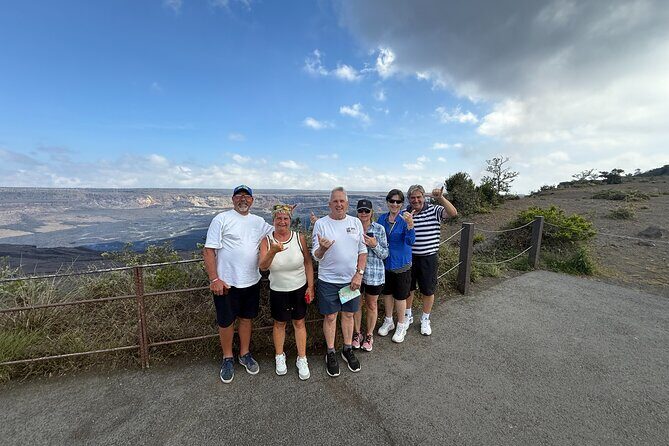
You begin at the Kilauea Visitor Center for about 35 minutes. This is where your day clicks into place.
You’ll get an introduction to the park’s geology and Hawaiian cultural history. The big value of this early stop is that it gives you a mental map. Later, when you’re at the steam vents and crater area, you’re not guessing what you’re looking at. You can recognize how the volcanic forces shaped the Big Island and why certain places matter.
This is also the kind of stop that pays off even if you’re not the museum type. You can treat it as your “orientation moment,” then the rest of the day becomes easier to read.
Stop 2: Steam Vents puts heat where you can feel it
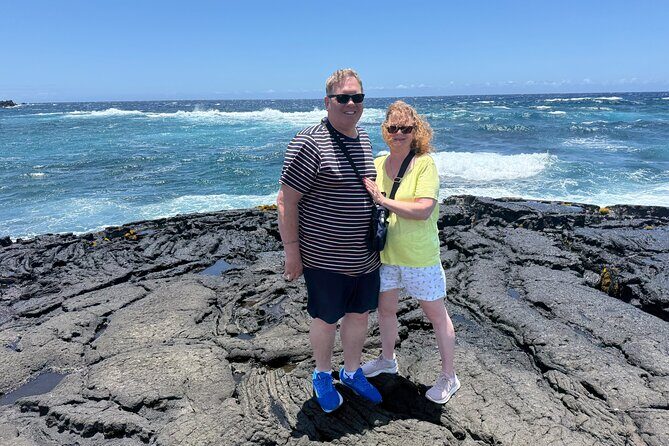
Next up is the Steam Vents, about 15 minutes. Short stop, big energy.
This is a classic moment in Volcanoes National Park: you feel the heat rising from the earth and see the active volcanic forces just below the surface. It’s not a lecture. It’s a physical reminder that the island is dynamic.
Practical tip: if you’re prone to camera fog or you wear glasses, the temperature shift can surprise you. Keep your lens habits simple and give yourself a second before you shoot.
Stop 3: Kīlauea Crater and Halemaʻumaʻu—panoramas with cultural weight
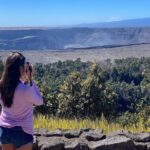
Then you head to Kīlauea Crater for around 40 minutes. This is where the view turns sweeping.
You’re looking out over Halemaʻumaʻu Crater. The guide frames it as a sacred site to Native Hawaiians and as home to the goddess Pele. That context changes how you experience a viewpoint. You’re not just chasing a photo. You’re standing in front of something that’s tied to living belief and place.
Admission here is listed as free, but don’t let that make it feel casual. It’s an essential part of the day’s “why it matters” arc.




Stop 4: Nahuku–Thurston Lava Tube walks you through cooled lava
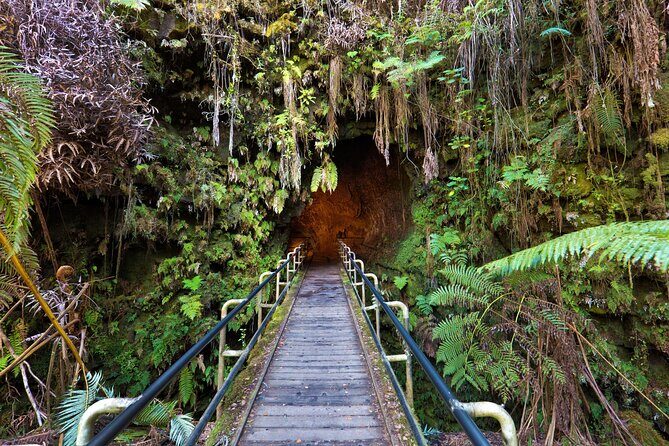
About 40 minutes at Nahuku – Thurston Lava Tube is one of the most memorable parts of the route.
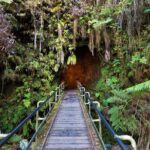
You take a short walk through the lava tube, an underground tunnel formed by a past lava flow. It’s surrounded by dense rainforest, so you get that rare mix of lush air above and cooled volcanic stone around you.
A lava tube visit can also be a good mental reset after crater viewpoints. If you’re the type who likes variety, this stop delivers. It’s visually different, physically different, and it tends to feel like you’ve crossed into another world.
Practical tip: even if it’s warm outside, lava tubes can feel cooler inside. Bring a light layer you’re comfortable hiking in.
Stop 5: The Kīlauea Iki 4-mile loop hike (the day’s main workout)
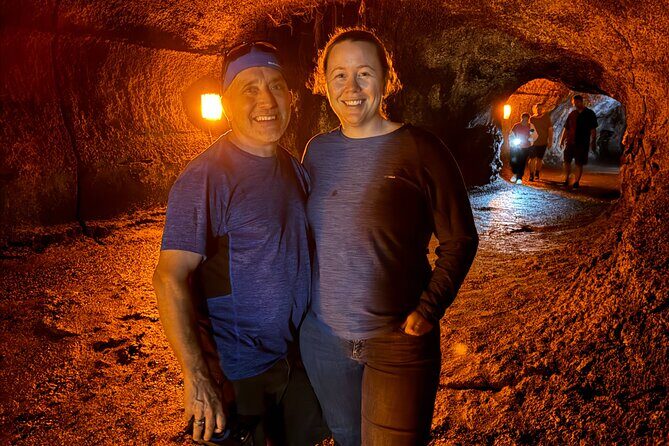
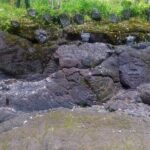
The Kīlauea Iki Trail stop is listed as a 2-hour hike and a 4-mile loop through the crater. It’s a walk from lush forest down to the floor of an ancient lava lake, with surreal terrain that makes you slow down.
This is the stop most likely to become your favorite. It’s long enough to feel immersive, but not so long that it takes over your entire day. And it’s timed so you’re not rushing through the best parts.
What makes it special is the change in surface and setting. You go from greenery to a world shaped by ancient fire. Even if you’ve seen photos, walking the route adds a sense of scale and detail that you don’t get from a viewpoint.
Practical tip: plan for steady pacing. If you burn all your energy early, the later parts can feel harder than they need to. Take your time at the transitions and let your guide explain what you’re seeing as the terrain changes.
Stop 6: Devastation Trail shows resilience after the 1959 eruption
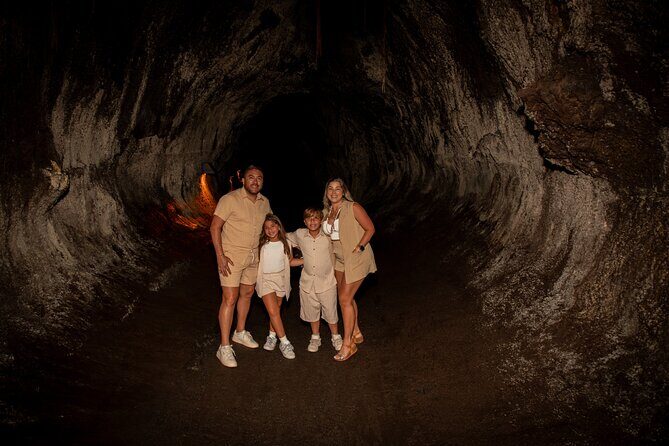
Next is the Devastation Trail, also around 2 hours. This path goes through an area impacted by the 1959 eruption, and it’s designed to show how nature returns and adapts.
This stop hits emotionally, even for people who come just for the science. You’re walking where volcanic effects once dominated, and now life has a foothold. It doesn’t erase what happened, but it adds a layer of hope and realism.
If you like photography, this is a great stretch to slow down. The mix of remnants and regrowth creates detail-rich views.
Practical tip: trail conditions can mean uneven footing. Wear shoes with grip, and don’t be shy about asking your guide where the easiest line is.
Stop 7: Hōlei Sea Arch ties the volcano to the ocean
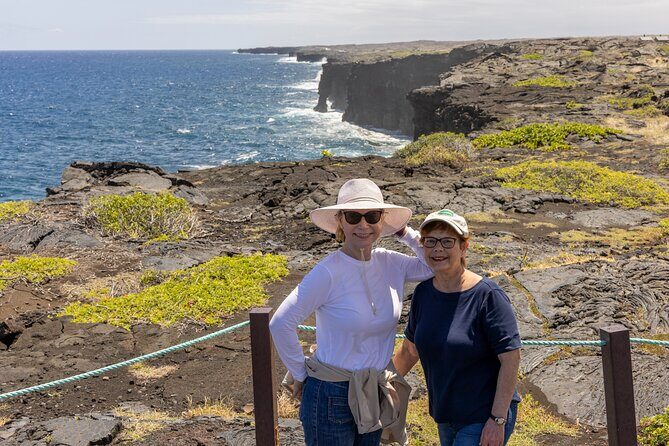
The finish is the Holei Sea Arch for about 45 minutes. Ocean waves carved the arch over time, and it’s a powerful end to a day about volcanism.
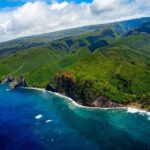
This is where the Big Island’s two forces—lava and sea—show up together. You get coastal views with that sense of motion from the water, even while you’re standing still.
45 minutes is enough for a slow look and photos, but it’s also short enough that you’re not dragging your legs through the last hour.
Practical tip: coastal wind can feel sharper than you expect. A light wind layer can turn this from chilly to comfortable.
Rom’s role: the difference between seeing and understanding
A lot of tours do the same “checklist” of sites. This one stands out because Rom is tuned into people, not just schedules.
From the start, he’s described as professional, attentive, and comfortable with questions. He shares stories about Pele and volcanic origins in a way that feels connected, not forced. If you like culture, this matters. If you just like facts, it still matters, because understanding makes the views stick.
And there’s a bonus angle you might catch depending on timing: Rom’s astrophotography and stargazing skill. One account describes stargazing at sunset, with impressive results for group photos. If you have a camera or even a phone you can control manually, ask him how he’s capturing it. Even without deep technical gear, having a guide who thinks about low-light framing can make a real difference.
What you should bring for a full day of hikes and volcanic stops
Because the itinerary includes a 4-mile loop plus two 2-hour trails, your comfort setup matters.
I’d pack:
- Sturdy hiking shoes with grip
- Sun protection (hat + sunscreen)
- Water (and a small snack plan if you like steady energy)
- A light rain layer or wind layer (you may want both at different stops)
- A camera or phone with a way to keep it protected
Also, since you’ll spend time near geothermal areas and also underground in the lava tube, keep clothing simple and breathable. You’ll be moving.
Price and value: $2,900 per group up to 14
This tour costs $2,900 per group for up to 14 people. That’s private, which can make it feel steep until you do the math.
If you fill most of the group capacity, the per-person cost drops a lot (roughly $207 per person at full capacity). If it’s a smaller group like a family of 4–6, you’ll pay more per person, but you get something you can’t buy in a typical shared bus: flexibility, a quieter pace, and a guide who can focus on your questions.
For me, the value case is strongest if:
- You’re traveling as a family or small group and want a custom feel
- You care about volcanic storytelling plus Hawaiian cultural framing
- You want to maximize the day without rushing between stops
Who should book this Volcanoes National Park full-day tour?
This suits you best if you like a guided day that mixes viewpoints with real walking. You’ll likely enjoy it more than a short tour if you want the “whole system” feeling: visitor center context, steam and crater views, a lava tube walk, and crater hikes, then the sea arch finish.
It also fits photographers and curious travelers. The stops are varied enough that you can capture different textures—steam, cooled lava, forest-to-lava transitions, and ocean carving at the end.
Should you book it?
If you want one Big Island day that covers the major Kīlauea highlights with a guide who connects geology to Hawaiian meaning, I’d say yes. The strongest reasons to book are the full-day structure, the amount of walking you get for your time, and Rom’s hands-on, attentive guidance.
If you’re not comfortable with several hours on trails (including a 4-mile loop), consider shortening expectations or choosing something lighter. Otherwise, this is the kind of day that leaves you with both photos and a real understanding of what you saw.
FAQ
How long is the full-day Volcanoes Hawaii Wonders tour?
It’s about 10 hours.
What time does the tour start?
The start time is 7:00 am.
Is pickup offered?
Yes, pickup is offered.
Is this a private tour?
Yes. It’s private, and only your group participates.
How big can the group be?
The price is for a group up to 14 people.
What does the tour include for entrance fees?
Entrance fee coverage is included, and some specific admission details are listed for stops (with Kīlauea Crater listed as free).
What language is the tour offered in?
The tour is offered in English.
Is the tour dependent on weather?
Yes. The experience requires good weather.
What is the cancellation window for a full refund?
You can cancel up to 24 hours in advance for a full refund.