REVIEW · BIG ISLAND OF HAWAII
Big Island North Island Jungle Adventure – Self-Guided Audio Tour
Book on Viator →Operated by Shaka Guide Apps · Bookable on Viator
Audio GPS turns long drives into stories. This two-day North Island jungle adventure uses GPS to play narration and directions as you drive, starting in Hilo Town and ending back at your starting point. I really like that the tour includes an offline map, so you can keep exploring even when your phone service gets sketchy.
Second, I like how much of the route hits real places with real context, not just “pretty views.” You get stops tied to Hawaiian history and legends, like the 14-foot bronze King Kamehameha statue and Coconut Island (Moku Ola), plus practical suggestions for where to eat, where to pause, and what to prioritize.
One drawback to plan for: you’re doing a lot of driving, and the experience depends on following the app prompts at the right time. In other words, if you miss a turn instruction, you may end up doing a quick reset and heading back to get back on track—so give yourself extra margin.
In This Review
- Key things to know before you hit play
- Hitting Play in Hilo: Offline Audio GPS, One Route, Your Pace
- Hilo Town Kickoff: King Kamehameha, Moku Ola, and Liliʻuokalani Gardens
- Waterfalls and Lava Tube Country: Rainbow Falls, Boiling Pots, Kaumana Caves Park
- Quick Legends and Quick Hikes: Naha Stone and Onomea Bay Trail
- Rainforest Gardens, Akaka Falls, and Umauma Falls Viewpoints
- Sugarcane Rails to Tsunami Memory: Laupahoehoe and the 1946 Remembrance
- Waipi’o Valley to Waimea: Royals, Ranch Country, and a Real Lunch Stop
- Ulu La’au to Parker Ranch: Trees, Shops, Paniolo, and Anna Ranch
- Saddle Road to Mauna Kea Visitor Center: Daniel K. Inouye Highway in Daylight
- Mauna Kea Observatories on Day 2: Where the Audio Shifts to the Sky
- Price and Logistics: $15.99 Per Group Plus a Few Predictable Extras
- Practical Tips to Avoid App Frustration on This Route
- Who This Self-Guided North Island Loop Fits Best
- Should You Book This Tour?
- FAQ
- Is this tour self-guided or guided by a person?
- How much does the tour cost?
- How long is the experience?
- Does it work offline?
- What’s included in the price?
- What isn’t included?
- What language is the narration offered in?
- Can I start at different times or take it on different days?
- Does the tour stay only with my group?
Key things to know before you hit play
- Offline map built in so the route still works without constant data or Wi-Fi
- Hands-free narration that plays automatically as you drive, with GPS directions
- Private by vehicle: your group only (up to 15 people), for one group price
- Major sights plus smaller stops: waterfalls, caves, trails, gardens, and historic ranch country
- Some add-on fees for a few high-profile stops and parking, so budget those early
Hitting Play in Hilo: Offline Audio GPS, One Route, Your Pace
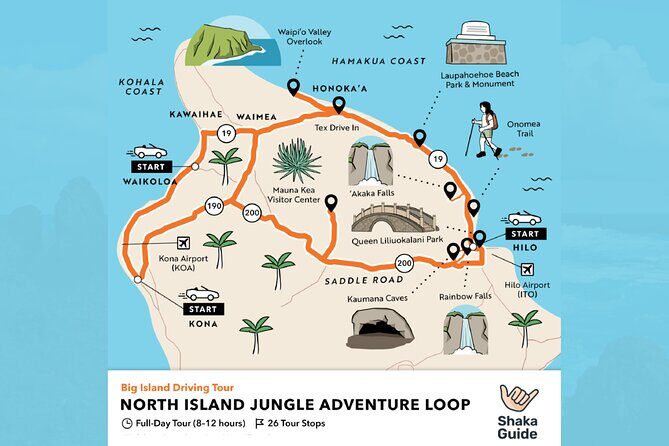
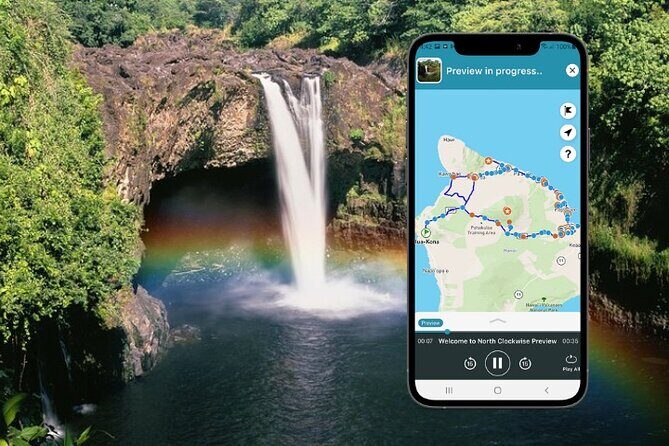
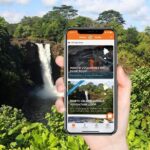
This is a self-guided audio tour built for road trips. You download and redeem it in the Shaka Guide app, then select your starting point and follow GPS instructions. The audio is designed to play automatically as you drive, so you’re not fiddling with your screen while you’re trying to navigate.
The tour is one booking per vehicle/group, priced at $15.99 per group (up to 15). That matters if you’re traveling with friends or family, because you’re not paying per person for the narration itself. You’re basically buying an organized route plus stories, directions, and built-in recommendations.
It’s also flexible in how you use it. You can start, pause, and resume on your schedule, and the tours never expire. The route can go clockwise or counter-clockwise, which is helpful when you’re matching it to where you’re staying and where you want to focus.
Other guided tours in Big Island of Hawaii
Hilo Town Kickoff: King Kamehameha, Moku Ola, and Liliʻuokalani Gardens
You begin in Hilo, and the route does a smart thing: it warms you up with a mix of history and calm, then ramps into waterfalls and lava geology.
At the King Kamehameha Statue, the narration connects the big royal figure to Hilo directly. You’re looking at a 14-foot bronze sculpture, and the tour explains how it ended up there. If you want a quick way to understand the “why” of the place before you start driving, this is a good first stop.
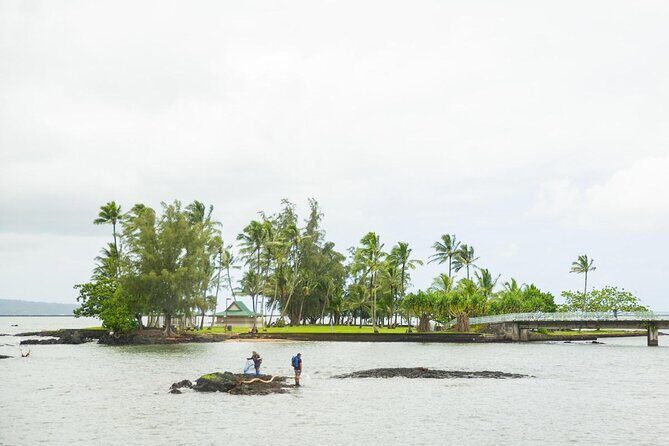
Next is Coconut Island (Moku Ola), a small beach park accessed by a short bridge. Here the story leans into Hawaiian legend: it’s called the healing island, and there’s a tradition that swimming around it three times could heal ailments or ill feelings. Even if you don’t buy into legends literally, you’ll leave with more meaning for the shoreline you’re seeing.
Then comes Liliʻuokalani Gardens, the kind of place that makes you slow down. It’s described as the biggest edo-style garden outside of Japan, and you’ll see red bridges over koi ponds, plus statues and pagodas. If you need a break from constant driving, this stop gives you a low-stress walk and a good reset.
Waterfalls and Lava Tube Country: Rainbow Falls, Boiling Pots, Kaumana Caves Park
After Hilo’s garden calm, the route turns to water and geology fast.
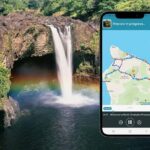
Rainbow Falls is one of those classic Big Island moments: an 80-foot waterfall, and on sunny days you can get rainbows as water drops over a lava cave. The tour highlights that the falls plunge through a natural lava cave into the river below, which adds depth beyond the postcard look.
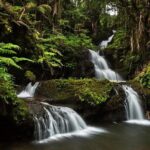
A short drive brings you to Boiling Pots, a chain of overflowing waterfalls that looks like bubbling pots after rain. This is the kind of stop where conditions matter. When it’s been wet, the “boiling” effect is more obvious, and when it’s dry, you’ll want to keep your expectations flexible.
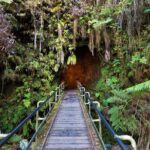
Then you hit Kaumana Caves Park, based on lava tube formation tied to a Mauna Loa lava flow in 1880. The public cave area is about 2 miles, and the tour notes that it goes pitch black quickly once you enter. If you’re bringing kids or anyone who doesn’t like enclosed dark spaces, it’s worth thinking ahead and moving at a comfortable pace.
Quick Legends and Quick Hikes: Naha Stone and Onomea Bay Trail
This part of the route is all about short stops that don’t eat your whole day.
The Naha Stone sits on the grass outside the Hilo Public Library, and the tour connects it to a 5,000-pound rock with spiritual power in ancient times. The legend says that whoever could move or overturn it would gain the power to unite the islands—and the narration ties that to Kamehameha successfully overturning it at age 30.
Then you get a simple hiking payoff: Onomea Bay Trail. It’s an easy walk along the coast with 180-degree views, and the trail to the bay is less than a mile roundtrip. There’s also a fork that lets you explore Onomea stream as it opens to the ocean, which is great if you want a little extra wandering without turning it into a big hike.
Rainforest Gardens, Akaka Falls, and Umauma Falls Viewpoints
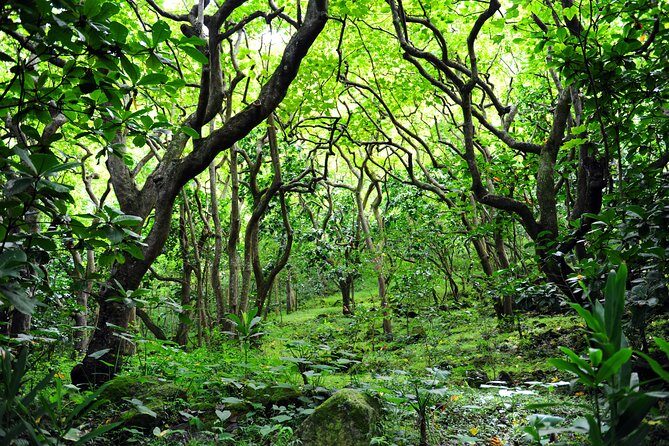
If you want the “jungle” feeling on this self-guided route, this is where it shows up.
Hawai‘i Tropical Botanical Garden is a key stop, and the tour gives you a lot to work with: it protects unique and endangered rainforest plants and has miles of trails under a canopy of trees. It also notes there are over 2,500 plant species. This is one of those places where the audio helps, because it turns a garden walk into a story about conservation and island ecosystems.
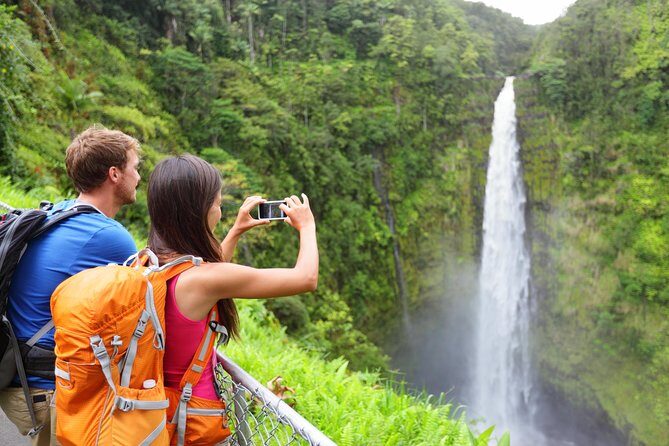
From there, you can add Akaka Falls State Park. The tour describes a half-mile stroll on a paved path through rainforest with wild orchids, bamboo groves, and draping ferns. Akaka Falls is not included in the base price, with an entrance fee listed for you to expect.
Next up is Umauma Falls, described as a stunning three-tier waterfall. The route suggests registering and grabbing a map at the visitor center, then using their self-guided driving tour setup to reach the viewpoint through a tropical garden setting. This is a good stop if you like viewpoints and short time in the car rather than long hikes.
A few more Big Island of Hawaii tours and experiences worth a look

Sugarcane Rails to Tsunami Memory: Laupahoehoe and the 1946 Remembrance

Hilo-to-Waimea doesn’t just mean scenery. It also means history you can see and stand near.
At the Laupahoehoe Train Museum, the narration shifts to sugarcane history on Hawai‘i and how railways helped move that export. The museum celebrates the Hamakua Coast and the railroad links that connected the Big Island to the rest of the world. It’s one of the places on the route that makes the island feel more like a living economy, not just a scenery set.
Then the route heads to the Tsunami Memorial, a heavier moment. It explains that a devastating tsunami in 1946 killed over 150 people, including many school children. The tour shares the story of the day and mentions brave survivors, which gives the stop real emotional weight.
If your goal is a respectful, balanced trip, don’t skip this part. The route intentionally balances beauty stops with something you remember for the right reasons.
Waipi’o Valley to Waimea: Royals, Ranch Country, and a Real Lunch Stop

One of the signature story stops is Waipi’o Valley. The narration ties it to ancient legends that gods lived there, plus its role as a royal center for many ancient rulers. It also connects it to Kamehameha, saying it was his boyhood home. Even if you only have limited time at the viewpoint area, this is one of the places where the words meaningfully change what you notice in the terrain.
Then you roll into Waimea Town, described as an artsy farm town with cowboy history. This is where the tour turns practical: it notes you’ll find restaurants, theatre, art exhibits, and historic ranches, so you can plan food and breaks without scrambling.
On the way through Honoka‘a, you’ll also get guidance to TEX Drive-In for hearty plate lunches. That kind of recommendation is worth something on a road trip, because it’s one less decision when you’re hungry and driving.
Ulu La’au to Parker Ranch: Trees, Shops, Paniolo, and Anna Ranch

Waimea’s portion of the route is for people who like culture that isn’t locked behind a ticket booth.
Start with Ulu La’au, meaning circle of trees in Hawaiian. It’s described as a nice stroll or picnic spot beside a flowing stream, which makes it a good “stretch your legs” stop between bigger drives.
Then there’s a plantation-style shopping area with a few named anchors, including The Gallery of Great Things, Waimea Coffee Company, and Waimea General Store for local gift items. This is a helpful break if you want snacks, coffee, small souvenirs, or just a human pause in the middle of long stretches of road.
The route also points to learning about the paniolo—Hawaiian cowboys—and why they matter in ranching history. A museum is mentioned as free and open to the public, with details on the website.
From there, you’re guided to Anna Ranch, a national historic site tied to Big Island plantation days. The tour notes it has white wooden walls with a lot of stories, has stayed in the same ranching family for five generations, and was home to Anna Lindsey Perry-Fiske, also called the first lady of ranching. It also describes two historic houses from the 1800s serving as Parker Ranch headquarters, where you can explore the grounds and homes on a self-guided tour.
If you want to add an activity, the route suggests Kahua Ranch Na‘alapa Stables for horseback riding with experienced paniolos and panoramic views of Waimea’s rolling hills. Booking is on you via their website, but the tour gives you the direction.
Saddle Road to Mauna Kea Visitor Center: Daniel K. Inouye Highway in Daylight
After Waimea, the route takes you across Saddle Road, officially named the Daniel K. Inouye Highway. The tour frames it as the main thoroughfare connecting Kona in the west to Hilo in the east, and it gives you an expected drive time of about 50 minutes.
This is also where the narration keeps working while you’re stuck in transit. You’ll hear history, geology, and music, plus the inspiring story of Daniel K. Inouye, the highway’s namesake. For a self-guided trip, this is a big quality-of-life point: it keeps “driving time” from feeling like dead time.
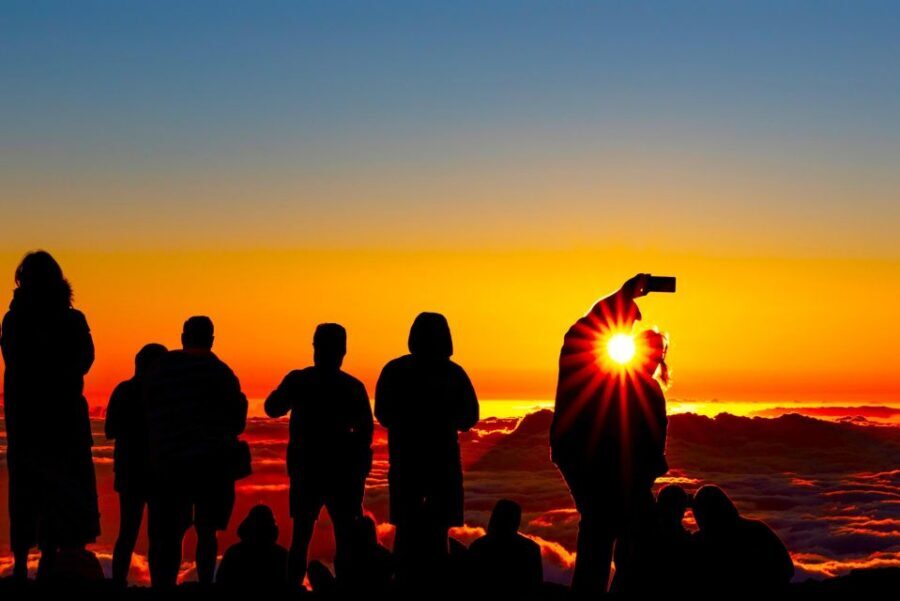
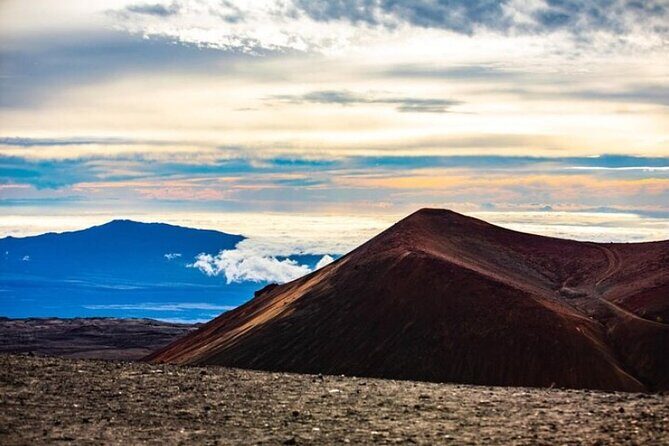
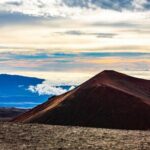
The day’s last major stop is the Maunakea Visitor Information Station. The narration compares heights by saying Mount Everest’s summit is higher above sea level, while Mauna Kea is the tallest when measured from its base on the ocean floor. It also notes astronomers from around the world study the universe from the summit and that Hawaiians have ancient spiritual connections to the site. For visitors, it’s presented as one of the clearest places on the planet for night sky viewing and offers a rare chance to experience polar tundra in Hawai‘i.
Mauna Kea Observatories on Day 2: Where the Audio Shifts to the Sky
Day 2 is focused and short: Mauna Kea Observatories. The tour notes it’s one of the clearest places on the planet for viewing the night sky and that it’s a good choice for families, with about an hour set aside.
This is also a stop where planning matters. The observatories admission is listed as not included, so you’ll need to factor that into your budget. But the payoff is that the route saves this “big sky” experience for a separate block of time instead of trying to cram it into the same daylight schedule.
Even if you’ve seen stars in other places, the narration framing helps: you’re not just looking upward, you’re learning why Mauna Kea is special to science and to local tradition.
Price and Logistics: $15.99 Per Group Plus a Few Predictable Extras
Let’s talk value in plain terms. You pay $15.99 per group (up to 15) for the tour itself, and it’s private for your group. If you’re driving a rental car with friends or family, that can be a bargain compared to paying per person for separate guided excursions.
But you do have add-ons. The tour lists entrance and parking costs:
- Akaka Falls State Park: $5 per person
- Laupahoehoe Train Museum: $10 per person
- Parking fees: $10 per booking
Meals and refreshment aren’t included either, and that’s normal for a self-guided driving tour. The good news is that the narration includes tour highlights with activity and restaurant recommendations, and the route even points you toward a local lunch option at TEX Drive-In.
Also remember: the audio tour itself never expires, so if your schedule shifts, you’re not stuck hunting for the “right day” later. Just keep an eye on your phone’s setup: strong Wi-Fi is recommended for downloading ahead.
Practical Tips to Avoid App Frustration on This Route
A self-guided tour lives or dies by how well you follow directions. One thing to be aware of on this route: it depends on GPS prompts at the time you’re approaching turns and stops, not after.
Here’s how to make it easier:
- Keep your attention on the road first, then look up for the prompts in time to act.
- Expect that some stops involve short walk areas or viewpoint pull-offs, so you may need to park and then reorient yourself.
- Give yourself a little extra time at caves, falls, and trails because stopping calmly beats rushing.
If you do miss a turn, don’t panic. You’re not trapped. You can pause and resume, and the app approach is designed so you can take your time and get back onto the suggested route.
Who This Self-Guided North Island Loop Fits Best
This works best if you:
- Prefer driving yourself and choosing how long to spend at each stop
- Like history and legends, not just photo ops
- Want offline audio navigation so you can keep moving without constant data
- Are traveling as a group in one vehicle to maximize the group price
If you hate driving for long stretches, or if you want someone else to manage timing and entry details for you, you might find a traditional guided day tour easier. But if you like control and you enjoy stopping where you feel like it, this kind of audio route can be exactly your style.
Should You Book This Tour?
Book it if you’re planning a north-side road trip and you want your drive to have structure. The combination of offline navigation, auto-playing stories, and a route that mixes waterfalls, caves, gardens, and historic ranch country is a strong match for independent travel.
Don’t book it if:
- You’re hoping for a walk-only itinerary with zero driving complexity
- You want everything fully included for a single flat price with no entrance fees to plan around
- You know you’ll struggle with GPS prompts while driving
If you’re comfortable with a self-guided rental-car day or two, this is one of those setups that can save money while still giving you real context for what you’re seeing.
FAQ
Is this tour self-guided or guided by a person?
It’s self-guided. The narration and directions play automatically as you drive using GPS, and you explore at your own pace.
How much does the tour cost?
The price is $15.99 per group, up to 15 people.
How long is the experience?
It’s listed as approximately 2 days.
Does it work offline?
Yes. It includes an offline map, and you do not need Wi-Fi or data during the tour.
What’s included in the price?
Included items are the offline map of the island, hours of audio narration with stories and travel tips, automatic audio playback as you drive, turn-by-turn GPS directions, and tour highlights with activity and restaurant recommendations.
What isn’t included?
Meals and refreshment are not included. Also not included are entrance fees for Akaka Falls State Park ($5 per person) and the Laupahoehoe Train Museum ($10 per person), plus parking fees ($10 per booking).
What language is the narration offered in?
The tour is offered in English.
Can I start at different times or take it on different days?
The tour start is customizable, the opening hours are 12:00 AM–11:30 PM daily, and tours never expire.
Does the tour stay only with my group?
Yes. It’s private, and only your group participates.