REVIEW · BIG ISLAND OF HAWAII
Big Island Surf Lesson from Hilo
Book on Viator →Operated by Bayfront Surf Company · Bookable on Viator
You can catch your first waves on a single morning. This Big Island surf lesson in Hilo pairs quick land basics with real water coaching, plus rash guards and a simple game plan for beginners. It’s a straightforward way to experience Hawaii surf culture without needing hours of practice first.
I especially like the hands-on instruction style: the coach works with you in the water to help you get up and standing as often as possible. I also like how the lesson is structured to move fast, with a quick pop-up lesson on land, then stretching, then straight into surfing time.
One thing to consider: surfing is weather- and spot-dependent, and I found serious reports about safety and credentials in a small number of experiences. Before you book, it’s smart to confirm the meeting spot and be ready to ask questions about licensing and safety procedures.
In This Review
- Key highlights to know before you go
- Meeting at 74 Kamehameha Ave and getting your rash guard on
- The shore drills: pop-ups, safety talk, and quick stretching
- Hands-on water coaching: how you actually learn to stand
- Morning schedule in Hilo: two start times, one goal
- Choosing the surf spot: when conditions mean a nearby switch
- Safety, credentials, and what to ask before you paddle out
- Value for $120: what this lesson includes (and what it doesn’t)
- Who this Big Island surf lesson is best for
- Should you book Bayfront Surf Company in Hilo?
- FAQ
- FAQ
- Where is the meeting point for the lesson?
- How long is the Big Island surf lesson from Hilo?
- What time does the surf lesson start?
- Is the lesson private or shared with other people?
- Do I receive any equipment?
- What if the weather is bad?
- What is the cancellation policy?
Key highlights to know before you go
- Rash guards provided at the meet-and-greet, so you can focus on learning instead of packing gear.
- 5-minute land lesson focused on pop-ups, plus quick surf break and safety talk.
- Water time is the goal: the instructor is in the water helping you on waves.
- Two daily start times in Hilo (8:30 AM and 10:30 AM) for a flexible morning plan.
- Spot changes can happen if conditions look better nearby, for good or bad depending on how it’s handled.
- Overall rating is mixed: most accounts praise fun and success, but a few describe major problems.
Meeting at 74 Kamehameha Ave and getting your rash guard on
The experience starts in Hilo at 74 Kamehameha Ave, with the lesson returning to the same meeting point. That matters because you avoid the usual scramble of finding the right beach entrance, parking lot, or check-in desk.
At the start, you’ll do a basic meet-and-greet and get your rash guard. It’s a small detail, but it sets the tone: you show up, you gear up, and you get moving. You’re also told what to expect, which helps a lot if you’re new to surf lessons.
You’ll likely see you’re with your own group only. That’s useful if you’re traveling as a couple, a family, or a small circle of friends and you want the lesson to feel focused on you instead of a mixed crowd.
A few more Big Island of Hawaii tours and experiences worth a look



The shore drills: pop-ups, safety talk, and quick stretching
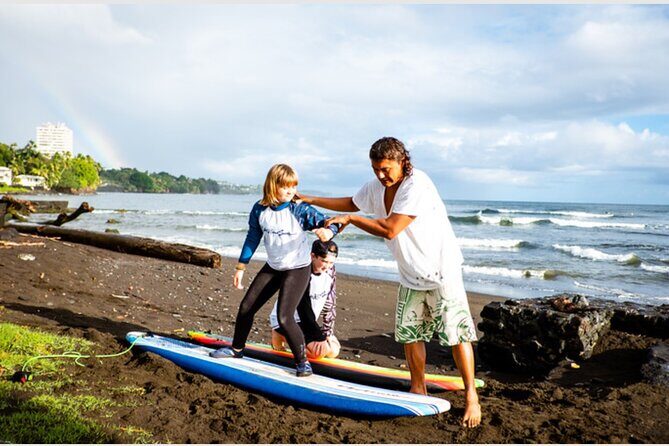
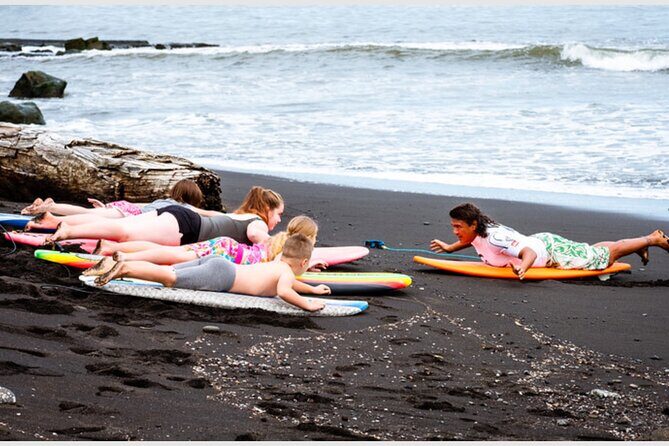
After check-in and gear, the lesson does a 5-minute land lesson. The emphasis is on pop-ups, meaning how to go from lying on the board to standing fast enough to catch a wave. For beginners, that short drill is gold because it gives you one repeatable action to focus on when you’re nervous in the ocean.
On land, you’ll also get a fast explanation about the surf break and safety topics. Even if you only remember a couple of rules in the moment, that guidance helps you avoid the classic beginner mistakes: turning the board the wrong way, paddling when you should pause, or misunderstanding where to look.
Then comes a fast stretch before you go in. It’s not an all-day yoga session; it’s more like a quick reset so your arms, shoulders, and legs are ready. When the lesson moves quickly, that kind of warm-up matters.
Hands-on water coaching: how you actually learn to stand
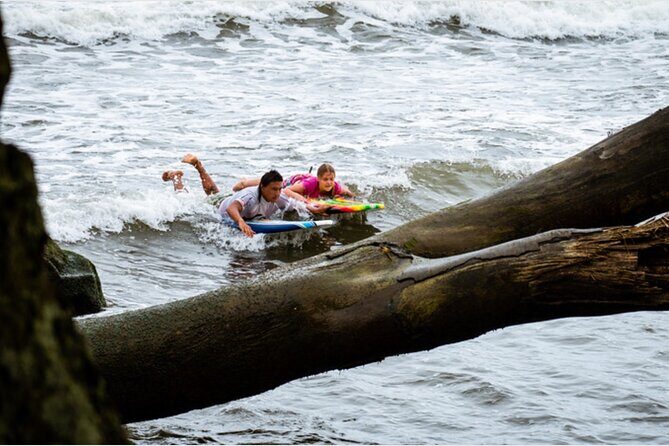
The core idea here is simple: the “base of surfing” is taught while you’re in the water. The instructor is there in the surf helping you with waves and working on getting you up and standing.
That coaching style is why many beginners feel successful faster. You’re not just watching from shore. You’re trying, getting corrected, and trying again. In accounts tied to this company and instructor (including a coach named Brandon), the consistent praise is that he’s patient and focused on helping people catch waves—especially when you’re a first-timer.
If you’re thinking, Wait, can someone really teach this in about an hour? The answer is: they can teach the basics and help you get early wins. The lesson is short by design. It’s built for momentum, not for perfect technique.
And yes, it can get funny in a hurry. One learner described the tiny beginner mistake of laying the wrong way on the board before the lesson clicked. That’s normal. The best part is that the instruction is geared toward fixing the mistake quickly, so you’re back to trying again.
Morning schedule in Hilo: two start times, one goal
You can choose between two start times in Hilo: 8:30 AM or 10:30 AM. The session runs for about 1 hour (approx.), so it fits neatly into a day that already includes beaches, waterfalls, or a drive around the island.
If you’re deciding between the two, I’d lean toward whatever gets you in the water when you’ll feel least rushed. Early mornings often feel more manageable for first-timers, because you’re not battling fatigue or heat before your lesson starts.
Also, because the experience depends on good weather, having a plan for either time helps. If conditions aren’t right, you’ll be offered a different date or a full refund, which reduces the risk of wasting a morning in Hawaii.
Choosing the surf spot: when conditions mean a nearby switch
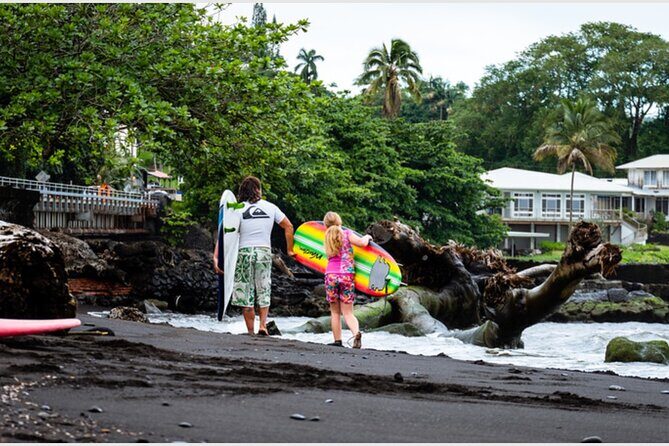
A key detail in this kind of Hilo surf lesson is that where you surf can change. One account described a coach checking the initially planned spot and switching to a nearby beach when the first option didn’t look favorable.
That’s actually sensible. Surf breaks vary quickly with wind, swell, and crowding. A good instructor tries to match the lesson conditions to beginners, because you learn faster when you can actually stand up and ride safely.
Still, I have to flag this carefully: I also saw a serious account describing a shift to a more rocky beach, with injuries and very negative conduct. That story included claims about delays, uneven participation, aggressive language, and a fall that led to head impact and bleeding.
So what’s the practical takeaway for you? If the spot being used looks rough for beginners, ask questions immediately. You want to feel like conditions match the skill level, and you want clear safety guidance before you paddle out.






Safety, credentials, and what to ask before you paddle out
Safety is the make-or-break part of surfing. And because you’re learning, you’re also trusting someone with your body in the ocean.
Most of the positive accounts emphasize safety and success. Phrases like safe and successful show up with families and first-timers, and Brandon’s patience is repeatedly praised. People mention that everyone in their group got up and rode multiple waves, and that instruction happens both on shore and in the water.
But there’s another side. One very concerning account described police questioning during the lesson and alleged licensing problems tied to the instructor. It also described swearing and tension when officers were involved, plus the guide attempting to keep the situation from escalating further.
I’m not saying what happened in that account is true for every session. I am saying this: if you care about safety and professionalism (you should), it’s reasonable to ask basic questions up front. For example:
- Confirm the exact meeting location before you head out.
- Ask how they choose the surf spot for beginners.
- Ask directly about the instructor’s credentials and permits, if you can.
If anything feels off—serious delays, unclear communication, or a mismatch between your skill level and the conditions—your best move is to pause and get clarity before you enter the water.
Value for $120: what this lesson includes (and what it doesn’t)
At $120 per person for about an hour, this lesson is in the “you pay for instruction and water time” category. You’re not buying a long course. You’re buying coaching that prioritizes getting you standing quickly.
What you get for your money:
- A guided session with shore instruction and safety topics
- Rash guards provided at check-in
- Hands-on help in the water to get you up on waves
- Two scheduled morning options in Hilo
What you should not expect based on the details here:
- A multi-hour technique program
- Customized training for advanced skill levels
- Guaranteed waves in every swell and wind situation
The value comes from the structure. The lesson compresses learning into short, actionable moments: pop-ups on land, stretching, then coaching during rides. If your goal is simply to experience beginner surfing well—and not to spend the whole day on lessons—this is a reasonable way to spend part of your Big Island time.
Who this Big Island surf lesson is best for
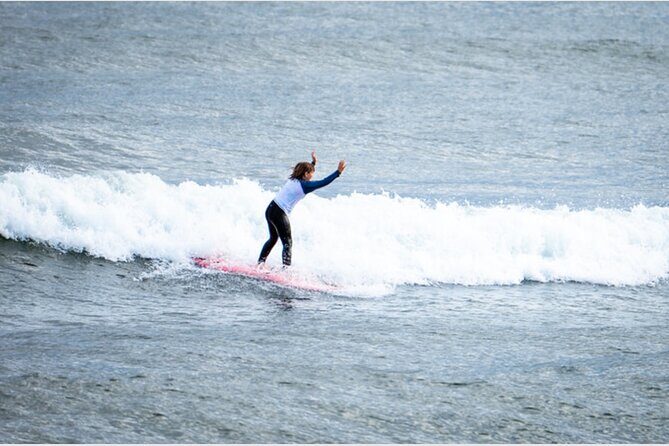
This lesson says most participants can join, and that fits beginners who want direct coaching. It also appears to work well for kids and families, including an account praising a one-on-one style that helped a 10-year-old catch waves quickly.
It’s a strong fit if you:
- Want a fun, active morning with a clear plan
- Learn best with quick corrections instead of long lectures
- Prefer coaching in the water rather than only on shore
It may be less ideal if you:
- Have strong concerns about safety and professionalism due to prior bad experiences
- Get anxious in environments where spot changes happen quickly
- Are looking for a highly technical, multi-session curriculum
Should you book Bayfront Surf Company in Hilo?
If you want an energetic, beginner-friendly Hilo surf lesson with rash guards, a short pop-up drill, and coaching in the water, this experience can be a great match. The best accounts are consistent: patience, help getting up, and real fun.
But I’d book with your eyes open. Confirm the meeting point (74 Kamehameha Ave), choose the start time that fits your day, and be ready to ask about spot choice and instructor credentials. And if conditions feel wrong for beginners, trust your judgment and ask to adjust.
If you’re comfortable with that extra bit of due diligence, the odds are good that you’ll walk away with at least a few rides, a new respect for pop-ups, and a story you’ll tell later.
FAQ
FAQ
Where is the meeting point for the lesson?
The lesson starts at 74 Kamehameha Ave, Hilo, HI 96720, and it ends back at the same meeting point.
How long is the Big Island surf lesson from Hilo?
It runs for about 1 hour.
What time does the surf lesson start?
There are two start times: the first begins at 8:30 AM and the second begins at 10:30 AM. You should let the operator know which time you prefer.
Is the lesson private or shared with other people?
It’s described as a private tour/activity, meaning only your group participates.
Do I receive any equipment?
Yes. You’ll do a meet-and-greet and they’ll hand out rash guards.
What if the weather is bad?
The experience requires good weather. If it’s canceled due to poor weather, you’ll be offered a different date or a full refund.
What is the cancellation policy?
You can cancel for free up to 24 hours in advance for a full refund. If you cancel less than 24 hours before the start time, there’s no refund.