REVIEW · HILO
Hilo: Elite Volcano Hike
Book on GetYourGuide →Operated by KapohoKine Adventures · Bookable on GetYourGuide
Lava still writes the coastline today. This Hilo Volcano day blends drive-by learning with real walking, including the 2018 eruption terrain and a guided look into Kilauea’s caldera and Halema’uma’u Crater. I like how the stops feel connected, not random—lava flow, black-sand shore, then the Big Island’s most dramatic crater views—plus the tour includes lunch and beverages so you’re not hunting for food. The main drawback to plan for: it’s a long, mostly outdoor day, and the walking won’t suit everyone, especially if you have back issues or breathing problems.
You’re traveling with a live English guide in a small group capped at 13, and you get hotel pickup and drop-off so the day stays simple. Expect a real mix of viewpoints (some from overlooks, some from your feet) and a route that’s built around what happened in 2018—not just generic volcano sightseeing.
If you want a volcano experience that feels hands-on and current, this is one of those tours that makes the science feel physical. You’ll see how lava reshaped roads, cliffs, and the shoreline—then stand where the ground changed shape right in front of you.
In This Review
- Key Things I’d Prioritize on This Tour
- Hilo to the Puna Coast: Where the 2018 Eruption Changed the Map
- Mackenzie State Recreation Area: Walking the Now-Closed Lava Highway
- Isaac Hale Beach Park and Fissure 8: Driving the Cracks That Made News
- Lunch at Sea Level: A Practical Break Before the National Park
- Kilauea Caldera Time: From the Kilauea Iki Overlook to Keanakakoi
- The 2-Mile Hike: Birds, Boulders, and the Marks of Earlier Visitors
- Guides, Pace, and Small-Group Comfort (Up to 13 People)
- What This Day Feels Like on Your Body (Not Just Your Camera Roll)
- Price and Value: What $189 Gets You on a Full Volcano Day
- Who Should Book the Hilo Elite Volcano Hike
- Should You Book This Tour or Keep It Flexible?
Key Things I’d Prioritize on This Tour
- 2018 eruption terrain you can walk: parts of a once-open highway and altered coastline made by the 2018 lava flows
- Puna Coast stops before the national park: the day starts at the source area, then ramps up into the big crater scenery
- A real 2-mile hike in the caldera: you’ll go down to Keanakakoi and work your way to views over Halema’uma’u
- Birdwatching along lava-country trails: keep an eye out for native ‘amakihi and ‘apapane
- Historic marks in the rock: you may spot locations associated with earlier visitors like Benjamin Boyd and John Webster
Hilo to the Puna Coast: Where the 2018 Eruption Changed the Map
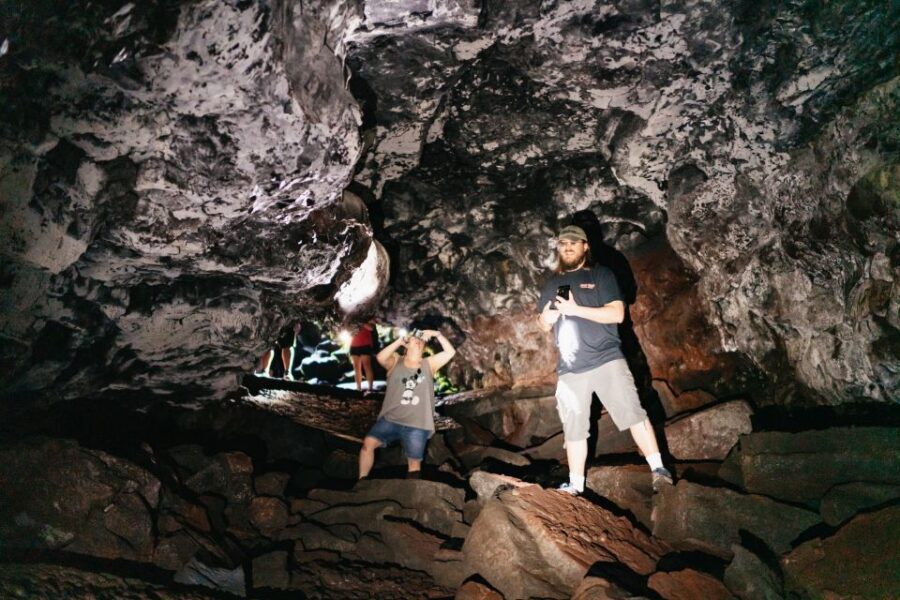
Your day starts with pickup in the Hilo area and a van ride that takes you across the island’s moods—from town streets to active-looking lava country. The first big idea of the tour is simple: you’re not just seeing volcano scenery. You’re seeing what a fresh eruption did to roads, trees, and the coast within living memory.
The tour heads to the Puna Coast, where the 2018 eruption dramatically altered the highway and pushed lava toward the sea. That sets the tone for everything after. When you’re later in Hawaii Volcanoes National Park, the crater views feel like the final chapter of the same story rather than a separate attraction.
One practical note: this is a full-day commitment. Even with hotel pickup and a smooth itinerary, you’ll spend a good chunk of time in transit. If you like to stay active, that’s fine. If you’re the type who hates long van rides, plan for it.
Other hiking tours in Hilo
Mackenzie State Recreation Area: Walking the Now-Closed Lava Highway
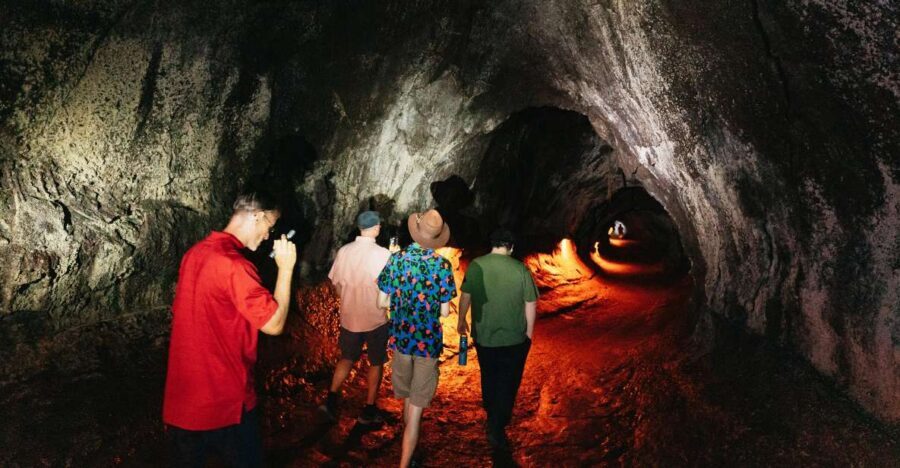
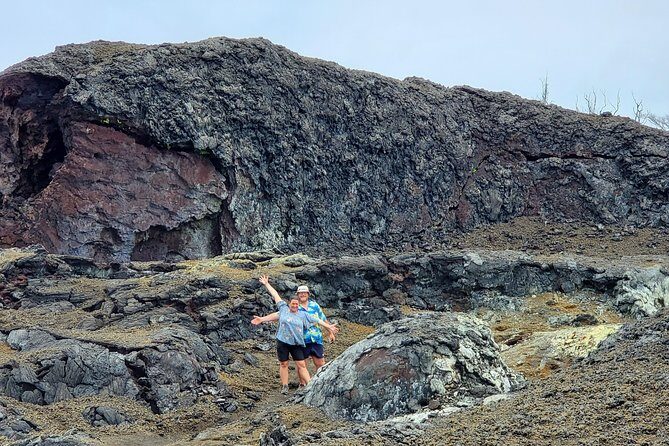
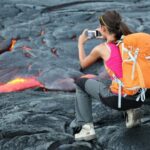
Your first true stop is Mackenzie State Recreation Area, tied to the historic lava wall that advanced toward the coast. The description you’ll hear on this part of the day is what makes it memorable: the highway was closed as a 40-foot-tall wall of crumbly a’a lava marched onward.
Then you’ll hike along the now-closed highway alignment. It’s not a typical trail through a forest. It’s a trail that follows a road that used to exist there. That gives you instant context for the scale of the event: you’re physically moving through the aftermath of something that stopped the normal traffic pattern for good reason.
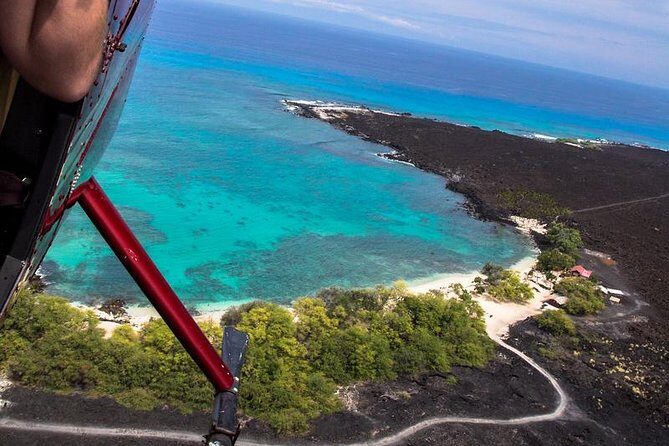
From there, you follow the lava flow through pine forest, then reach a coastline that looks and feels altered. Expect cliffy viewpoints over a newly formed black sand beach area. This is one of those places where the ground looks solid, but you’re seeing a landscape still sorting itself out—edges reshaping, vegetation recovering, and the coastline recalculating.
One drawback to keep in mind: this section is outdoors and on rougher ground than you might expect from a casual walk. Closed-toe shoes matter here in a real way.
Isaac Hale Beach Park and Fissure 8: Driving the Cracks That Made News
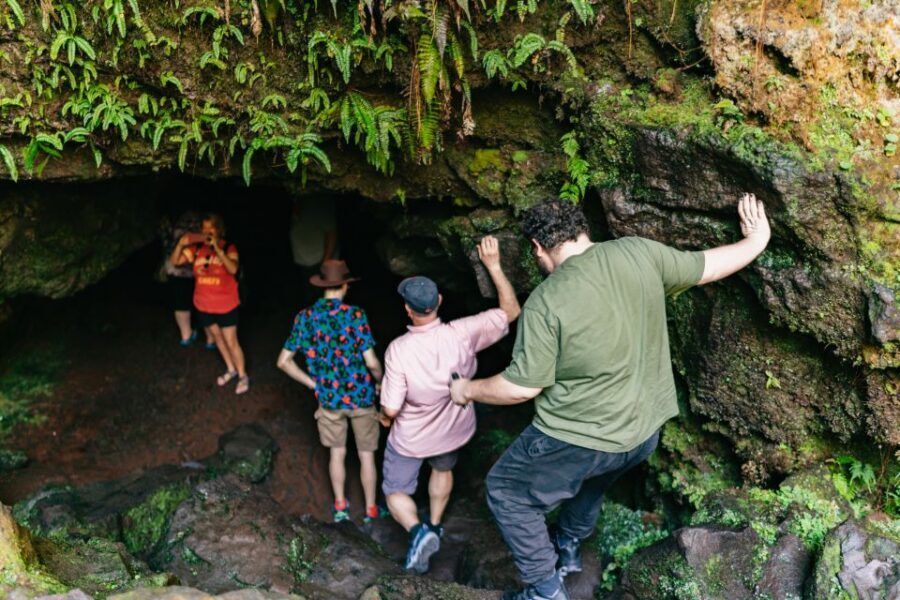
Next up is Isaac Hale Beach Park, where the tour shifts from hiking to a drive-by moment that hits like a history lesson you can see. You’ll drive along a famous eruption feature called “Fissure 8,” which erupted in the heart of a Lelani Estate subdivision.
This stop helps you connect volcano activity to everyday life. Instead of thinking of lava as something far away in a movie, you see how close it came to homes, roads, and regular neighborhood geometry. The guide’s explanations here are the difference between seeing a crack in the ground and understanding what created it.
Then lunch comes into the picture—picnic-style at the park, weather permitting. That timing is smart. By now you’ve already had enough movement to build an appetite, but you’re still early enough in the day to reset before heading into the national park.
If you’re sensitive to heat or you’re not used to midday sun, pay attention to how the day will feel. One common note from previous experiences is that the heat can make the day tougher than expected, even when the scenery is incredible.
Lunch at Sea Level: A Practical Break Before the National Park
You’ll get lunch at Isaac Hale Beach Park, and beverages are included. That sounds simple, but it matters on a day like this because the rest of your energy depends on it.
This is also a good time to do a quick gear check. Are your shoes secure? Are your socks staying comfortable? Do you have what you need for the next hike segment? The tour is built around moving through multiple terrains—lava fields, pine forest, coastal cliffs—so keeping yourself comfortable between stops helps a lot.
Weather can affect whether the lunch setup proceeds at the park, so be ready for the day to adapt. But the overall structure stays the same: lunch is a mid-day anchor, not an optional detour.
Kilauea Caldera Time: From the Kilauea Iki Overlook to Keanakakoi
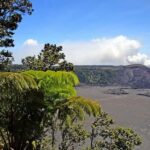
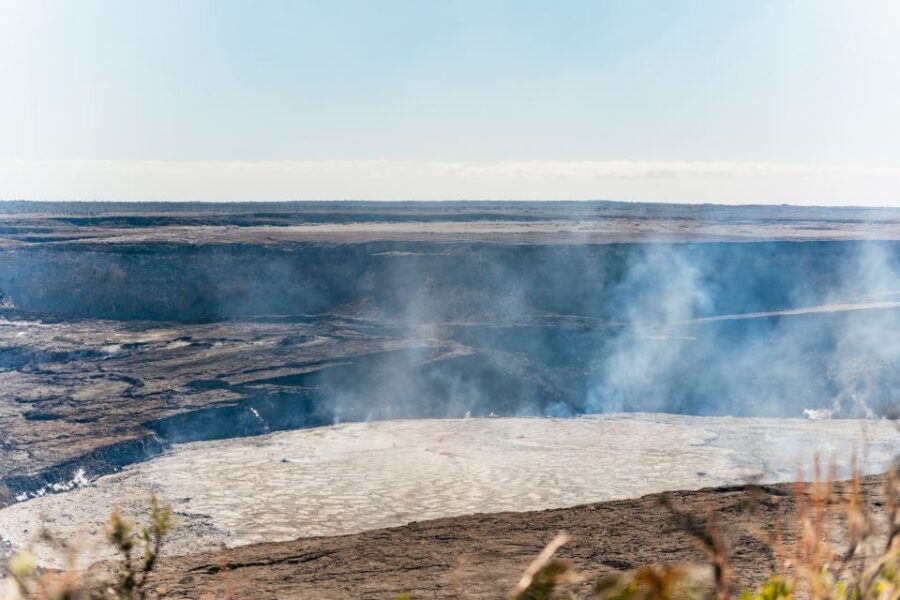
After lunch, the crown jewel arrives: Hawaii Volcanoes National Park. The day’s pace turns more “destination” here. You’ll start with a brief stop at the Kilauea Iki Overlook, then head on foot down a paved road to Keanakakoi.
This part of the route matters because it changes your viewpoint in layers. First you get the broad perspective—caldera shape, crater presence, and how large the volcanic system really is. Then you move down toward the action area, where the 2018 eruption effects become harder to ignore.
At Keanakakoi, you’ll see indications of the 2018 eruption that buckled roads and created racks and sinkholes (as explained by your guide during the walk and stop). It’s one of the more striking contrasts of the day: the national park feel on one hand, and then the clear evidence of fresh ground movement on the other.
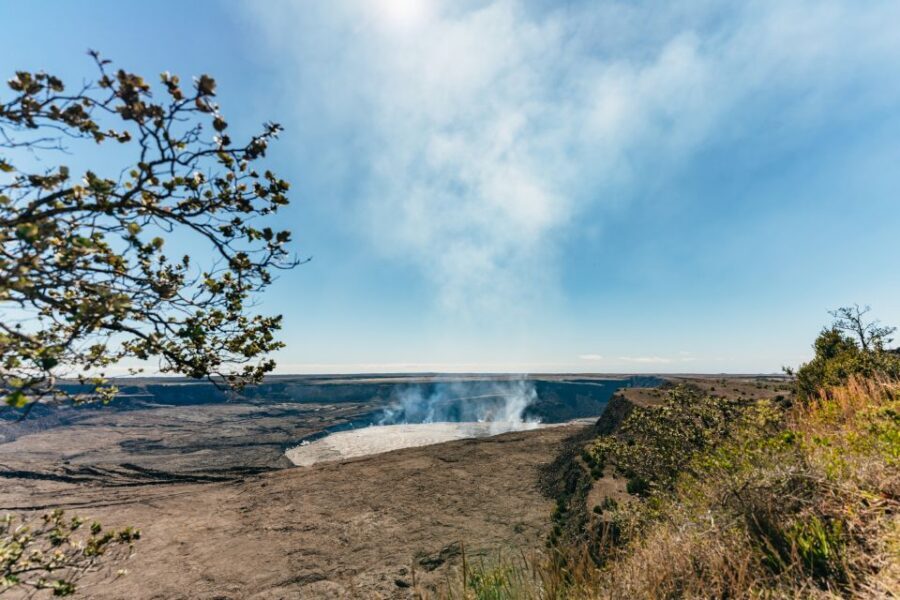
You’ll also get birds-eye views of the Kilauea Caldera and Halema’uma’u Crater, including sightlines toward the trail section you’ll walk within the caldera. That’s a big deal for your enjoyment: you can see where you are headed before you get there.


The 2-Mile Hike: Birds, Boulders, and the Marks of Earlier Visitors
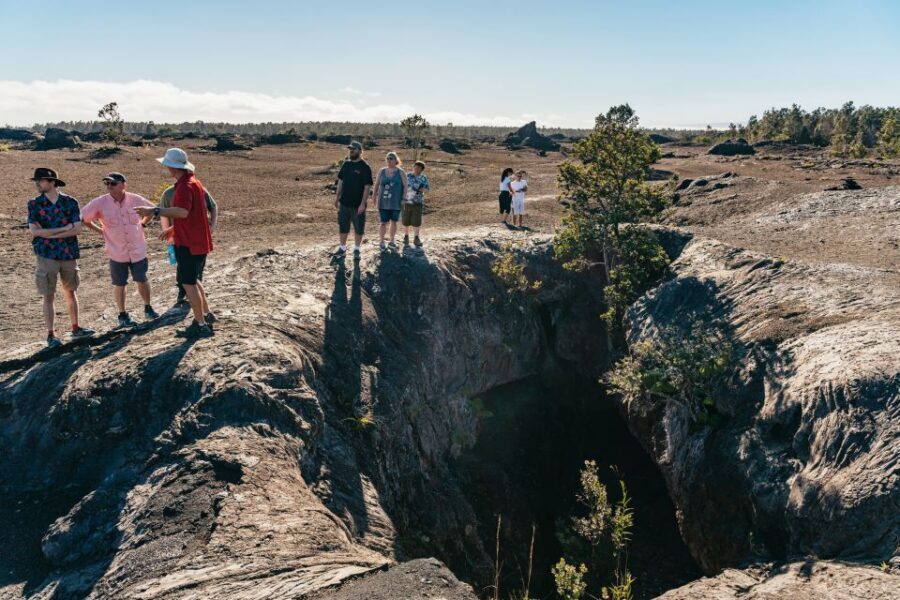
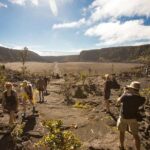
The main hiking moment is about 2 miles. Along the way, your guide will point out things to watch for—especially native birds like the yellow ‘amakihi and the red ‘apapane. Even if birdwatching isn’t your hobby, this helps you stay engaged, because it gives you a reason to look up and around instead of only focusing on footing.
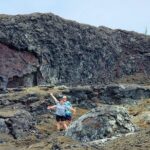
You’ll also notice the geology up close. Huge boulders came to rest at this spot during ancient rock slides and eruptions. This is one of the tour’s quiet superpowers: it doesn’t treat the caldera as just one event. It shows how repeated upheaval leaves layers of evidence across time.
And then there are the human marks in the rock. The route includes areas where you can look for signs left by previous visitors such as Benjamin Boyd and John Webster. When the guide explains why those names show up here, the crater starts to feel like a place people have studied, argued about, feared, and returned to for generations.
As you reach the floor of Kilauea Caldera, you’ll encounter a rock slide to your left that’s evidence of the 2018 eruption. Ahead sits Halema’uma’u Crater. The guide will talk about how the crater increased in size during the eruption and how the lava lake drained out, leaving behind an enormous pit described here as roughly 1,000 feet deep.
It’s not the kind of view you forget. It’s also not the kind of view you can get from a quick drive-through overlook. Walking the route is what lets you feel the scale.
Then you return to the starting point and finish the day the same way it began: with the comfort of pickup and a complete itinerary rather than you trying to piece together crater access on your own.
Guides, Pace, and Small-Group Comfort (Up to 13 People)
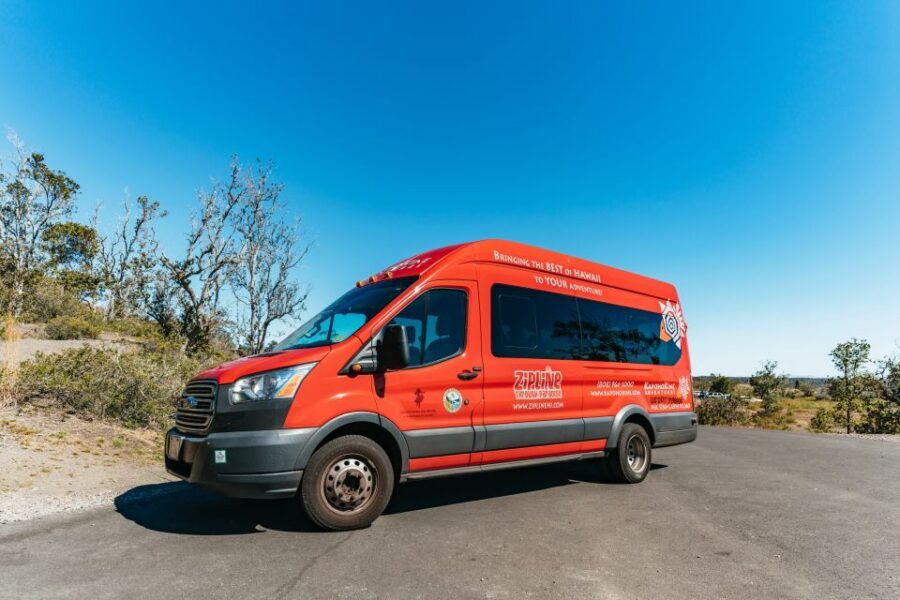
The tour runs with a live English guide, and the small-group size—limited to 13—is part of the value. In a setting like this, it’s not only about comfort. It’s about timing and attention. Fewer people means your guide can adapt to the group’s pace during stops and on the walk.
The guiding style seems to make a big difference. One guide named Ray is described as having clear explanations and an easy sense of humor that kept the group engaged. Another named Nick is remembered for being very informative, plus sharing local experiences that connect volcano science to everyday Big Island life.
What I’d take from that for your planning: don’t assume a volcano tour is automatically fun. You want a guide who can translate what you’re seeing into something you can actually picture. The best moments on a day like this are usually the ones when the explanations match what’s in front of your eyes.
What This Day Feels Like on Your Body (Not Just Your Camera Roll)
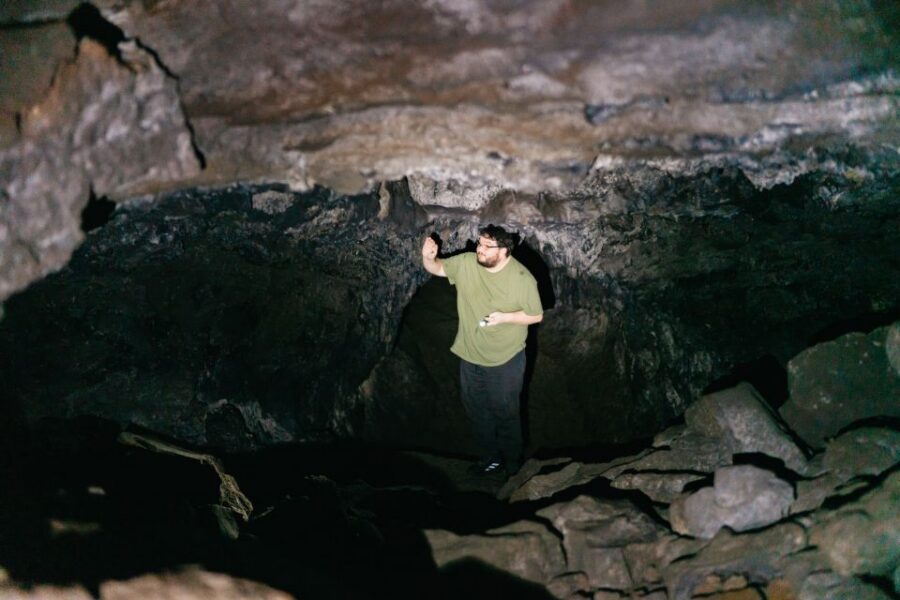
This tour isn’t built like a casual stroller loop. Even though the hike is listed as about 2 miles, you’re on volcano terrain with uneven ground and shifting surfaces. The itinerary also includes multiple stops with time spent outside in heat and sun.
That’s why the shoe rule matters. You need closed-toe shoes, and open-toed footwear isn’t allowed. It’s also why the tour isn’t suitable for wheelchair users, people with back problems, pregnant women, or those with respiratory issues.
If you fall into one of those categories, the scenery is still real, but the day might be unsafe or uncomfortable. If you’re generally mobile but hate strenuous heat, plan for extra caution. There’s a specific kind of fatigue that comes from volcano walking in the sun, even when the distance doesn’t look huge on paper.
Price and Value: What $189 Gets You on a Full Volcano Day
At $189 per person, this isn’t the cheapest way to see Kilauea. But the price makes more sense when you look at what’s included and what’s actually happening.
You’re paying for:
- hotel pickup and drop-off in the Hilo area
- a live English guide for the full route
- lunch plus beverages
- small-group access (capped at 13)
- a guided walking route inside Hawaii Volcanoes National Park tied to the 2018 eruption
If you tried to DIY this, you’d be juggling transportation and timing across the Puna Coast and the national park—plus figuring out where to get meaningful access to eruption-impacted areas. Here, the itinerary does that work for you, and the guide helps you read the terrain so it doesn’t feel like random lava rocks.
Is it worth it? For many people, yes—especially if you want the 2018 eruption sites and not just generic viewpoints. The best value shows up when you care about understanding what you’re seeing, not just collecting photos.
Who Should Book the Hilo Elite Volcano Hike
This is a great pick if you:
- want a guided day focused on the 2018 eruption rather than generic volcano stops
- like a mix of viewpoints and walking
- enjoy geology and the story behind landscapes
- prefer a small group with pickup and lunch handled
It’s likely not your best fit if you:
- need wheelchair access (not suitable)
- have significant back issues or require a low-impact plan
- have respiratory concerns that make extended outdoor exertion risky
- are pregnant and need to avoid strenuous or uneven terrain
Also, if you’re younger and you want a more intense adventure, you might find the pace more suited to older or less able hikers. The route is active, but it’s still structured around accessible viewing points and guided pacing.
Should You Book This Tour or Keep It Flexible?
If your goal is to spend one full day learning volcano history with your feet on the ground, I’d book it. The itinerary is tightly connected: Puna Coast damage first, then the caldera’s dramatic center stage, with lunch and beverages keeping you moving.
But make your decision based on one thing: your comfort with outdoor walking. If you’re steady on your feet and your breathing is good in heat, this is exactly the kind of tour that turns volcano knowledge into real-world understanding. If you’re not, you’ll likely be better off choosing a lighter option that reduces hiking and uneven terrain.